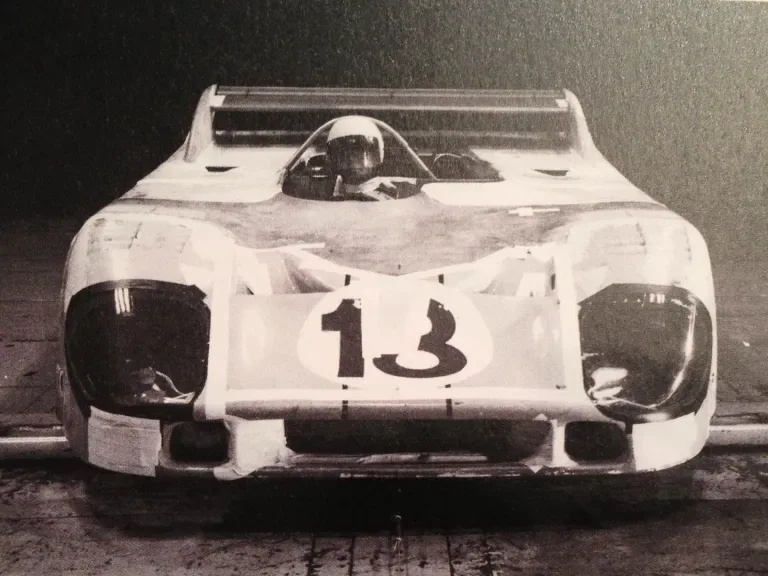
Troisième des cinq châssis tubulaires spécifiques créés pour la carrosserie profilée dessinée par la SERA, cette Porsche 917 portant le numéro de châssis 917-043 est propulsée par un moteur V12 à plat de 4,5 litres délivrant 630 chevaux pour 800 kilos.
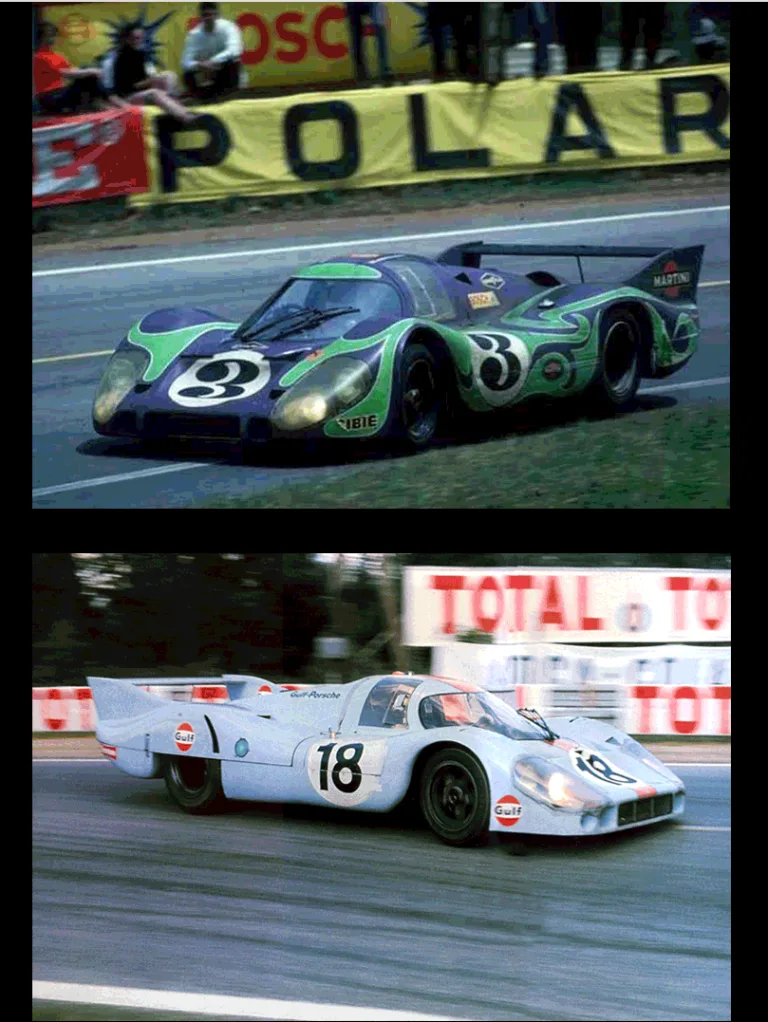
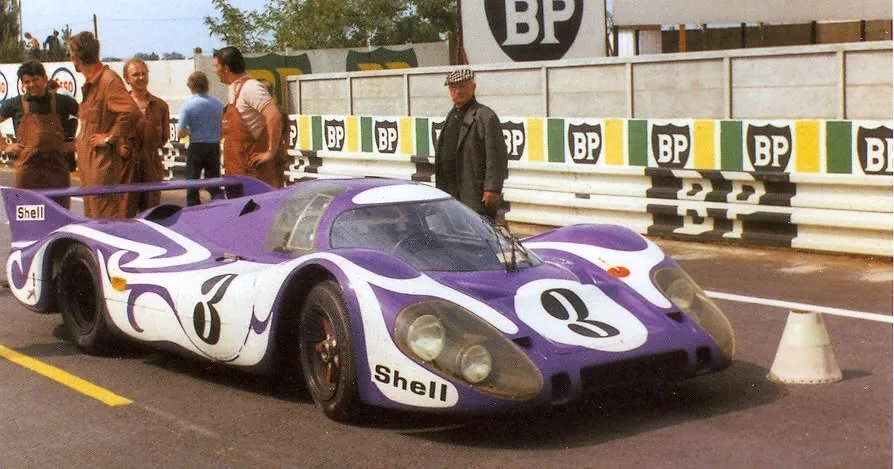
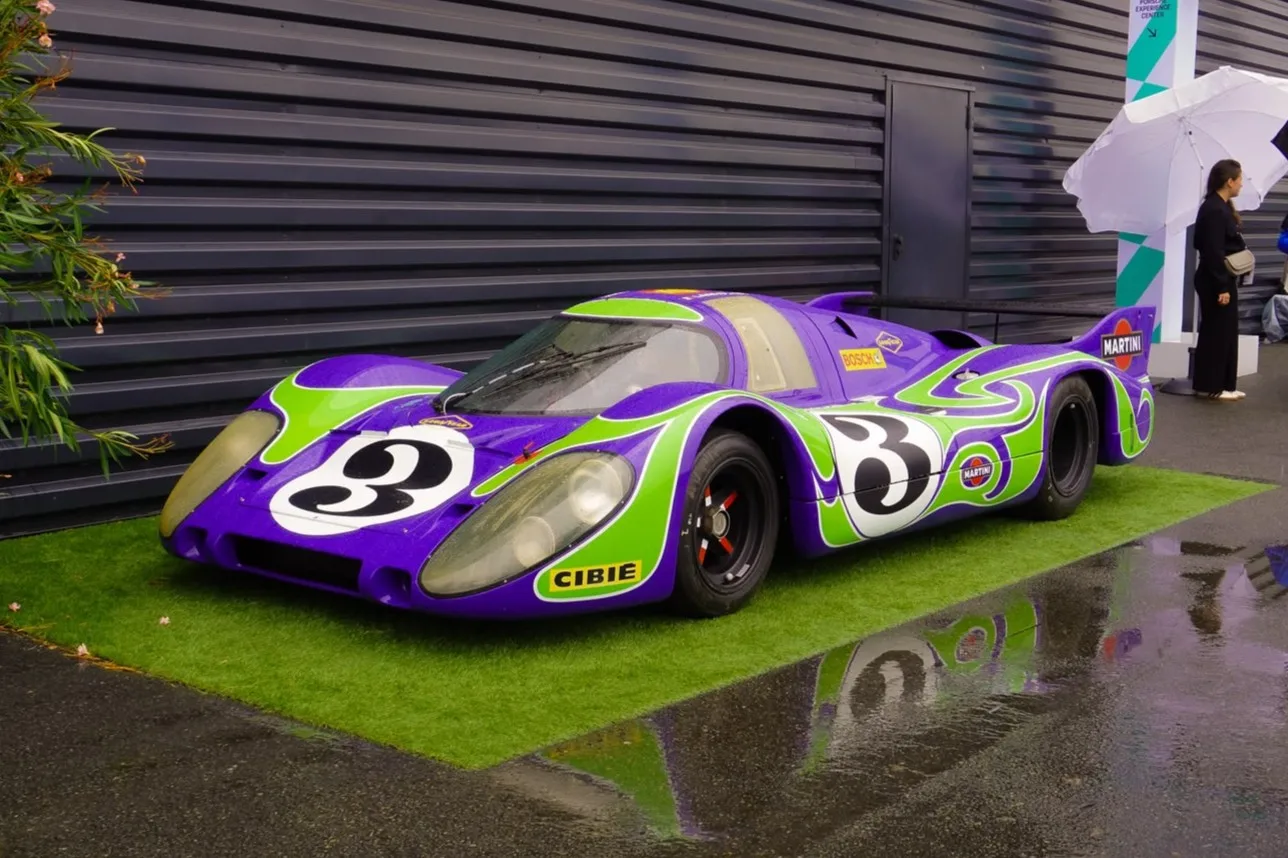
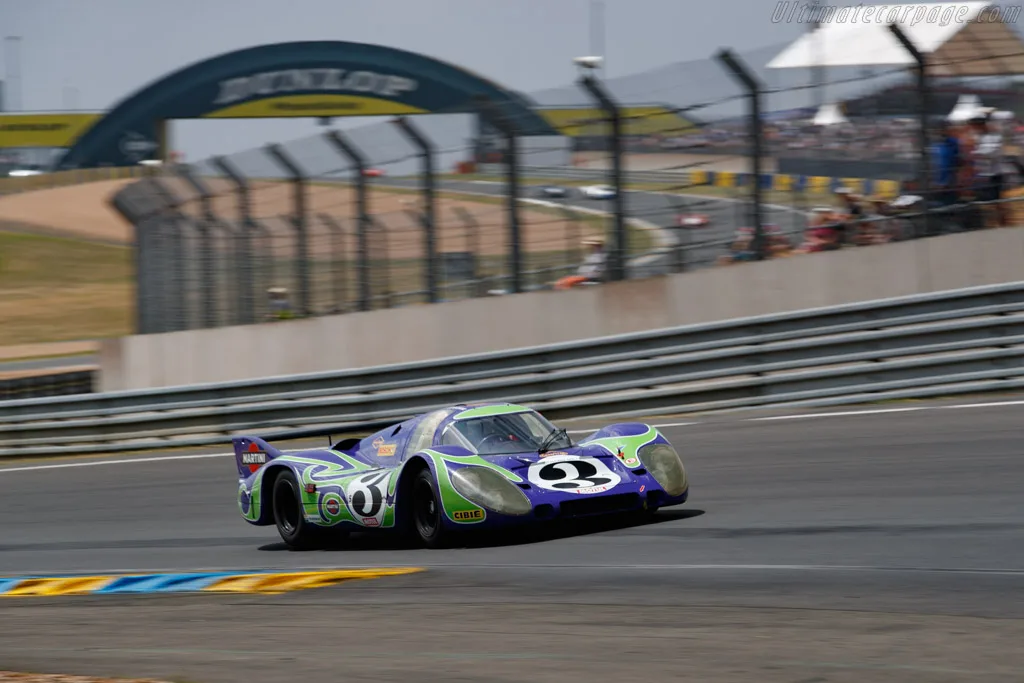
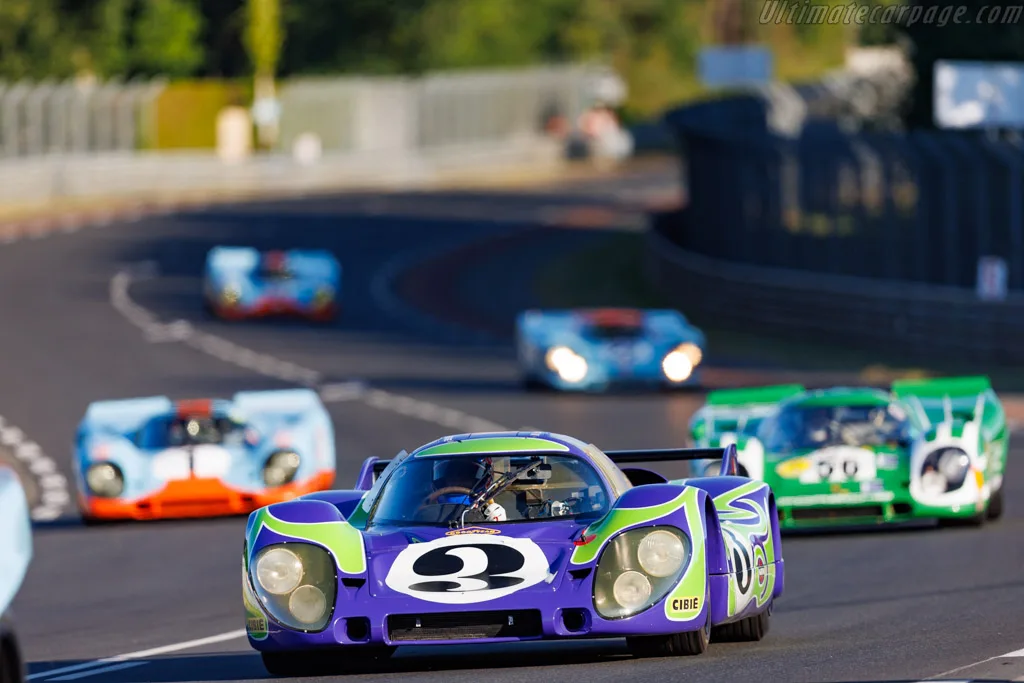
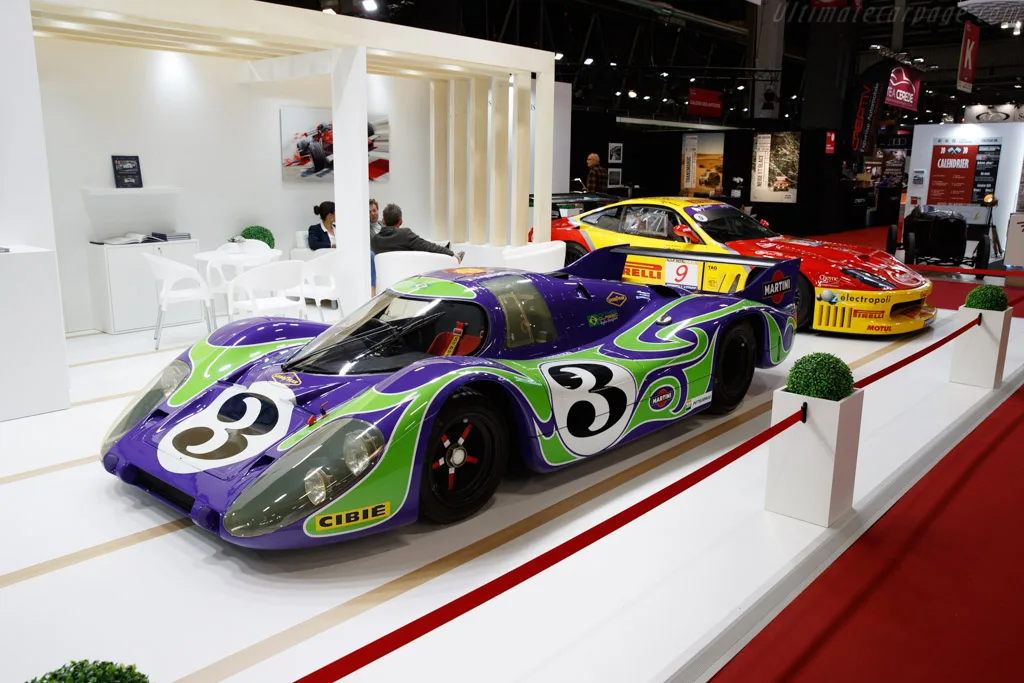
Achevée en juin 1970, la voiture est immédiatement envoyée aux 24 Heures du Mans dans sa configuration « 917 LH 1970 ». Engagée par le Martini Racing Team sous le numéro 3 et confiée à Gérard Larrousse et Willi Kauhsen, elle entre dans la légende grâce à sa livrée psychédélique imaginée par le designer Anatole Lapine. Initialement peinte en blanc avec des volutes violettes, elle reçoit des touches de vert vif le matin même de la course, gagnant instantanément son célèbre surnom de « Hippie Car ». Qualifiée douzième, elle réalise une course magistrale sous une pluie torrentielle pour s'emparer de la deuxième place au classement général (derrière la 917 K n°23) et remporter l'Indice de Rendement Énergétique.
Après ce succès, le châssis 043 est utilisé pour des séances de développement. Le 13 novembre 1970, lors d'essais à Hockenheim, Jo Siffert subit un léger accident causé par la rupture de l'aileron arrière. Sur ordre d'Helmut Flegl, la voiture est minutieusement réparée par les mécaniciens de l'usine, dont Klaus Bischof.
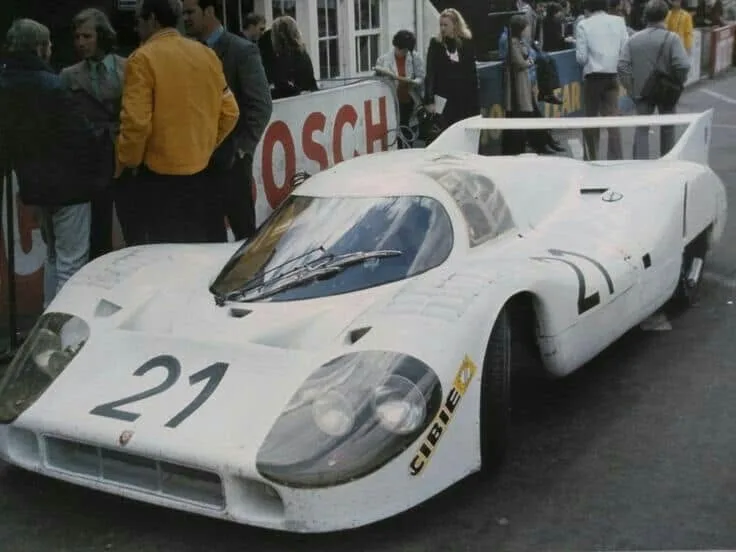
Pour la saison suivante, la voiture évolue profondément et adopte les spécifications aérodynamiques « 917 LH 1971 ». Lors des essais préliminaires du Mans en avril 1971, revêtue d'une robe blanche (n°21), elle marque les esprits : Jackie Oliver y signe un chrono ahurissant de 3’13’’6 (à plus de 250 km/h de moyenne) et atteint la vitesse de pointe vertigineuse de 386 km/h dans la ligne droite des Hunaudières.
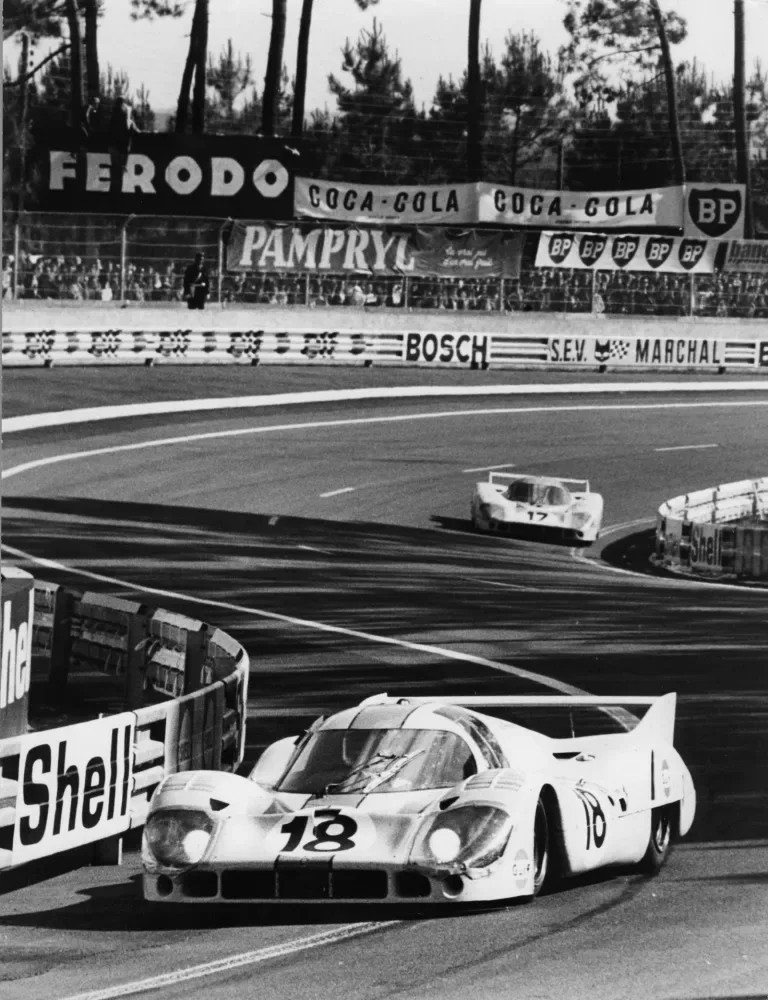
En juin, pour la course des 24 Heures du Mans 1971, la voiture est allouée à l'équipe Gulf-Wyer (John Wyer Automotive Engineering). Son engagement est alors marqué par une subtilité administrative : pour éviter les lourdes démarches et les coûts d'un nouveau carnet douanier ATA, l'équipe soude temporairement la plaque d'identification du châssis 917-009 (une voiture accidentée à Sebring pour laquelle elle possédait déjà les documents) par-dessus la plaque originale 043. C'est donc sous l'identité 009 que la voiture passe le pesage. Parée des couleurs Gulf et flanquée du numéro 18, elle est pilotée par Jackie Oliver et Pedro Rodriguez. Oliver signe la pole position, établissant un record absolu de vitesse et de temps au tour qui tiendra pendant 37 ans. La course s'achève cependant à la quatorzième heure suite à une défaillance du système d'huile externe modifié par Gulf-Wyer. À l'issue de l'épreuve, la fausse plaque 009 est retirée, révélant de nouveau la véritable identité 043.
À l'automne 1971, le museau profilé de la 043 est brièvement greffé sur le prototype Can-Am 917/10-001 pour des tests en soufflerie. L'usine redonne ensuite au châssis 043 sa configuration « 917 LH 1970 » (livrée Hippie) avant de le vendre en 1972 à Vasek Polak. Ce dernier le cède en 1975 au Brésilien Massimo Pedrazzi, qui envisage un temps de la découper pour l'Interserie avant de se raviser. La 043 reste alors jalousement conservée et cachée dans sa collection pendant 47 ans.
Durant ce demi-siècle de disparition inexpliquée, une usurpation d'identité voit le jour. Le châssis de réserve inachevé 917-044 (également racheté blanc par Vasek Polak dans les années 70) est maquillé et repeint aux couleurs « Hippie » après la mort de Polak en 1997 par des marchands peu honnêtes. Vendue aux enchères en 1998 puis donnée au Simeone Foundation Automotive Museum, cette 917-044 y est depuis présentée, à tort, comme la véritable voiture arrivée deuxième au Mans en 1970.
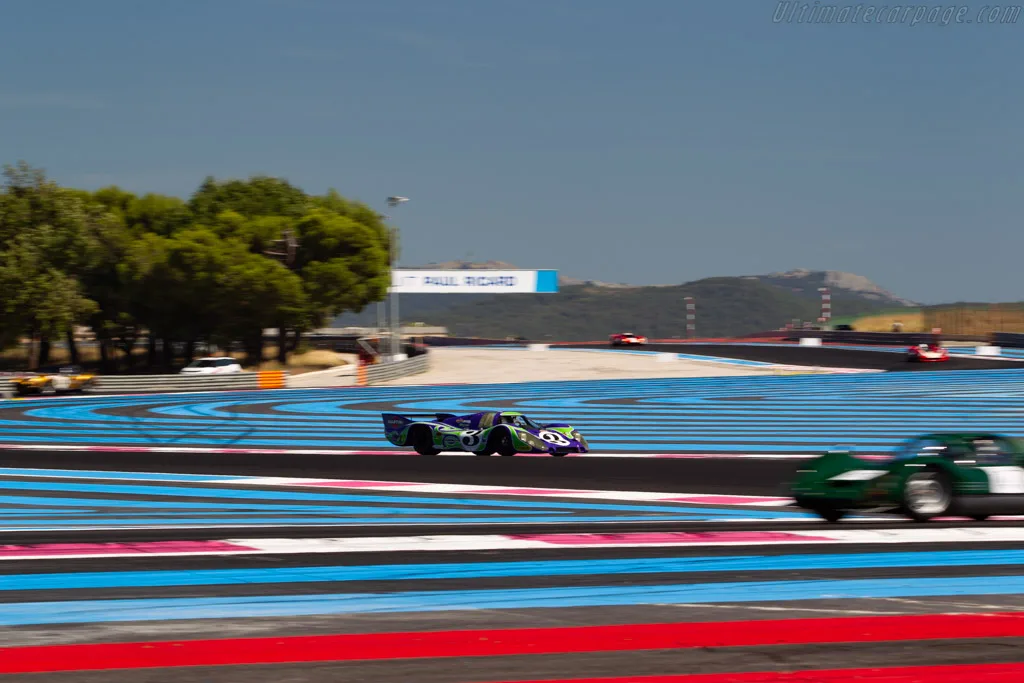
La véritable 043 refait publiquement surface au début des années 2020. Emmenée sur les circuits historiques par Pedrazzi et Gérard Larrousse en personne (notamment aux Dix Mille Tours 2020 et au Mans Classic 2023), elle est vendue fin 2023 pour rejoindre la Sytner Automotive Collection en Angleterre. Parfaitement authentifiée, notamment lors de retrouvailles émouvantes en 2025 à Stuttgart avec Norbert Singer et Klaus Bischof, elle permet à Gérard Larrousse de reprendre le volant au Mans en 2025, 55 ans après son exploit. En 2026, cette authentique légende vivante écume les plus beaux plateaux du monde, du concours The ICE à St Moritz au Chantilly Arts & Elegance, en passant par le Goodwood Festival of Speed et Le Mans Classic en 2026.
The third of five bespoke tubular chassis created for the streamlined bodywork designed by SERA, this Porsche 917—bearing chassis number 917-043—is powered by a 4.5-liter flat-12 engine, producing 630 horsepower in a vehicle weighing 800 kilograms.
Completed in June 1970, the car was immediately sent to the 24 Hours of Le Mans in its "917 LH 1970" configuration. Entered by the Martini Racing Team as car number 3 and driven by Gérard Larrousse and Willi Kauhsen, it became legendary thanks to its psychedelic livery, conceived by designer Anatole Lapine. Originally painted white with purple swirls, it received splashes of bright green on the morning of the race, instantly earning its famous nickname: the "Hippie Car." After qualifying twelfth, it delivered a masterful performance in torrential rain, securing second place overall (behind the #23 917 K) and winning the Index of Energy Efficiency.
Following this success, chassis 043 was used for development testing. On November 13, 1970, during a session at Hockenheim, Jo Siffert was involved in a minor accident caused by the failure of the rear wing. On the instructions of Helmut Flegl, the car was meticulously repaired by factory mechanics, including Klaus Bischof.
For the following season, the car underwent significant evolution, adopting the "917 LH 1971" aerodynamic specifications. During the preliminary tests at Le Mans in April 1971, the car—sporting a white livery (number 21)—made a striking impression: Jackie Oliver clocked an astonishing lap time of 3:13.6 (an average speed of over 250 km/h) and reached a dizzying top speed of 386 km/h on the Hunaudières straight.
In June, for the 1971 24 Hours of Le Mans, the car was assigned to the Gulf-Wyer team (John Wyer Automotive Engineering). Its entry involved an administrative workaround: to avoid the cumbersome procedures and costs associated with obtaining a new ATA carnet (customs document), the team temporarily welded the chassis identification plate of 917-009—a car that had been crashed at Sebring and for which they already held the paperwork—over the original 043 plate. Consequently, the car went through scrutineering under the identity of 009. Decked out in Gulf colors and bearing the number 18, it was driven by Jackie Oliver and Pedro Rodriguez. Oliver secured pole position, setting an absolute speed and lap-time record that would stand for 37 years. However, the race ended for the car in the fourteenth hour due to a failure in the external oil system, which had been modified by Gulf-Wyer. Following the event, the false 009 plate was removed, once again revealing the car's true identity: 043.
In the autumn of 1971, the streamlined nose of chassis 043 was briefly fitted to the 917/10-001 Can-Am prototype for wind-tunnel testing. The factory subsequently restored chassis 043 to its "1970 917 LH" configuration (featuring the "Hippie" livery) before selling it to Vasek Polak in 1972. In 1975, Polak sold the car to the Brazilian Massimo Pedrazzi, who briefly considered cutting it up for use in the Interserie racing series, but ultimately thought better of it. Chassis 043 was then jealously guarded and kept hidden within his collection for 47 years.
During this half-century of unexplained disappearance, a case of mistaken identity—or rather, a deliberate misrepresentation—emerged. An unfinished spare chassis, 917-044 (also purchased in an unpainted state by Vasek Polak in the 1970s), was disguised and repainted in the "Hippie" livery by unscrupulous dealers following Polak’s death in 1997. Sold at auction in 1998 and subsequently donated to the Simeone Foundation Automotive Museum, this 917-044 has since been incorrectly presented there as the actual car that finished second at Le Mans in 1970.
The genuine 043 resurfaced in the public eye in the early 2020s. Taken to historic racing circuits by Pedrazzi and Gérard Larrousse himself—most notably for the 2020 "Dix Mille Tours" and the 2023 Le Mans Classic—the car was sold in late 2023 and joined the Sytner Automotive Collection in England. Having been fully authenticated—most notably during an emotional reunion in 2025 in Stuttgart with Norbert Singer and Klaus Bischof—the car allowed Gérard Larrousse to get back behind the wheel at Le Mans in 2025, 55 years after his original achievement. In 2026, this true living legend is gracing the world’s most prestigious stages—from The ICE in St. Moritz and Chantilly Arts & Elegance to the Goodwood Festival of Speed and Le Mans Classic.
.webp)
.webp)
.webp)
.webp)
.webp)
.webp)
.webp)
.webp)
.webp)
.webp)