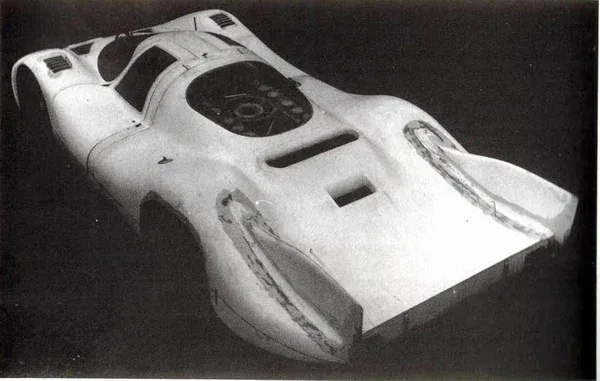
De couleur blanche, la Porsche 917 portant le numéro de châssis 917-040 occupe une place singulière et dramatique dans l'histoire du modèle. Équipée du moteur V12 à plat de 4,5 litres (4494 cm³) à pompe à injection délivrant 630 chevaux pour un poids de 800 kilos, elle est la toute première Porsche 917 construite spécifiquement dans la configuration « Longue Queue » (Langheck). Cette version à faible traînée aérodynamique a été créée exclusivement pour affronter les vitesses extrêmes des lignes droites des 24 Heures du Mans. Outre sa carrosserie inédite conçue d'après un dessin de la société française SERA, cette version à longue queue se distingue par l'utilisation d'un châssis tubulaire différent de celui des autres modèles.
Assemblé en réutilisant plusieurs pièces provenant du châssis 006, le châssis 040 est conservé par l'usine Porsche KG. Dès son achèvement, la voiture est emmenée le 7 avril 1970 sur le circuit d'essai Volkswagen d'Ehra-Lessien (Basse-Saxe), dont la gigantesque ligne droite de 5,4 miles constitue le terrain d'essai idéal pour préparer Le Mans. Les conditions météorologiques de cette journée de tests à haute vitesse sont particulièrement piégeuses : un temps froid et humide, de la neige aux abords de la piste, et une alternance de courtes averses soudaines et de grand soleil.
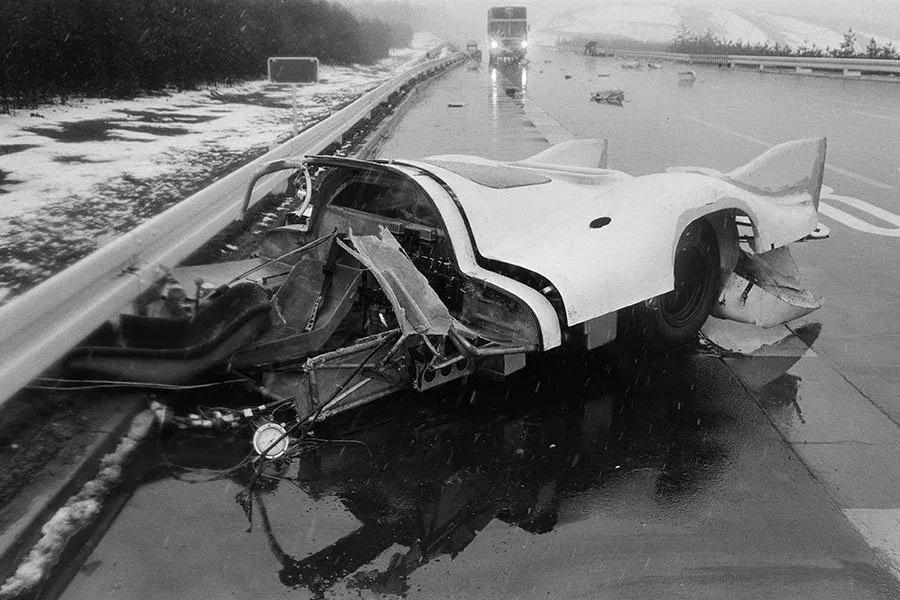
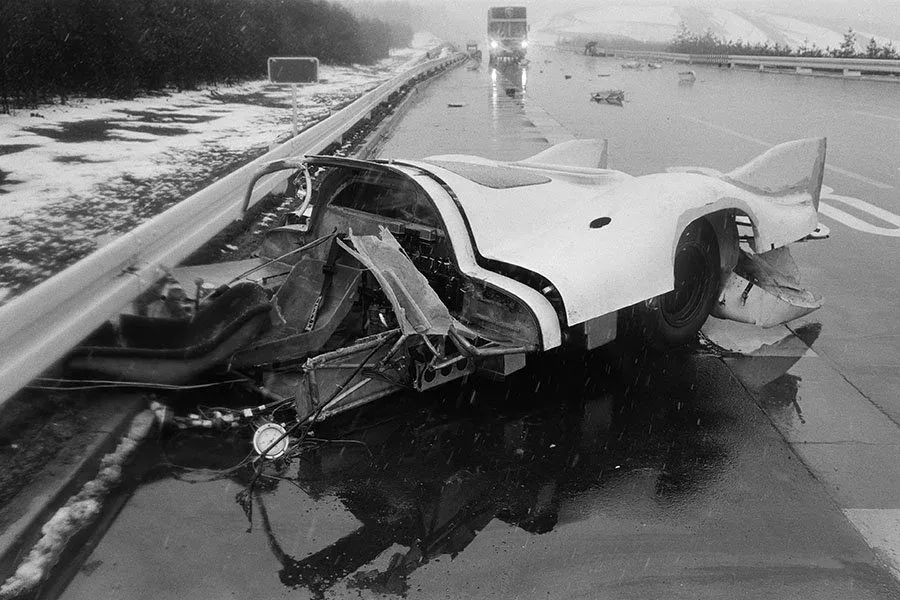
Après quelques tours effectués en pneus slicks, le pilote autrichien Ahrens aborde une courbe se négociant normalement à fond à près de 200 mph (environ 320 km/h). Remarquant un objet étrange miroitement sur la chaussée, il lève le pied pour ralentir à environ 155 mph (250 km/h), mais réalise qu'une flaque d'eau localisée inonde entièrement la piste. La 917 part violemment en aquaplaning, traverse la piste et percute la glissière de sécurité opposée. L'impact est si brutal que la voiture est littéralement coupée en deux.
La partie avant du châssis s'encastre sous la barrière, tandis que la partie arrière — dans laquelle Ahrens est toujours sanglé à sa place — poursuit sa course à grande vitesse. Après avoir glissé sur 200 mètres, l'arrière s'écrase en diagonale contre un rail, piégeant temporairement les jambes du pilote en dessous. Ayant réussi à s'extraire avec précaution, l'Autrichien s'en sort miraculeusement sans blessure grave, souffrant principalement d'une contusion au foie et d'hématomes internes l'empêchant de participer aux 1000 Kilomètres de Brands Hatch et aux essais du Mans (il sera néanmoins de retour au volant d'une autre 917 pour les 1000 Kilomètres de Monza moins de trois semaines plus tard).
Totalement détruit et brisé en deux lors de cet accident, le châssis 040 a été définitivement mis à la ferraille.