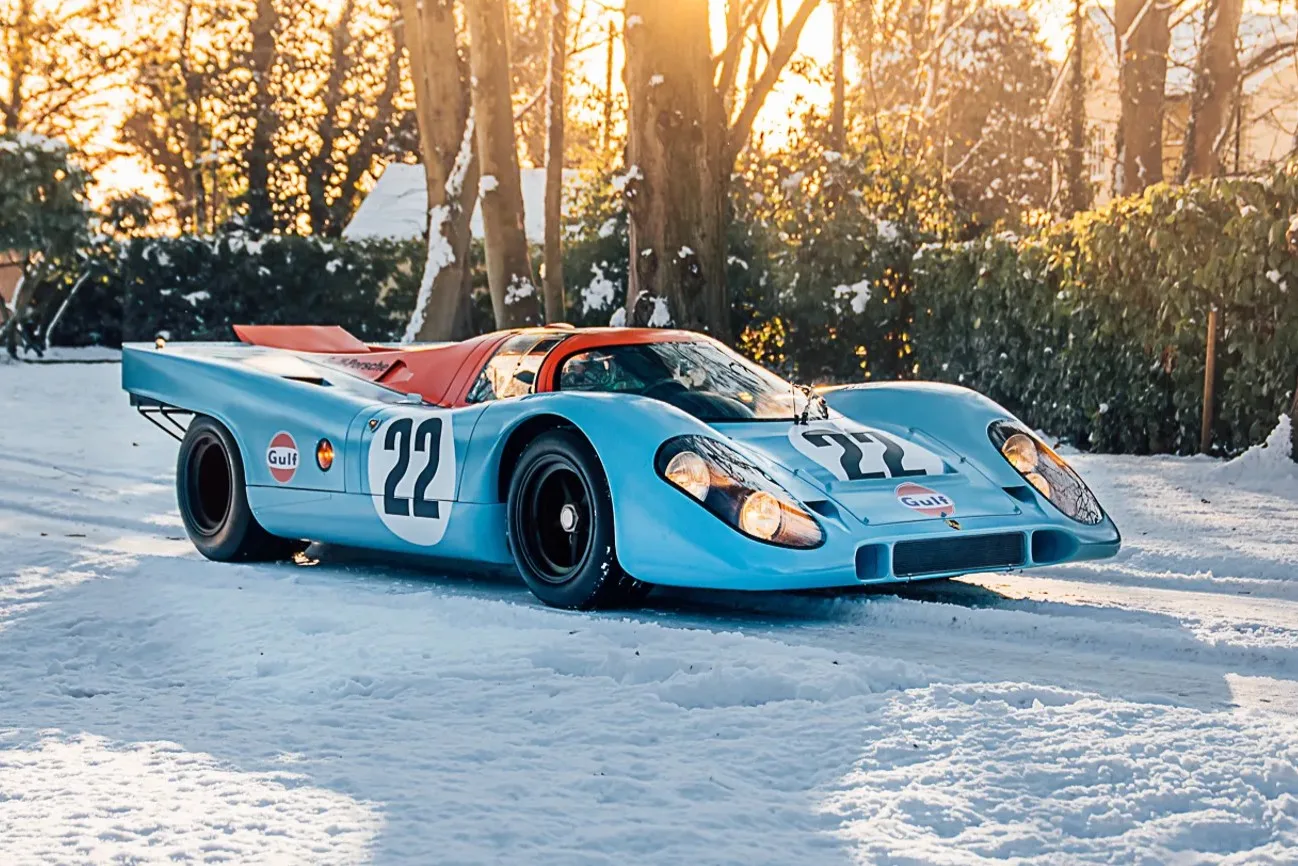
Sortie des ateliers de Stuttgart en décembre 1969, cette Porsche 917 porte le numéro de châssis 917-026 (également étroitement associé à l'historique de la coque 031 suite à des interversions administratives de carnets). Animée par le célèbre moteur V12 à plat de 4,5 litres (4494 cm³) alimenté par une pompe à injection, développant 600 chevaux pour un poids de 800 kilos, elle arbore à l'origine la mythique livrée *Gulf* (bleu et orange) de l'écurie de John Wyer.
Le châssis 026 fait ses débuts en compétition lors des 24 Heures du Mans 1970 au sein de l'équipe officielle Gulf (voiture n°22), piloté par David Hobbs et Mike Hailwood. Qualifié en dixième position, l'équipage est contraint à l'abandon après un accident d'Hailwood suite à un aquaplaning lors de la cinquième heure de course.
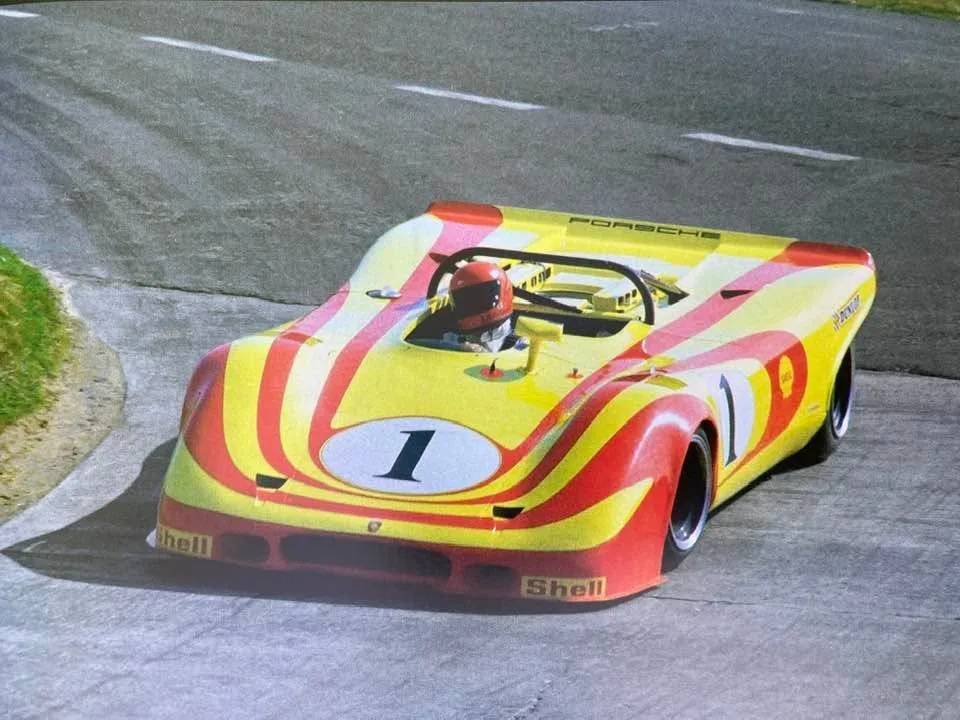
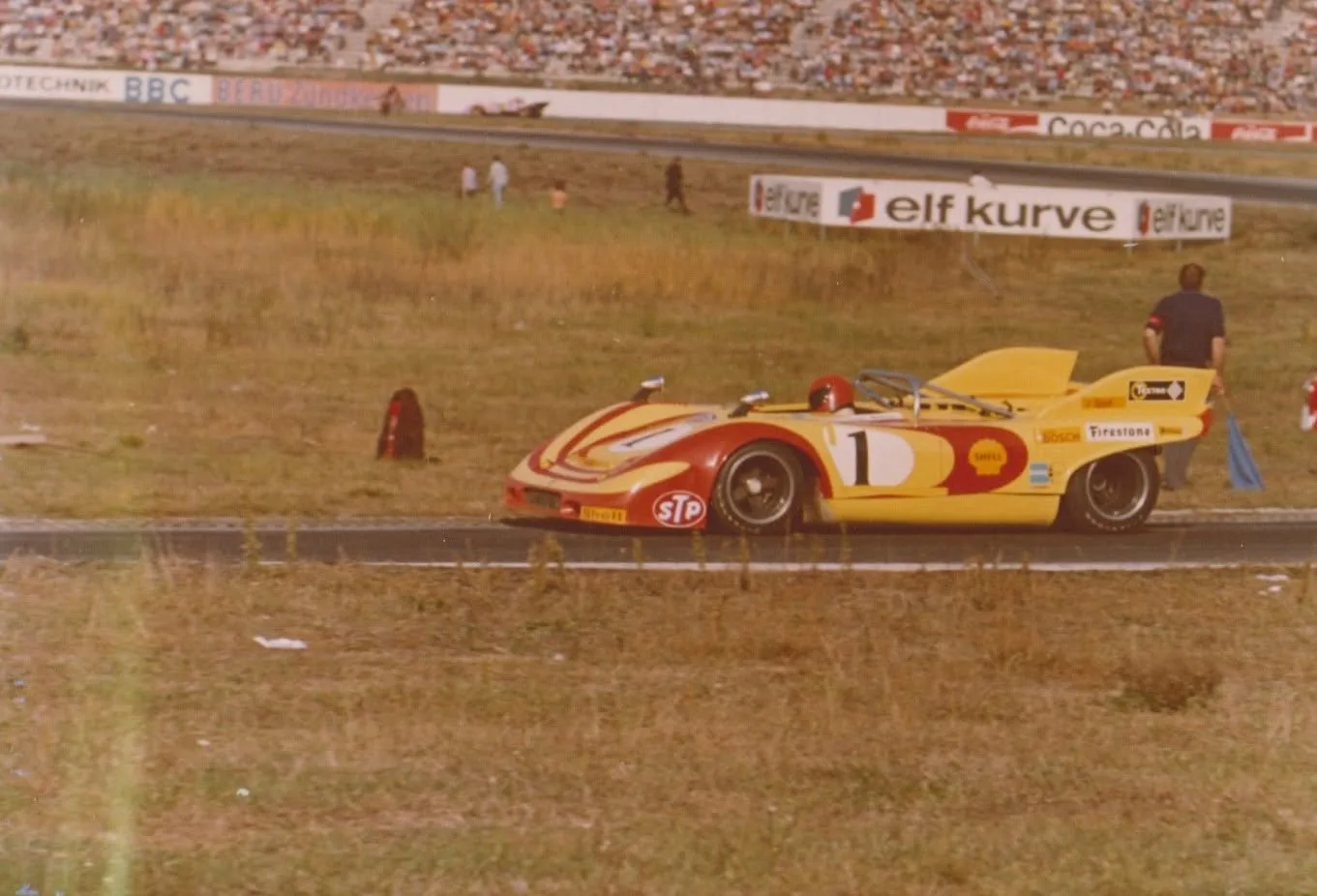
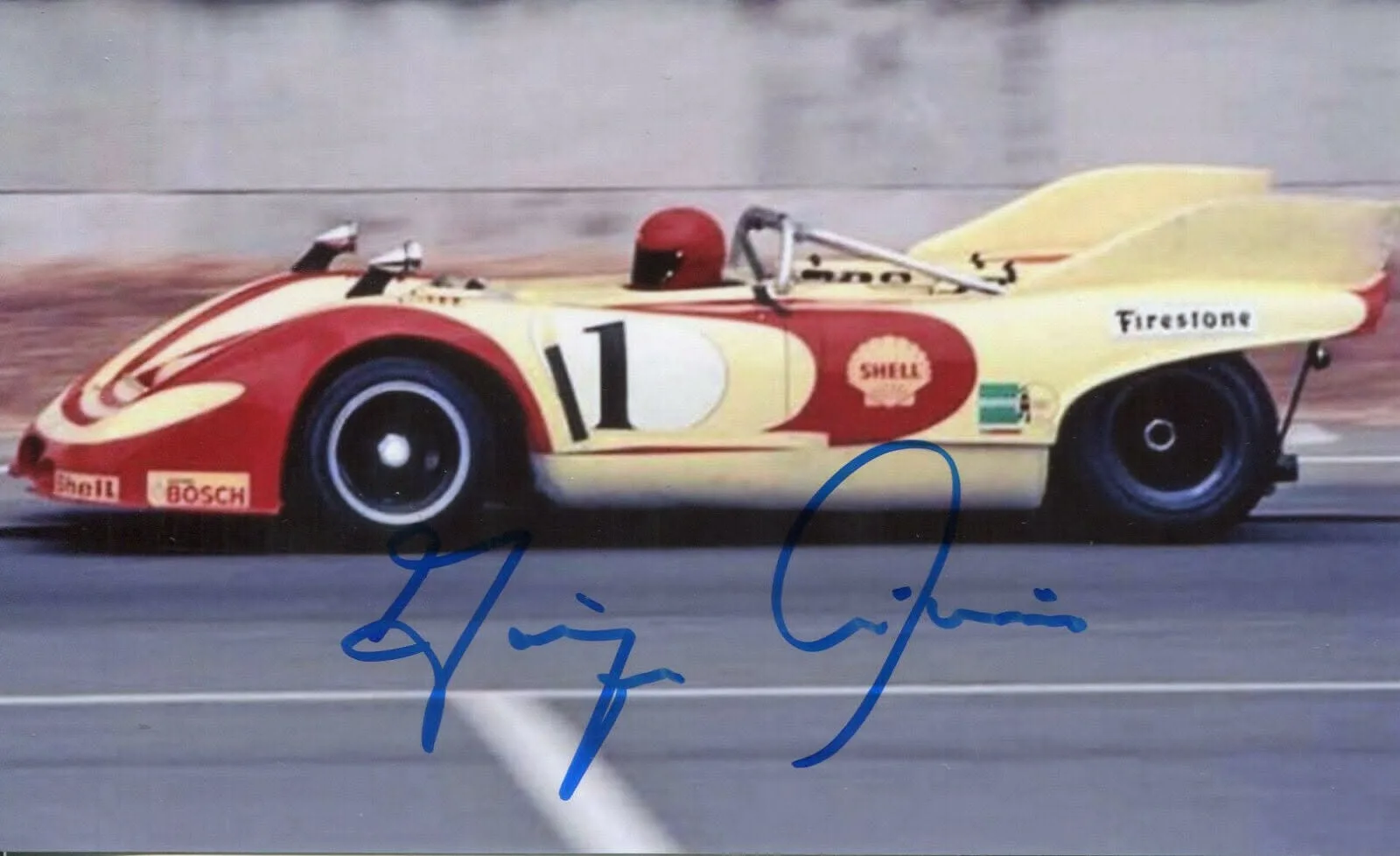
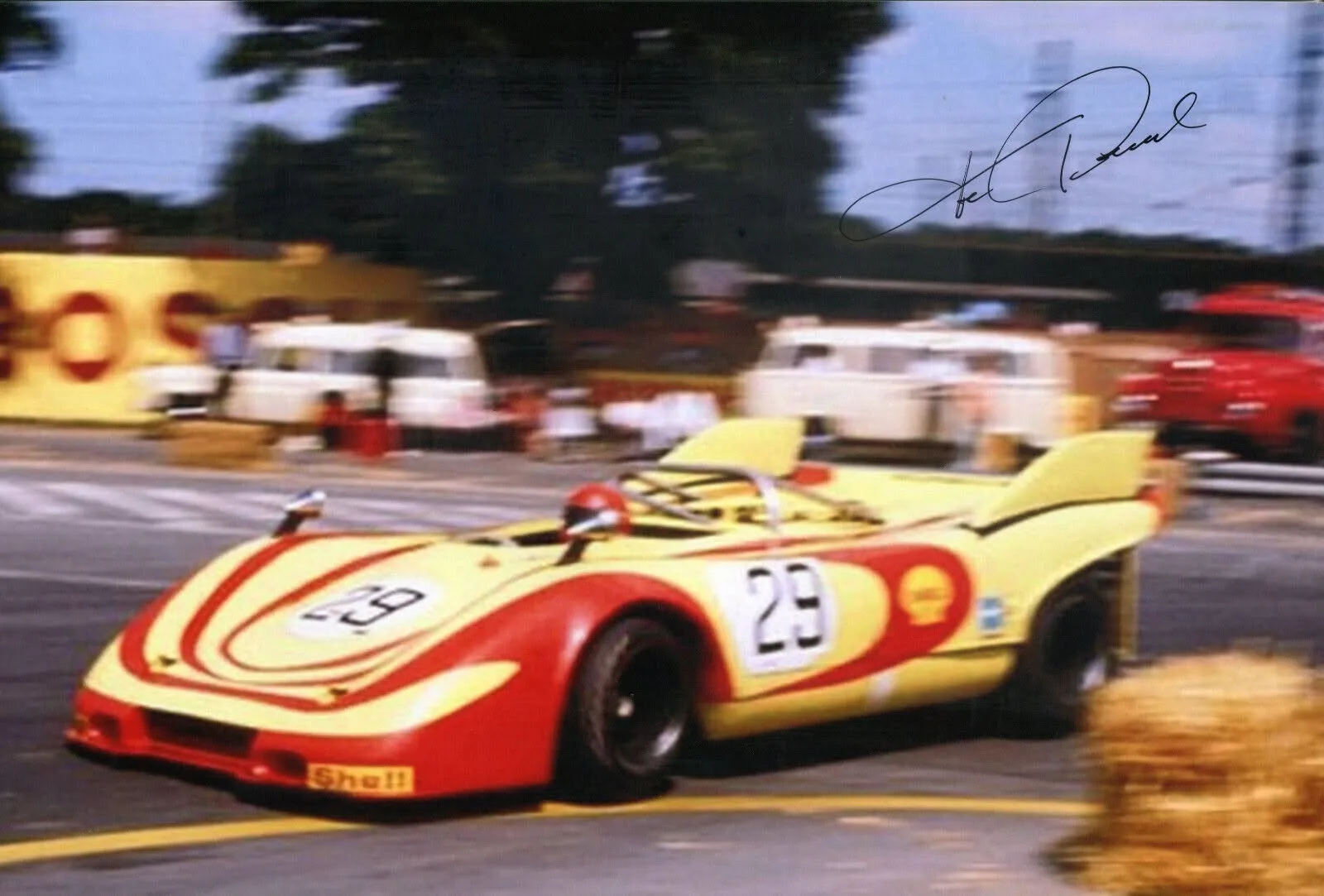
De retour à l'usine Porsche, le châssis est réparé et converti en version ouverte (Spyder Groupe 7) pour le pilote allemand Jürgen Neuhaus, désireux de défendre son titre en championnat Interserie pour la saison 1971. Revêtue d'une spectaculaire livrée rouge et jaune aux couleurs de son sponsor Shell, la voiture enchaîne les manches d'Interserie et s'illustre particulièrement lors d'épreuves nationales et de courses de côte (avec des victoires notables au Nürburgring, à Mainz-Finthen et à Mendig).
En 1972, la voiture est acquise par le promoteur immobilier et gentleman driver Georg Loos pour son écurie, le GELO Racing Team, et pilotée en Interserie par Franz Pesch puis par le futur vainqueur du Mans Jürgen Barth jusqu'en 1973.
Après sa période en configuration Spyder, la voiture connaît une trajectoire de collection et de conservation remarquable :
- 1974 : vendue à Olivier Chandon (héritier de la fortune Moët & Chandon) pour intégrer la collection Chandon à Saint-Avit-de-Tardes / Haute-Marne, où elle reste jusqu'à son décès tragique en 1983.
- 1987 : acquise par le collectionneur américain Mike Amalfitano, qui la conserve précieusement pendant plus de trente ans.
- 2010-2012 : passe entre les mains de collectionneurs (dont Aaron Hsu et Shaun Lynn), avant d'être confiée aux ateliers de Lanzante pour une restauration complète visant à lui redonner sa configuration d'origine de Coupé Gulf de 1970.
- 2023 : proposée à la vente par le courtier Gregor Fiskens lors du salon Rétromobile pour la somme de 22 millions d'euros, elle rejoint la collection de Richard Mille la même année.
Au cours de sa longue existence, cette 917 a participé à de nombreux événements et concours d'élégance de premier plan, parmi lesquels le Heveningham Concours (2017) ainsi que des expositions prestigieuses au Musée des 24 Heures du Mans, au Musée du Sport Automobile (M24) et lors de la Global 917 Reunion à la lustrerie Mathieu.
Emerging from the Stuttgart workshops in December 1969, this Porsche 917 bears chassis number 917-026 (a designation also closely linked to the history of chassis 031, following some administrative confusion involving the vehicle logbooks). Powered by the renowned 4.5-liter (4,494 cc) flat-12 engine—equipped with a fuel-injection pump and producing 600 horsepower—the car weighs in at 800 kilograms. Originally, it sported the iconic *Gulf* livery (blue and orange) associated with John Wyer’s racing team.
Chassis 026 made its competitive debut at the 1970 24 Hours of Le Mans as part of the official Gulf team (car no. 22), driven by David Hobbs and Mike Hailwood. After qualifying in tenth position, the pair was forced to retire when Hailwood hydroplaned and crashed during the fifth hour of the race.
Upon its return to the Porsche factory, the chassis was repaired and converted into an open-top configuration (Group 7 Spyder) for German driver Jürgen Neuhaus, who sought to defend his Interserie championship title for the 1971 season. Finished in a striking red and yellow livery—the colors of his sponsor, Shell—the car competed in various Interserie rounds and distinguished itself in several national events and hill climbs (securing notable victories at the Nürburgring, Mainz-Finthen, and Mendig). In 1972, the car was acquired by real estate developer and gentleman driver Georg Loos for his racing outfit, GELO Racing Team. It was campaigned in the Interserie championship by Franz Pesch and subsequently by Jürgen Barth—who would later go on to win at Le Mans—until 1973.
Following its time in Spyder configuration, the car’s history as a collector’s piece is particularly notable:
- 1974: Sold to Olivier Chandon (heir to the Moët & Chandon fortune), it became part of the Chandon collection in Saint-Avit-de-Tardes (Haute-Marne), where it remained until his tragic death in 1983.
- 1987: Acquired by American collector Mike Amalfitano, who carefully preserved it for over thirty years.
- 2010–2012: Passed through the hands of various collectors (including Aaron Hsu and Shaun Lynn) before being entrusted to the workshops at Lanzante for a comprehensive restoration, returning it to its original 1970 Gulf Coupé configuration.
- 2023: Offered for sale by broker Gregor Fiskens at the Rétromobile show for €22 million, it joined Richard Mille’s collection that same year.
Throughout its long existence, this 917 has appeared at numerous high-profile events and concours d’élégance, including the Heveningham Concours (2017), as well as prestigious exhibitions at the 24 Hours of Le Mans Museum, the Motorsport Museum (M24), and the Global 917 Reunion held at the Mathieu lighting workshops (Lustrerie Mathieu).
.webp)
.webp)
.webp)
.webp)
.webp)
.webp)
.webp)
.webp)
.webp)
.webp)
.webp)
.webp)
.webp)