Sortie des ateliers de Stuttgart le 21 avril 1969 pour la présentation officielle de l'homologation FIA (avant d'être brièvement démontée puis remontée en spécification courte Kurzheck), cette remarquable Porsche 917 porte le numéro de châssis 917-022. Propulsée par le monstrueux moteur V12 à plat de 4,5 litres (4494 cm³) alimenté par une pompe à injection et développant 600 chevaux pour un poids de 800 kilos, elle possède un pedigree cinématographique et sportif absolument unique.
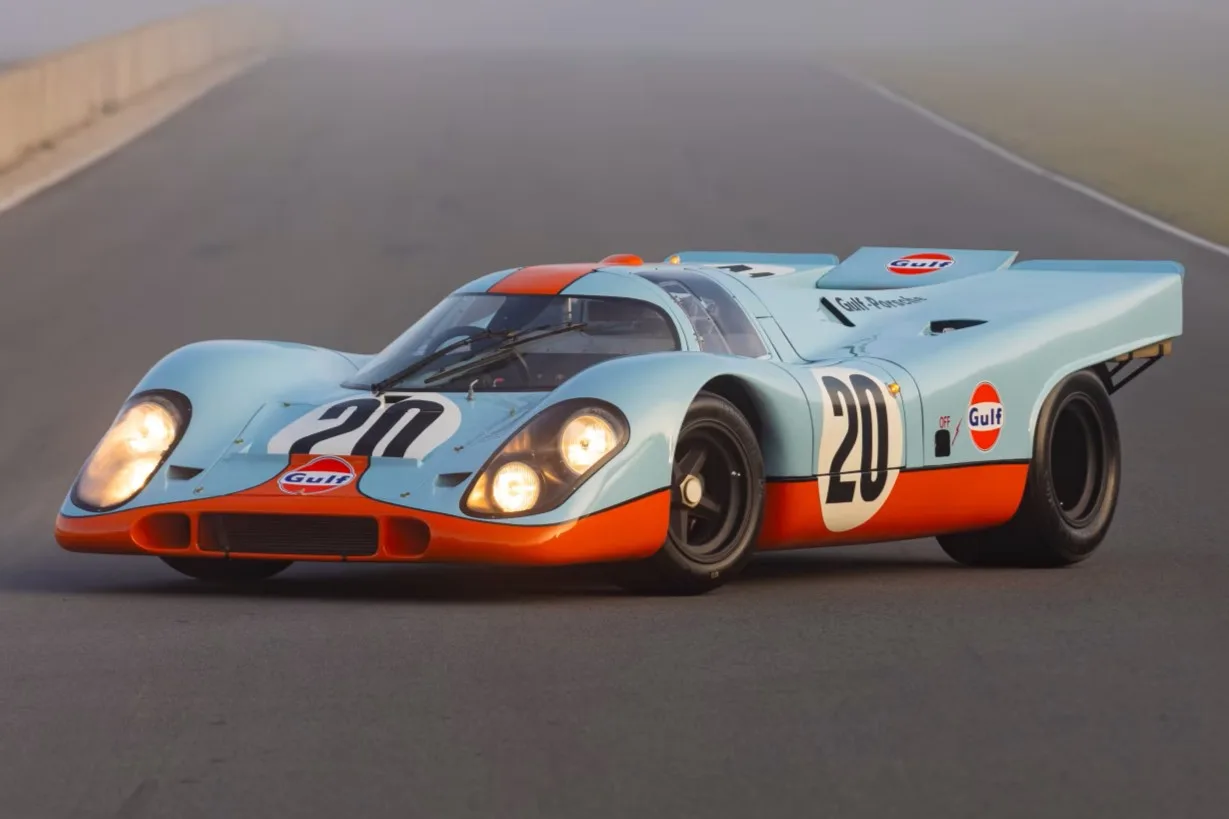
Après avoir passé les cinq premiers mois de 1970 à l'usine en tant que voiture de réserve, le châssis est vendu à la société Solar Productions pour les besoins du tournage du film culte Le Mans de Steve McQueen. Revêtue de la mythique livrée Gulf (bleu et orange) et arborant le numéro 20, la voiture participe activement aux prises de vue menées entre juin et novembre 1970.
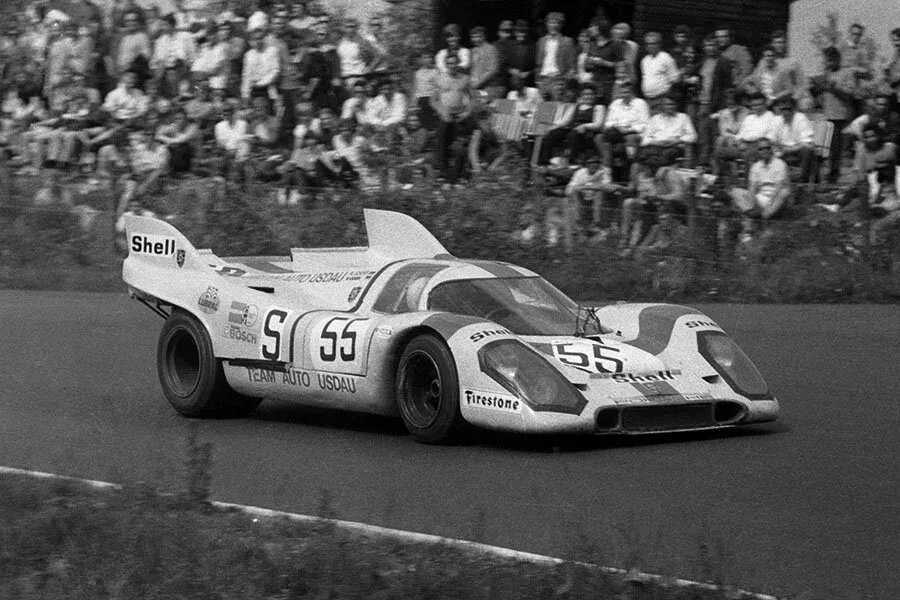
À l'issue du tournage, la 022 est acquise par le pilote allemand Reinhold Jöst. Pour la saison 1971, Jöst s'associe à Willi Kauhsen sous la bannière du Team Auto Usdau (soutenu par une concession Mercedes-Benz de Mannheim), faisant évoluer la voiture au gré de livrées et de configurations très changeantes :
- Buenos Aires 1000 km (10 janvier 1971) : vêtue d'une livrée bleu Gulf rehaussée de rouge, la voiture (n°48) est confiée à Jöst et à l'Argentin Engel Monguzzi (ce dernier remplaçant au pied levé Kauhsen, cloué au lit par la grippe). Elle abandonne sur problème moteur au 85e tour.
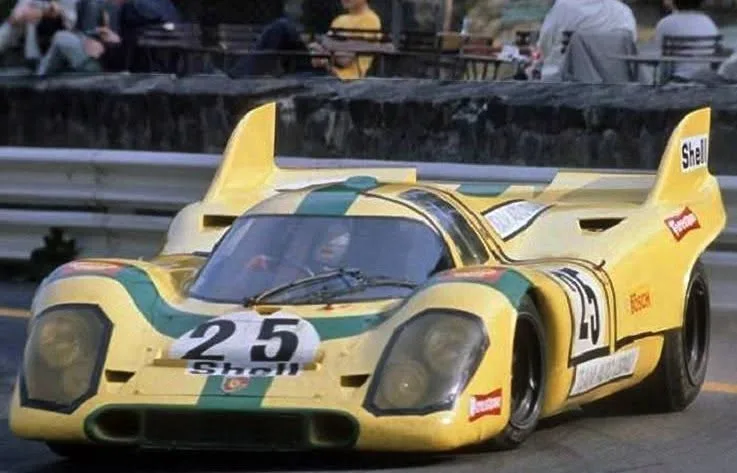
- Campagne européenne (printemps 1971) : repeinte dans une audacieuse livrée jaune et verte, la voiture revient en Europe pour s'illustrer aux 1000 Kilomètres de Brands Hatch (sixième place avec Kauhsen et Jöst). Elle adopte ensuite les spécifications complètes *917/71 K* pour enchaîner les excellents résultats en Championnat du Monde : septième aux 1000 Kilomètres de Monza, brillante quatrième aux 1000 Kilomètres de Spa, puis une solide sixième place aux 1000 Kilomètres du Nürburgring en mai 1971, synonyme de victoire dans la classe 5 litres (les écuries officielles privilégiant alors les agiles 908/03).
- Vallelunga et Zolder (juin 1971) : engagée hors-championnat au Grand Prix de la République à Vallelunga, la voiture est confiée au légendaire Jo Siffert. Siffert, parti du fond de la grille après avoir manqué les essais, hisse vaillamment le châssis (qui accuse alors plus de 92 heures de fonctionnement sans révision) à une superbe deuxième place finale derrière la Ferrari de Mike Parkes. Une dernière tentative est menée quatre jours plus tard en Interserie à Zolder, mais le moteur rend l'âme dès les essais.
Retirée de la compétition active, la 022 entame une paisible reconversion entre les mains de pilotes de renom : vendue à Brian Redman en 1975, elle est cédée à Richard Attwood en 1978. Au cours des années 1980, la voiture est repeinte dans sa livrée historique *Gulf*, avant d'être à nouveau modifiée dans les années 1990 : Richard Attwood décide en effet de la faire repeindre aux couleurs Salzburg Red*, imitant la fameuse livrée rouge et blanche de la 917-023 avec laquelle il avait triomphé aux 24 Heures du Le Mans en 1970 (la véritable 917-023 se trouvant alors encore au Japon à cette époque). Les connaisseurs discernent toutefois un détail distinctif trahissant cette transformation : un autocollant bleu présent sur le capot arrière, absent sur la authentique 917-023 victorieuse.
La trajectoire de la voiture se poursuit à travers l'Atlantique : acquise par Frank Gallogly en 2000, elle rejoint en 2001 la prestigieuse collection de l'célèbre humoriste et producteur américain Jerry Seinfeld.
Emerging from the Stuttgart workshops on April 21, 1969, for the official FIA homologation presentation—before being briefly disassembled and reassembled in the short-tail (*Kurzheck*) configuration—this remarkable Porsche 917 bears the chassis number 917-022. Powered by a monstrous 4.5-liter (4,494 cc) flat-12 engine equipped with an injection pump and producing 600 horsepower—all within an 800-kilogram frame—it possesses a truly unique pedigree, spanning both the world of motorsport and cinema.
After spending the first five months of 1970 at the factory as a reserve car, the chassis was sold to Solar Productions for use in the filming of Steve McQueen’s cult classic, *Le Mans*. Adorned in the iconic Gulf livery (blue and orange) and bearing the number 20, the car played an active role during the filming, which took place between June and November 1970.
Following the conclusion of filming, chassis 022 was acquired by German racing driver Reinhold Jöst. For the 1971 season, Jöst partnered with Willi Kauhsen under the banner of Team Auto Usdau (supported by a Mercedes-Benz dealership in Mannheim), during which time the car underwent frequent changes in both its livery and technical configuration:
- 1000 km of Buenos Aires (January 10, 1971): Sporting a Gulf-blue livery accented with red, the car (No. 48) was driven by Jöst and Argentine driver Engel Monguzzi—who stepped in at the last minute to replace Kauhsen, the latter having been sidelined by the flu. The car was forced to retire on the 85th lap due to an engine issue. - European Campaign (Spring 1971): Repainted in a bold yellow and green livery, the car returned to Europe to compete in the 1000 Kilometers of Brands Hatch, where it finished sixth with drivers Kauhsen and Jöst. It was subsequently upgraded to full *917/71 K* specifications, going on to achieve a string of excellent results in the World Championship: seventh at the 1000 Kilometers of Monza, an impressive fourth at the 1000 Kilometers of Spa, and a solid sixth-place finish at the 1000 Kilometers of the Nürburgring in May 1971—a result that secured a class win in the 5-liter category (at a time when the factory teams were favoring the more agile 908/03 models).
- Vallelunga and Zolder (June 1971): Entered in the non-championship Grand Prix of the Republic at Vallelunga, the car was entrusted to the legendary Jo Siffert. Starting from the back of the grid after missing the practice sessions, Siffert valiantly piloted the chassis—which by then had logged over 92 hours of running time without an overhaul—to a superb second-place finish behind the Ferrari driven by Mike Parkes. A final outing took place four days later at an Interserie event in Zolder, but the engine failed during practice. Retired from active competition, the 022 began a quiet second act in the hands of renowned drivers: sold to Brian Redman in 1975, it later passed to Richard Attwood in 1978. During the 1980s, the car was repainted in its historic *Gulf* livery, before undergoing further modifications in the 1990s—Richard Attwood opted to have it repainted in the *Salzburg Red* color scheme, mimicking the famous red-and-white livery of the 917-023 in which he had triumphed at the 1970 24 Hours of Le Mans (the actual 917-023 was still in Japan at the time). Connoisseurs, however, can spot a telltale detail that reveals this transformation: a blue decal on the rear bodywork, which was absent on the authentic, race-winning 917-023.
The car’s journey continued across the Atlantic; acquired by Frank Gallogly in 2000, it joined the prestigious collection of the celebrated American comedian and producer Jerry Seinfeld in 2001.
.webp)
.webp)
.webp)
.webp)
.webp)
.webp)
.webp)
.webp)
.webp)
.webp)
.webp)
.webp)
.webp)