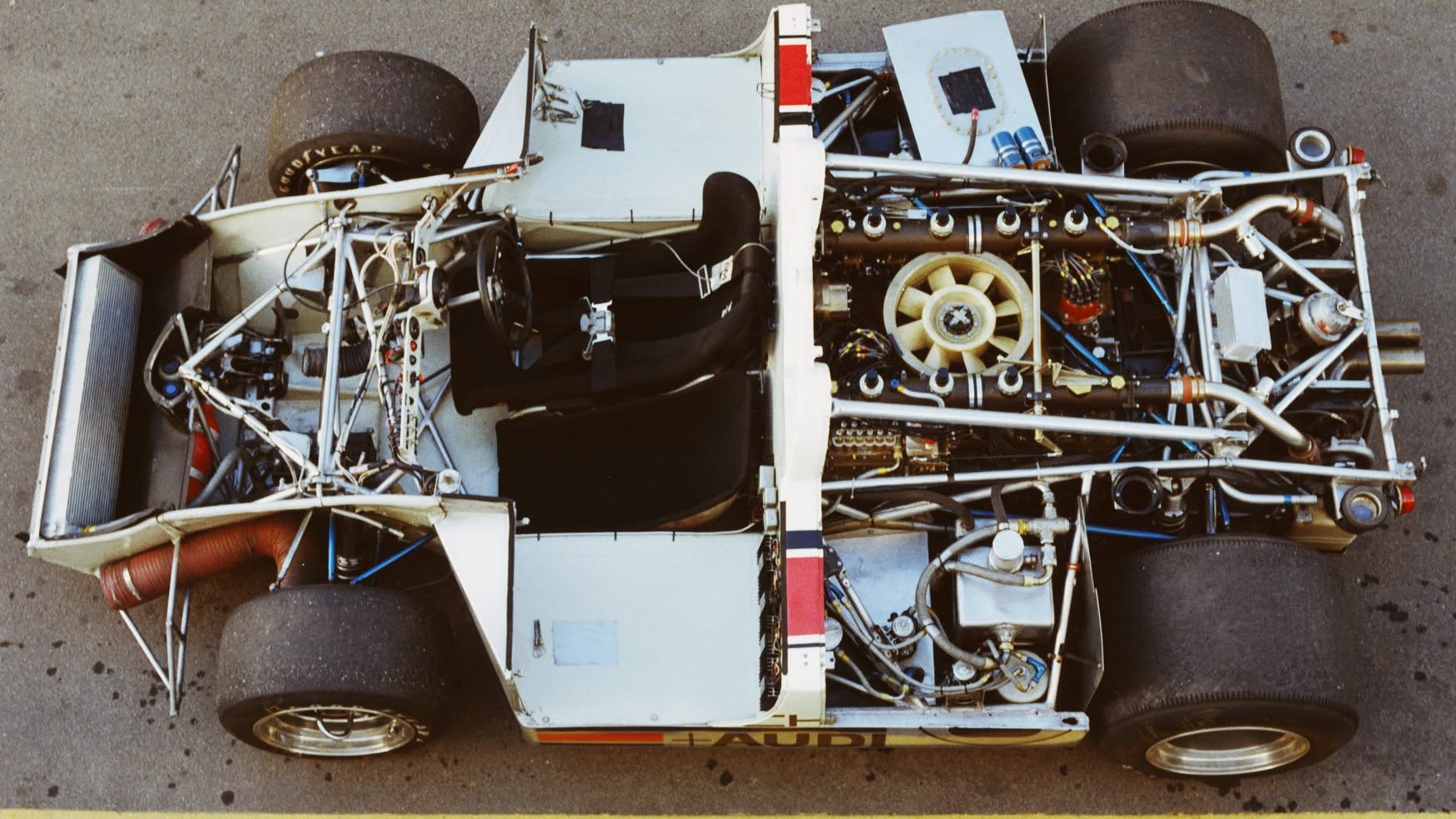
Présentée pour la saison 1971, la Porsche 917/10 représente l'évolution ouverte de la légendaire 917 conçue pour les compétitions nord-américaines de type Can-Am. Libérée des contraintes de l'endurance et des règlements de la FIA, cette nouvelle version abandonne la carrosserie fermée des 917K et 917LH au profit d'une configuration spyder plus légère et mieux adaptée aux courses sprint disputées sur les circuits américains.
Basée sur l'architecture générale de la 917, la 917/10 conserve son châssis tubulaire en alliage léger ainsi que son moteur douze cylindres à plat refroidi par air. Les premiers exemplaires sont équipés d'un moteur atmosphérique de près de cinq litres développant plus de 600 chevaux, mais Porsche et son partenaire Penske Racing comprennent rapidement que le potentiel du moteur est bien supérieur. Dès 1972 apparaît la spectaculaire 917/10 Turbo, équipée de deux turbocompresseurs et d'une injection Bosch perfectionnée.
Cette transformation métamorphose les performances de la voiture. Selon la pression de suralimentation utilisée, la puissance dépasse largement les 800 chevaux et peut approcher les 900 chevaux en configuration de course. Associée à un poids contenu et à une aérodynamique optimisée, cette cavalerie permet à la 917/10 de dominer la série Can-Am face à McLaren, jusque-là référence incontestée de la discipline.
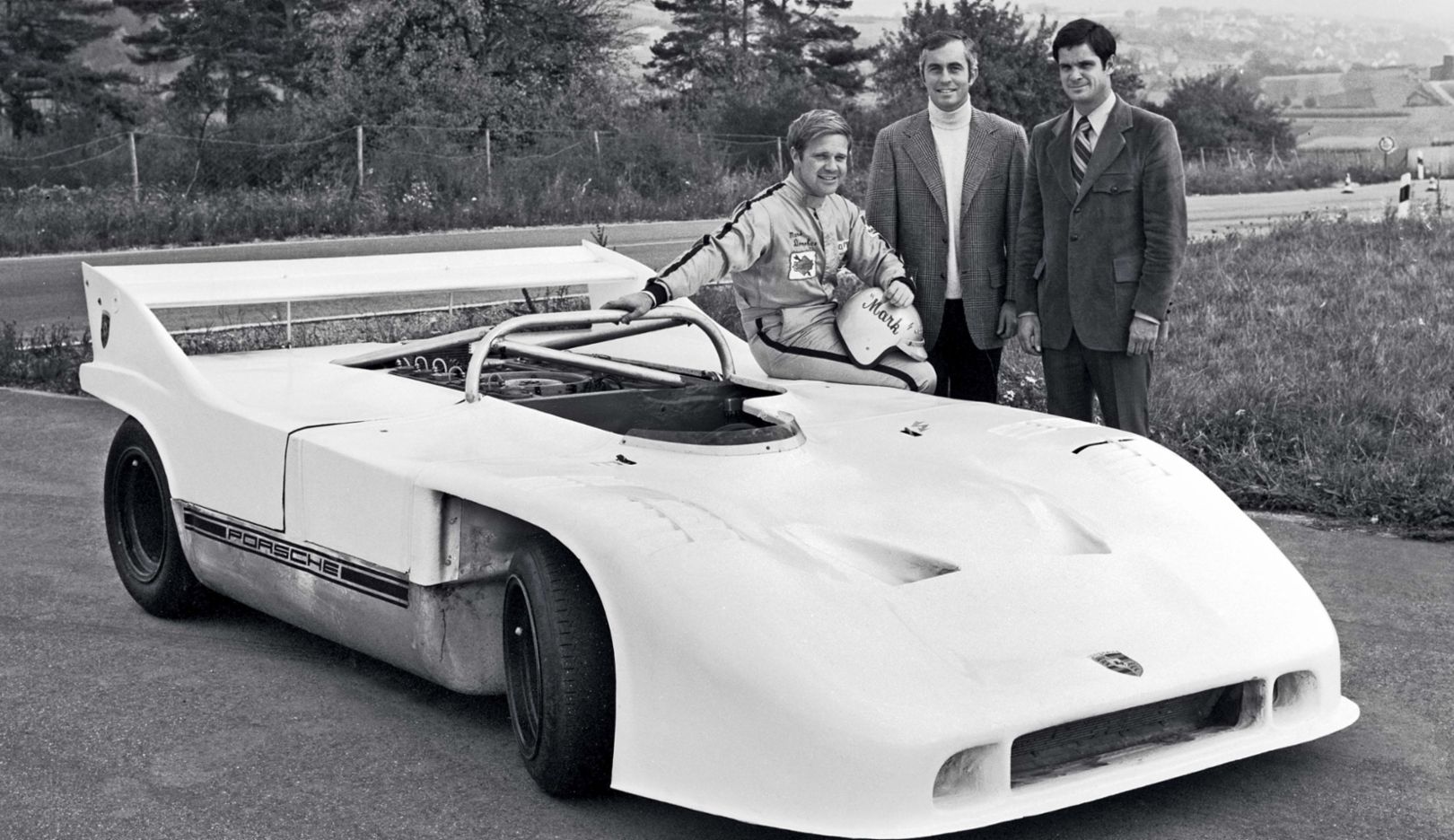
Engagée principalement par Penske Racing avec Mark Donohue, la 917/10 remporte le championnat Can-Am 1972 après une saison marquée par une supériorité technique et sportive sans précédent. Son succès confirme la maîtrise de Porsche dans le domaine de la suralimentation et ouvre la voie au développement de sa remplaçante directe, la 917/30.
Souvent considérée comme l'une des premières voitures de course modernes à exploiter pleinement le potentiel des moteurs turbocompressés, la Porsche 917/10 occupe une place majeure dans l'histoire du sport automobile. Elle constitue le lien entre les 917 victorieuses en endurance et les redoutables prototypes Can-Am qui feront entrer Porsche dans une nouvelle ère de performances extrêmes.
Introduced for the 1971 season, the Porsche 917/10 was the open-cockpit evolution of the legendary Porsche 917 developed specifically for North America's Can-Am championship. Free from FIA endurance racing regulations, the new model abandoned the closed bodywork of the 917K and 917LH in favour of a lightweight spyder configuration better suited to the short, high-intensity races that defined the Can-Am series.
Although derived from the original 917 design, the 917/10 featured significant modifications while retaining the lightweight tubular chassis and air-cooled flat-twelve engine architecture. Early versions were powered by naturally aspirated engines of nearly five litres producing more than 600 horsepower. However, Porsche and its partner Penske Racing quickly realised the enormous potential of turbocharging and introduced the revolutionary 917/10 Turbo for the 1972 season.
Equipped with twin turbochargers and an advanced Bosch fuel injection system, the new car delivered extraordinary performance. Depending on boost pressure, output exceeded 800 horsepower and could approach 900 horsepower in racing configuration. Combined with low weight and refined aerodynamics, this immense power transformed the 917/10 into one of the most formidable racing cars of its era.
Driven primarily by Mark Donohue for Penske Racing, the 917/10 dominated the 1972 Can-Am championship and ended the long-standing supremacy of McLaren. Its overwhelming success demonstrated Porsche's mastery of turbocharged technology and established a new benchmark for prototype racing performance.
The achievements of the 917/10 directly influenced the development of the even more powerful Porsche 917/30, which would continue Porsche's domination of the Can-Am series. Today, the 917/10 is remembered as one of the most important competition cars of the early 1970s and as a key milestone in the history of turbocharged racing machines.
By successfully combining Porsche's endurance racing expertise with groundbreaking turbocharger technology, the 917/10 helped shape the future of motorsport engineering and remains one of the most iconic Can-Am cars ever built.
.jpg)
.png)
.jpg)
.png)
.jpg)
.png)
.jpg)
.png)
.jpg)
.png)
.jpg)
.jpg)