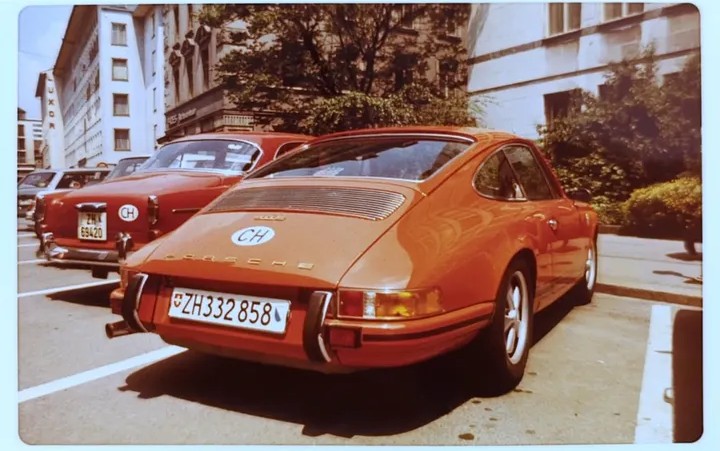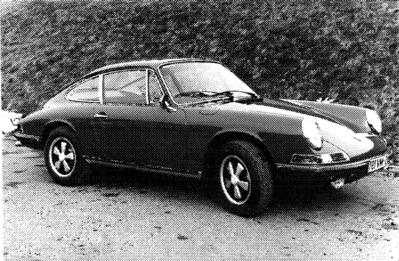
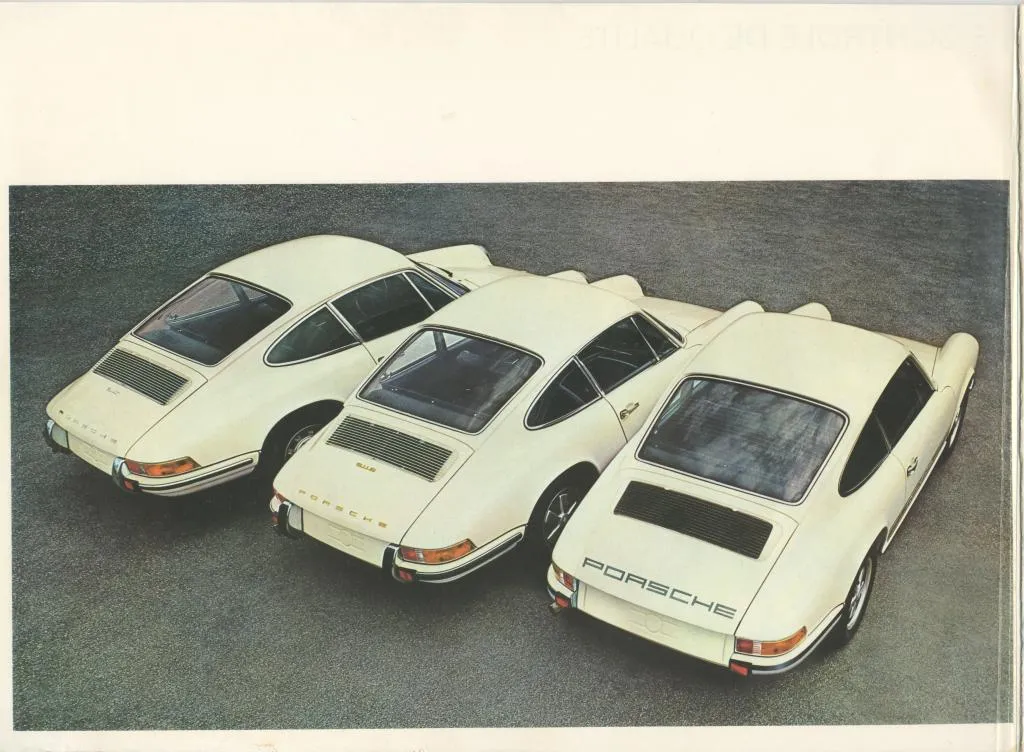
La Porsche 911 S 2.2 de l'année-modèle 1970 a fait l'objet d'une spécification particulière destinée principalement au marché allemand, aujourd'hui souvent considérée comme l'un des précurseurs conceptuels de la future Carrera RS 2.7 Lightweight. Plusieurs documents commerciaux d'époque distinguent en effet une version de base allégée ("Grundausstattung") d'une version plus luxueuse équipée du pack M, plus proche de l'équipement habituel des 911 de série.
Cette variante se distinguait par une recherche systématique d'allègement visant à améliorer les performances et à faciliter l'engagement en compétition. Son équipement comprenait notamment des sièges baquets Recaro, des panneaux de portes simplifiés avec sangles d'ouverture, un habitacle dépourvu de plusieurs équipements de confort, ainsi qu'un réservoir de grande capacité de 100 à 110 litres adapté aux épreuves d'endurance. Plusieurs éléments en aluminium étaient également utilisés afin de réduire le poids, notamment certains panneaux de carrosserie et les pare-chocs. La voiture était annoncée pour un poids d'environ 930 kg, soit sensiblement moins qu'une 911 S conventionnelle.
Cette spécification bénéficiait également d'équipements directement inspirés de la compétition, tels que des jantes Fuchs élargies de 6 pouces à l'avant et 7 pouces à l'arrière, associées à des pneumatiques Dunlop Racing. Certaines voitures recevaient également des aménagements facilitant l'installation d'un arceau de sécurité ainsi qu'une insonorisation fortement réduite, voire absente. Des exemplaires survivants présentent également l'absence de cendrier, de matériaux d'isolation ou d'antigravillonnage, confirmant la volonté de Porsche de privilégier la légèreté à tout autre critère.
Destinées à une clientèle de gentlemen drivers et de concurrents engagés dans les épreuves nationales et internationales de Grand Tourisme, ces 911 S allégées servaient fréquemment de base aux préparations destinées aux rallyes, courses de côte et épreuves d'endurance. Leur philosophie était proche de celle qui conduira quelques années plus tard à la Carrera RS 2.7 Lightweight : offrir une voiture homologuée pour la route mais optimisée dès sa sortie d'usine pour un usage sportif intensif.
Le nombre exact d'exemplaires produits demeure aujourd'hui sujet à débat parmi les spécialistes. Plusieurs témoignages évoquent une production très limitée, tandis que certains propriétaires et historiens s'appuient sur des archives d'usine et sur les caractéristiques physiques observées sur les voitures survivantes pour identifier ces rares versions allégées.
.webp)
.webp)
.webp)
.webp)
.webp)
.webp)
.webp)
.webp)
.webp)
.webp)
.webp)
.webp)
.webp)
.webp)
.webp)
.webp)
.webp)
.webp)
.webp)
.jpg)