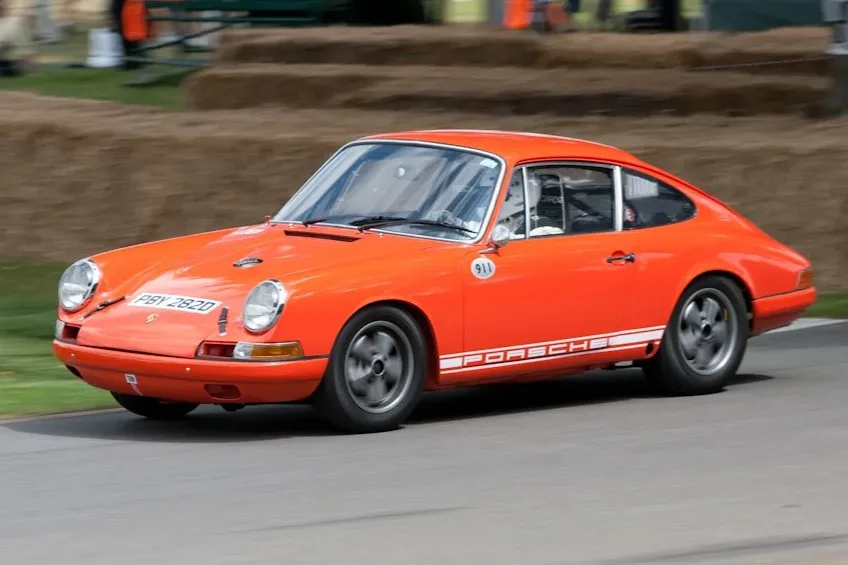
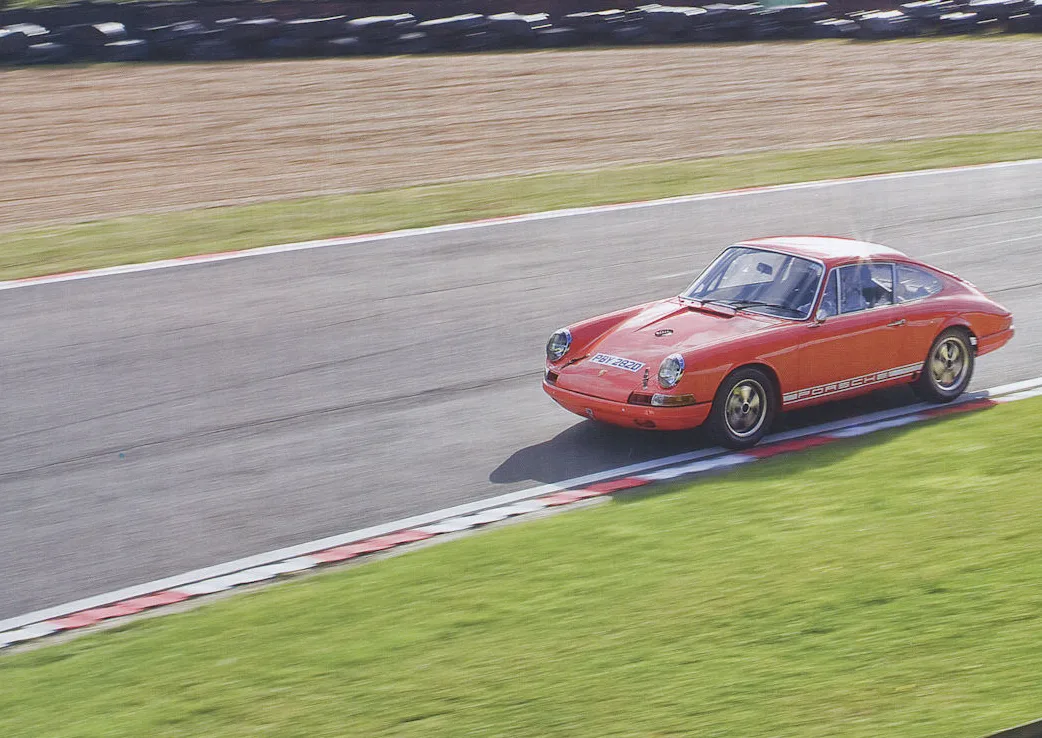
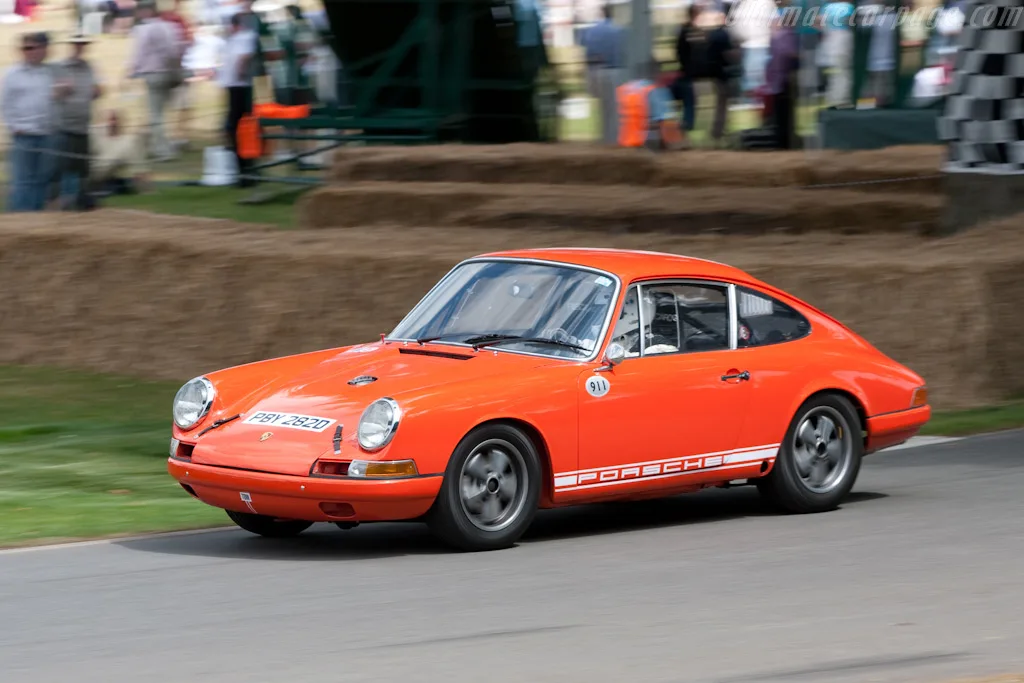
Portant le numéro de châssis 307 671 S, cette 911 est le troisième prototype de développement de la série, connu sous le nom de code interne « R3 ». Réservée à l'usage de l'usine, elle se distingue radicalement des futurs modèles de production par sa conception : en lieu et place de la fibre de verre, la carrosserie de la R3 fait largement appel à l'aluminium, utilisé pour les portes ainsi que les ailes avant et arrière. Vêtue d'une spectaculaire teinte Blood Orange (Orange sanguine), elle présente d'autres spécificités uniques, telles qu'un remplissage de carburant central sur le capot avant (sécurisé par des lanières de cuir en V), des vitres latérales fixes avec une petite coulisse, et surtout la conservation des blocs optiques Porsche de série (elle n'est pas équipée des fameux feux ronds "NSU" typiques des 911 R). Sur le plan mécanique, bien qu'équipée du moteur 2.0L de 210 chevaux, elle est passée à la postérité sous le surnom de "The Sportomatic", l'usine l'ayant dotée de sa transmission semi-automatique novatrice pour l'éprouver en compétition.
Immatriculée « S-ZZ 829 » par le Porsche System Engineering (PSE), R3 va écrire l'une des pages les plus glorieuses et étonnantes de l'histoire du constructeur. Fin août 1967, l'usine l'engage au départ de la course la plus impitoyable de l'époque : le Marathon de la Route, une épreuve d'endurance dantesque s'étalant sur 84 heures ininterrompues sur les 28 kilomètres du Nürburgring. Confiée au trio composé de Hans Herrmann, Jochen Neerpasch et Vic Elford, la voiture démontre une fiabilité absolue. Face à des conditions extrêmes et grâce à l'efficacité de sa boîte Sportomatic qui ménage la mécanique, la R3 triomphe et remporte une victoire absolue historique.
Après cet exploit retentissant, la carrière du troisième prototype se poursuit dans la péninsule ibérique. Vendue en 1968, elle est acquise par le pilote espagnol Jaime Lazcano et immatriculée « 428 Z-3388 ». Elle va ensuite changer de mains à plusieurs reprises sur le sol espagnol : elle est cédée en 1970 à Julio García Delgado (qui l'immatricule « IZ 0195 »), passe brièvement chez Ignacio Ituarte en 1971, puis rejoint le garage d'Agustín Urreaga entre 1972 et 1974 (retrouvant sa plaque 428 Z-3388) avant d'être acquise par Francisco Gómez.
Après de longues décennies passées en Espagne, la victorieuse du Marathon de la Route réapparaît sur la scène internationale en 2001 lorsqu'elle est importée au Royaume-Uni. Prise en main par le collectionneur James Wood, la voiture bénéficie d'une restauration de très haut niveau menée par le spécialiste Russell-Edmond Harris. Immatriculée « PBY 282D » sur le sol britannique, cette pièce de l'histoire de Zuffenhausen a notamment été mise à l'honneur en 2009 lors d'une exhibition très remarquée au célèbre Goodwood Festival of Speed.
.webp)
.webp)
.webp)
.webp)
.webp)
.webp)
.webp)
.webp)
.webp)
.webp)