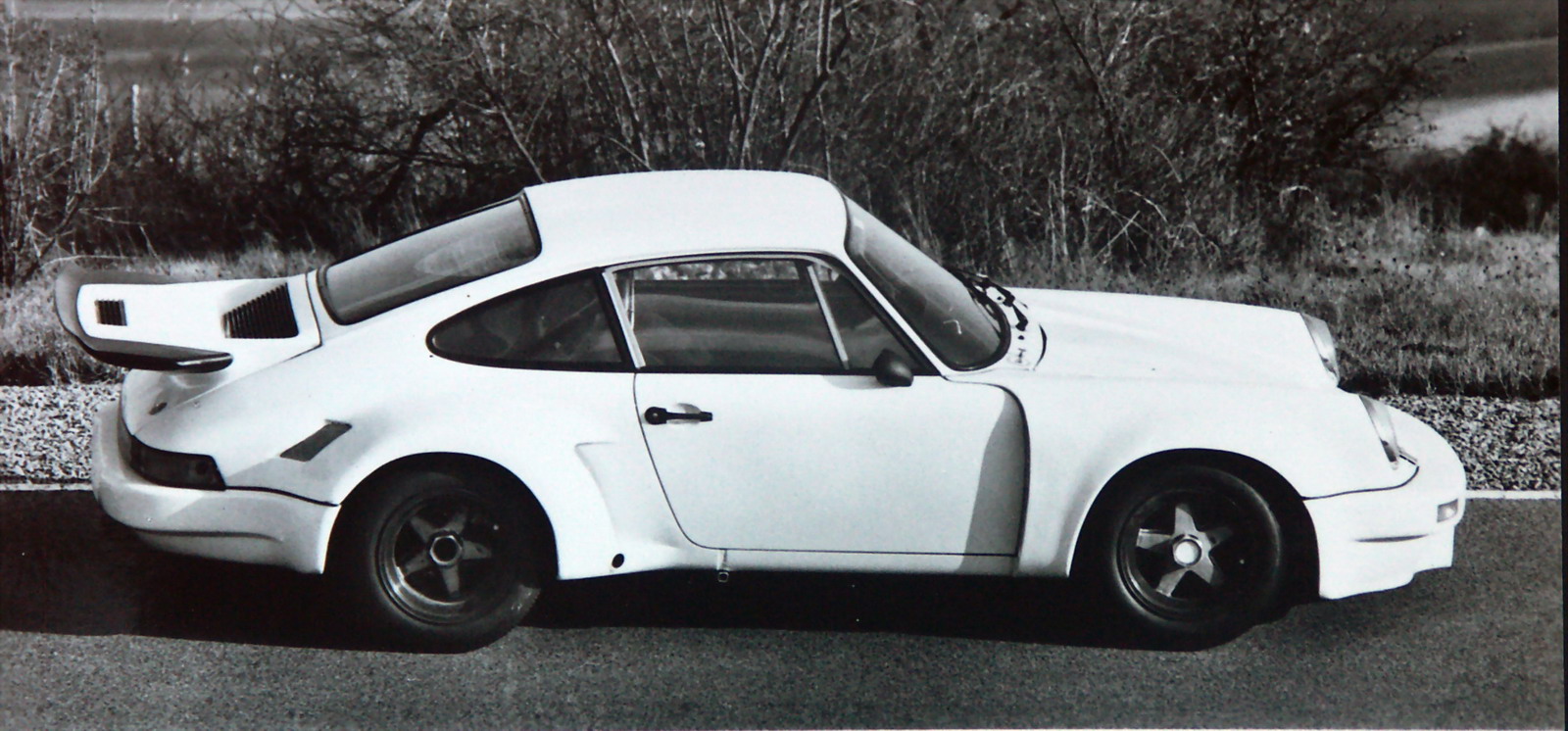
Présentée pour la saison 1974, la Porsche 3.0 RSR constitue l'aboutissement du développement des premières 911 de compétition engagées en Groupe 4. Issue directement de la Carrera RS 2.7 homologuée sous le numéro FIA 3053, elle bénéficie d'une évolution majeure qui transforme la voiture de route allégée en une machine spécialement conçue pour les courses d'endurance internationales et les épreuves de Grand Tourisme les plus disputées de son époque.
L'évolution homologuée en 1974 adopte un moteur flat-six refroidi par air porté à 2 992 cm³ grâce à un alésage augmenté à 95 mm. Développant 230 chevaux à 6 200 tr/min dans sa forme homologuée, ce moteur conserve l'injection mécanique Bosch et l'architecture classique des moteurs Porsche tout en offrant un gain de performances significatif par rapport à la Carrera RS 2.7 d'origine. Les voies sont également élargies, les roues et pneumatiques deviennent plus imposants et le système de freinage reçoit des composants de plus grande dimension afin de répondre aux exigences de la compétition internationale.
Au-delà de ses évolutions mécaniques, la 3.0 RSR se distingue par ses ailes fortement élargies, ses roues arrière plus larges et son aérodynamique adaptée aux courses d'endurance. Plusieurs extensions d'homologation permettent également l'installation d'équipements spécifiques à la compétition, tels que des systèmes de freinage améliorés, des réservoirs de plus grande capacité, des refroidisseurs supplémentaires et différents rapports de transmission.
La Porsche 3.0 RSR connaît rapidement un succès exceptionnel. Dès 1974, elle remporte les 24 Heures de Daytona au classement général face à des prototypes théoriquement plus performants et s'impose dans de nombreuses compétitions internationales. Sa robustesse, sa facilité d'exploitation et sa compétitivité en font l'une des voitures de Grand Tourisme les plus redoutées de son époque.
Engagée aussi bien par l'usine Porsche que par de nombreuses équipes privées, la 3.0 RSR demeure compétitive pendant plusieurs saisons et contribue largement à renforcer la réputation sportive de la 911. Son influence technique se fera sentir sur les générations suivantes de Porsche de compétition, notamment les 934 et 935 qui reprendront une grande partie des enseignements développés sur la RSR.
Aujourd'hui, la Porsche 3.0 RSR est considérée comme l'une des variantes les plus emblématiques de la 911 de compétition. Son équilibre entre performances, fiabilité et polyvalence lui a permis de remporter des succès majeurs dans les plus prestigieuses épreuves d'endurance des années 1970 et d'assurer la transition entre les premières Carrera RS et les futures Porsche turbocompressées.
.jpg)
.png)
.jpg)
.png)
.jpg)
.png)
.png)
.png)
.png)
.png)