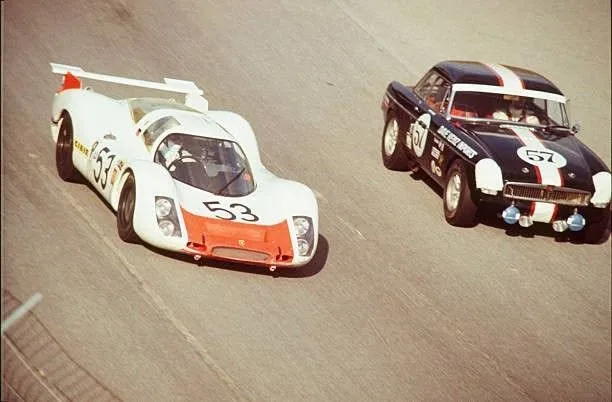
Achevée le 10 janvier 1969 par l'usine Porsche KG, la Porsche portant le numéro de châssis 908-024 dans une configuration 908 LH, est un prototype d'usine arborant une livrée blanche soulignée de détails rouges. Elle est animée par le moteur 8 cylindres à plat de 3,0 litres (2996 cm³) alimenté par pompe à injection, développant une puissance de 350 chevaux pour un poids strictement contenu de 660 kilos.
Construite initialement en version coupé profilé « longue queue » en vue des 24 Heures de Daytona, elle est engagée par le département compétition le 2 février 1969. Flanquée du numéro 53 et confiée au trio composé d'Udo Schütz, Gerhard Mitter et Richard Attwood, elle est contrainte à l'abandon suite à une défaillance de la commande d'arbre à cames (reléguée à la 24e place, elle fut paradoxalement la seule des cinq voitures engagées par l'usine à être classée lors de cette épreuve). Le 25 avril de la même année, le châssis fait une apparition aux 1000 Kilomètres de Monza sous le numéro T, servant exclusivement de voiture de réserve lors des séances d'essais aux mains de Brian Redman.
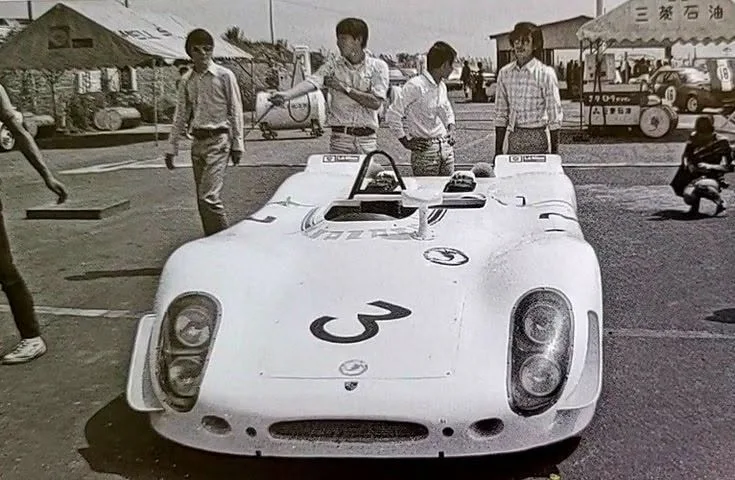
Suite à ce début de carrière, l'usine décide de modifier radicalement la monture en la transformant selon les spécifications 908/02, lui faisant adopter la carrosserie ouverte et très plate dite Spyder. C'est dans cette nouvelle configuration que la voiture s'envole pour le continent asiatique. Fin 1969, elle s'illustre sur le tracé de Fuji en prenant part au Grand Prix du Japon (7e avec Hans Herrmann et Kenjiro Tanaka) puis aux 200 miles Can-Am (5e avec Kuniomi Nagamatsu).
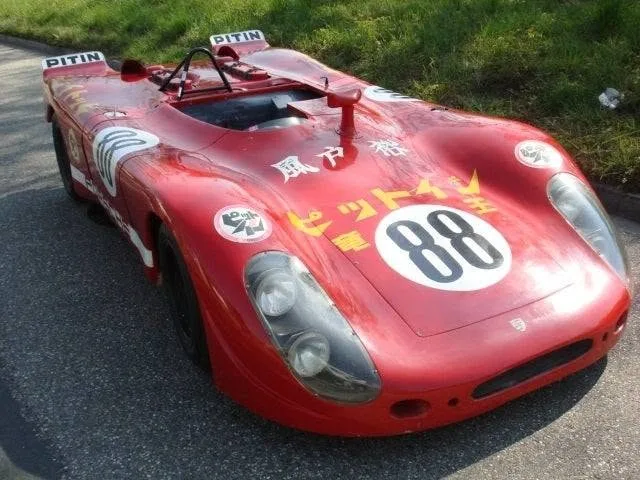
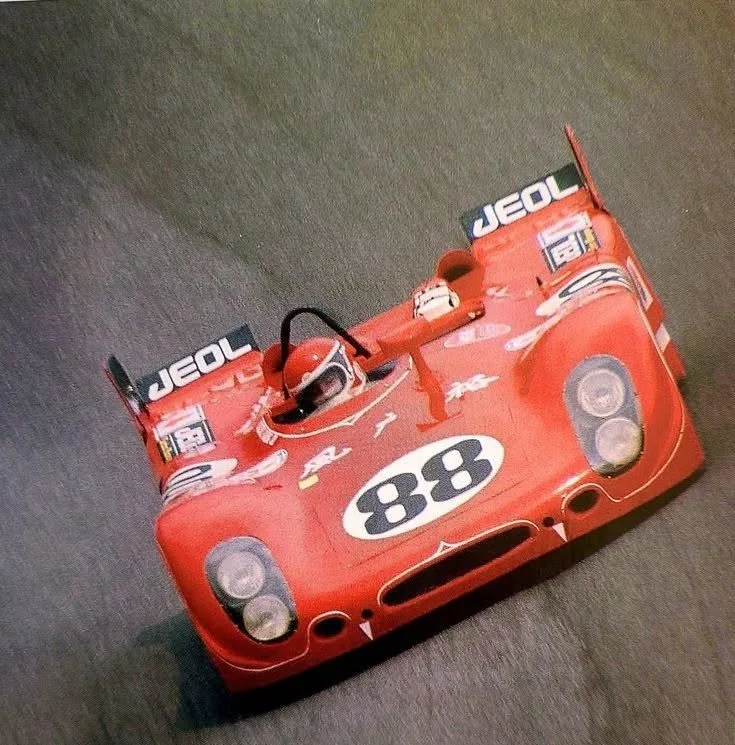
Le châssis est alors acquis par le pilote japonais Hiroshi Kazato, qui délaisse alors sa Porsche 910. Kazato l'engage intensivement tout au long des saisons 1970 et 1971, forgeant son palmarès sur le Fuji Speedway. Après avoir décroché une belle 2e place aux 300 miles en juin 1971, il parachève l'exploitation de la voiture en compétition par une superbe victoire lors des 250 kilomètres de Fuji le 10 octobre de la même année, au volant de sa monture frappée du numéro 88.
Après son épopée japonaise, le destin de la 024 demeure flou pendant plusieurs décennies. Le prototype a néanmoins fini par retrouver le chemin du continent européen, refaisant surface sur le marché de l'automobile de collection. La voiture a notamment été proposée à la vente en 2011 en Allemagne, pays où elle est aujourd'hui précieusement conservée par son propriétaire actuel.
.webp)
.webp)
.webp)
.webp)
.webp)
.webp)
.webp)
.webp)
.webp)
.webp)
.webp)
.webp)