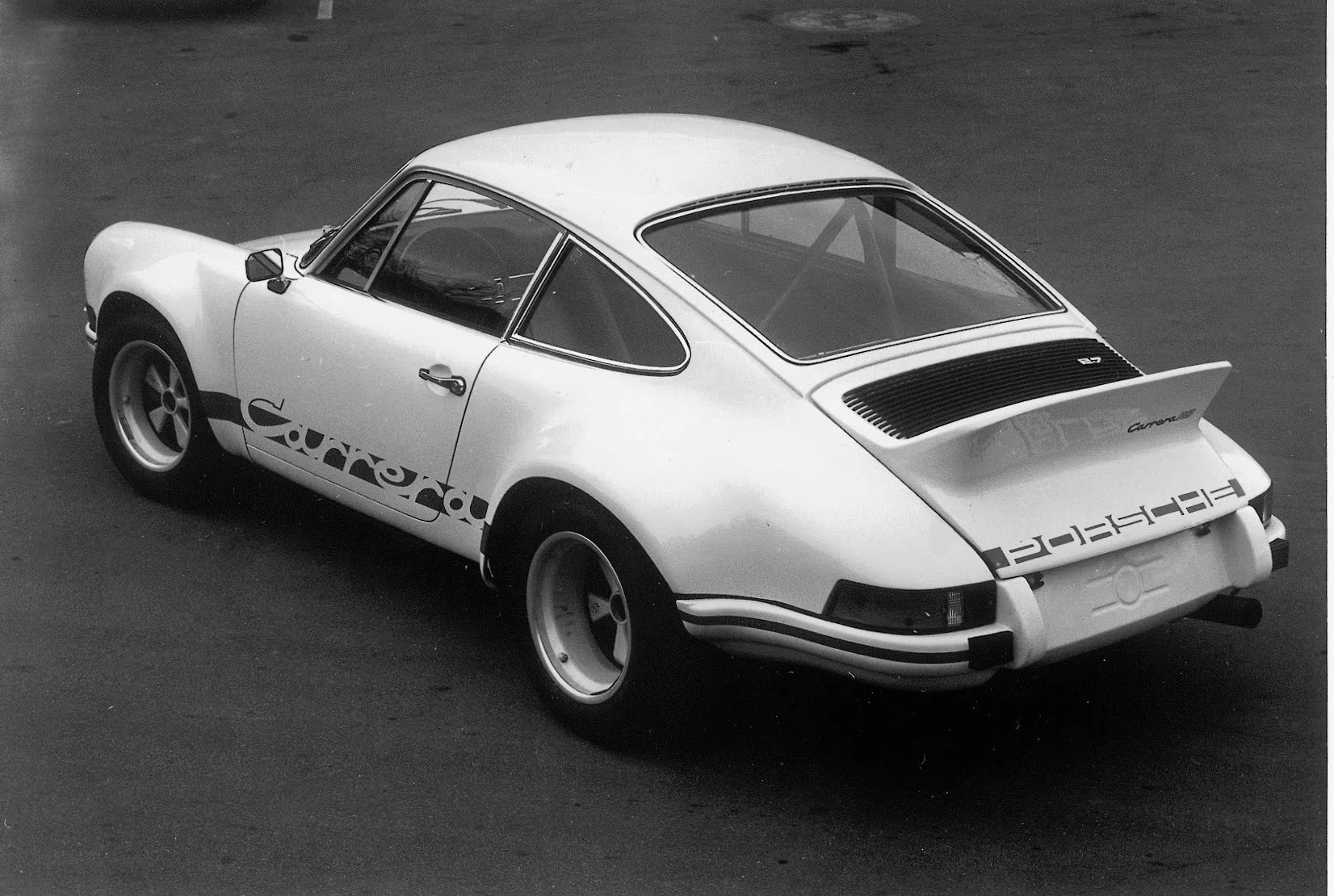
La transformation de la Carrera RS 2.7L en redoutable RSR 2.8L de Groupe 4 est documentée par une série impressionnante d'extensions à la fiche d'homologation FIA n°3053. Afin de proposer une véritable voiture de compétition prête à courir, Porsche développe l'option M491 « Rennausführung » (version compétition). Cette option permettait de convertir directement une Carrera RS 2.7 de série en authentique Groupe 4 sans autre modification majeure nécessaire. Au total, 49 exemplaires clients furent assemblés, auxquels s'ajoutèrent cinq voitures officielles d'usine ainsi qu'un prototype de développement.
Le pack M491 regroupait la quasi-totalité des équipements nécessaires à l'exploitation en compétition : arceau de sécurité, coupe-circuit, extincteur, sièges baquets, harnais, habitacle dépouillé, vitrages allégés, réservoir compétition de grande capacité, barre anti-rapprochement ainsi qu'un important allègement général de la voiture. Les extensions d'ailes avant et arrière en fibre de verre transformaient radicalement l'apparence de la 911 tout en permettant l'installation de jantes Fuchs forgées de 9 pouces à l'avant et 11 pouces à l'arrière. L'installation d'un grand radiateur d'huile central dans le bouclier avant ainsi que plusieurs capacités de réservoirs allant jusqu'à 120 litres FIA FT3 faisaient également partie des évolutions homologuées.
La partie mécanique bénéficiait d'une préparation approfondie. Le Flat-6 recevait des cylindres et pistons spécifiques portant l'alésage à 92 mm pour atteindre 2808 cm³. Les évolutions homologuées comprenaient notamment des culasses à double allumage, des arbres à cames reposant sur quatre paliers, des culbuteurs allégés sans vis de réglage et des boîtiers papillon à guillotine munis de cornets d'admission. Ces modifications transformaient la Carrera RS en véritable machine de compétition capable de rivaliser avec les meilleurs prototypes de sa catégorie.
Le châssis fut lui aussi profondément revu. Porsche homologue une modification de géométrie consistant à relever les fusées avant de 18 mm afin de réduire la plongée au freinage. Les bras arrière sont raccourcis et reçoivent de nouveaux points de pivot, tandis que plusieurs articulations de suspension adoptent des roulements à aiguilles en lieu et place des silentblocs d'origine. Les moyeux renforcés à cinq pions d'entraînement et écrou central améliorent encore la résistance de l'ensemble face aux contraintes imposées par les pneumatiques de compétition.
Le système de freinage bénéficie également d'améliorations majeures. Des étriers dérivés du programme 917 et de nouveaux conduits de refroidissement sont homologués pour la compétition. Afin d'améliorer l'efficacité du refroidissement des freins avant, les deux logements de batterie avant sont supprimés et une unique batterie est déplacée dans l'emplacement réservé au chauffage auxiliaire.
Avec son moteur 2.8 litres développant près de 300 chevaux en configuration usine, son poids réduit et son châssis profondément optimisé, la Carrera RSR 2.8 domine rapidement les compétitions GT internationales. Véritable synthèse entre la 911 de route et une voiture de course pure, elle constitue la première grande RSR de l'histoire et pose les bases techniques de toutes les générations de 911 RSR qui lui succéderont.
.webp)
.webp)
.webp)
.webp)
.webp)
.webp)
.webp)