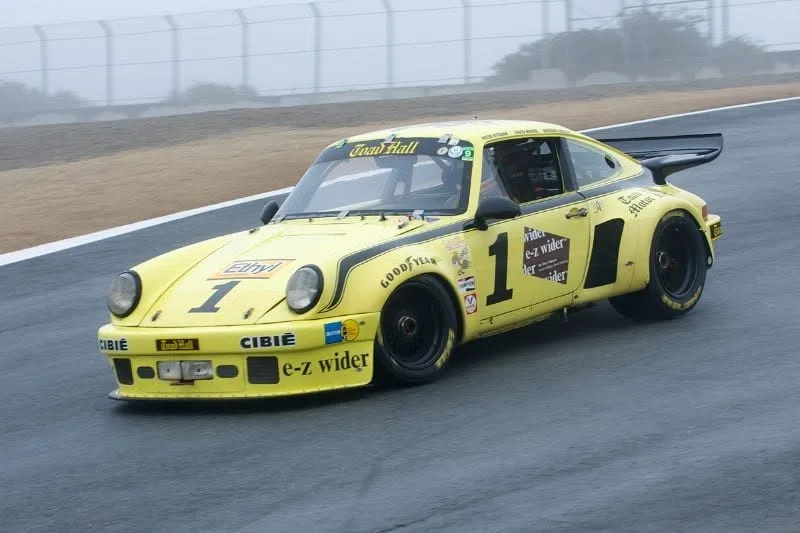
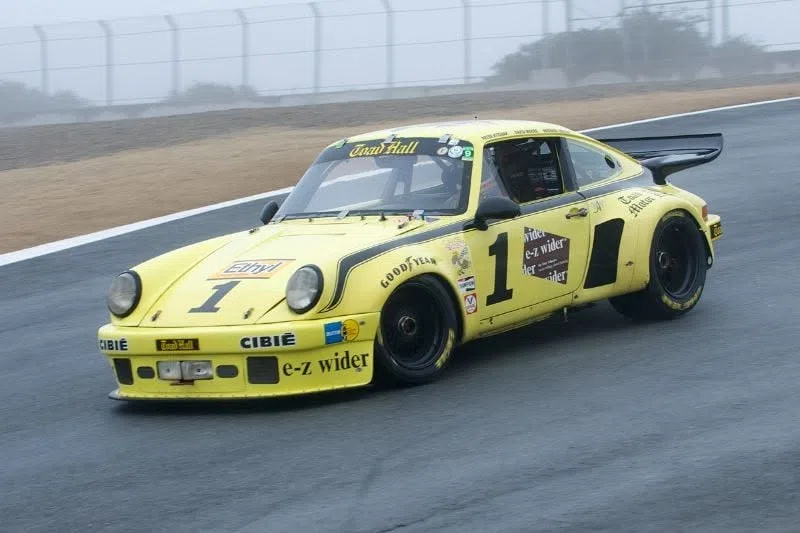
L'histoire de cette voiture débute à l'aube des 12 Heures de Sebring 1973. Achetée par le pilote Michael Keyser (Toad Hall Racing) avec l'aide de Jürgen Barth, la voiture atterrit à New York juste avant l'épreuve et est préparée à la hâte. La course est marquée par un incident spectaculaire : la Porsche prend feu alors que Keyser et Milt Minter luttent pour la tête de la course. Malgré les flammes et le temps perdu, le duo arrache une héroïque 2ème place au classement général.
La suite de la saison 1973 est un triomphe. Keyser décroche plusieurs victoires absolues, notamment aux 6 Heures de Mid-Ohio et à Lime Rock, terminant deuxième du championnat IMSA Camel GT juste derrière Peter Gregg. L'année suivante, la voiture continue de briller, s'offrant une victoire à Laguna Seca et terminant plus tard 2ème aux 24 Heures de Daytona 1975.
Vendue durant l'hiver 1974-1975 à Stephan Edlis, la RSR va subir des modifications radicales pour le championnat SCCA. Pour réduire la surface frontale, Edlis prend la décision extrême de découper le toit et le pare-brise, transformant la redoutable RSR en une singulière version Targa !
La voiture passe ensuite entre les mains de Tom Brennan en 1982, puis de la famille Cogbill. C'est Joe Cogbill qui décidera de ressouder un toit sur la voiture pour pouvoir l'engager en IMSA. Lors de cette opération de renforcement de l'arceau, le numéro de série d'origine situé près du tableau de bord est malencontreusement recouvert. La carrière de la Porsche sous l'ère Cogbill s'achève brutalement à Savannah lorsque l'accélérateur se bloque, provoquant l'explosion spectaculaire de son moteur Andial.
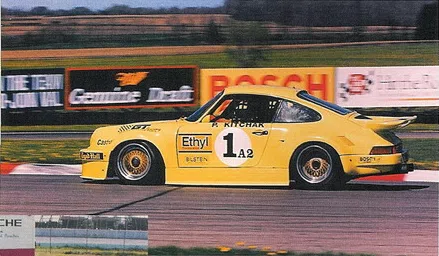
En 1992, la 911, alors passablement usée et au moteur percé, est rachetée par Peter Kitchak pour le prix de ses pièces détachées. Ce qui devait être une simple voiture de club va se transformer en légende. Après l'avoir restaurée et engagée en PCA, Kitchak tente un pari fou en 1999 : engager ce châssis vieux de 26 ans dans le championnat professionnel SCCA World Challenge.
Contre toute attente, face à des Saleen Mustang V8 et des 911 Turbo modernes, la vénérable RSR remporte quatre victoires et passe à un point du titre de champion ! L'exploit est tel qu'il gêne les organisateurs : vexée de voir une voiture de près de 30 ans humilier des modèles d'usine contemporains, la SCCA décide de bannir la voiture pour la saison 2000.
Aujourd'hui, cette icône absolue a retrouvé une retraite active bien méritée dans les courses historiques (HSR, Rennsport, Monterey Historics) et a rejoint le garage de son propriétaire actuel en 2025.
The story of this car begins on the eve of the 1973 12 Hours of Sebring. Purchased by driver Michael Keyser (Toad Hall Racing) with the assistance of Jürgen Barth, the car arrived in New York just before the event and was prepared in a rush. The race was marked by a dramatic incident: the Porsche caught fire while Keyser and Milt Minter were battling for the lead. Despite the flames and the time lost, the duo managed to secure a heroic 2nd-place finish overall.
The remainder of the 1973 season was a triumph. Keyser claimed several outright victories—notably at the 6 Hours of Mid-Ohio and at Lime Rock—finishing second in the IMSA Camel GT championship, just behind Peter Gregg. The following year, the car continued to shine, taking a win at Laguna Seca and later finishing 2nd at the 1975 24 Hours of Daytona.
Sold during the winter of 1974–1975 to Stephan Edlis, the RSR underwent radical modifications for the SCCA championship. To reduce the frontal area, Edlis made the extreme decision to cut away the roof and windshield, transforming the formidable RSR into a unique "Targa" version!
The car subsequently passed into the hands of Tom Brennan in 1982, and later to the Cogbill family. It was Joe Cogbill who decided to weld a roof back onto the car so that it could be entered into IMSA competition. During this process—which included reinforcing the roll cage—the original serial number, located near the dashboard, was inadvertently covered over. The Porsche’s career under the Cogbill era came to an abrupt end in Savannah when the throttle stuck, leading to a spectacular explosion of its Andial engine. In 1992, the 911—by then quite worn out and with a hole in its engine—was purchased by Peter Kitchak for the value of its spare parts. What was intended to be a simple club-racing car would go on to become a legend. After restoring it and entering it into PCA (Porsche Club of America) events, Kitchak took a daring gamble in 1999: he entered this 26-year-old chassis into the professional SCCA World Challenge championship.
Against all odds—up against V8-powered Saleen Mustangs and modern 911 Turbos—the venerable RSR secured four victories and missed out on the championship title by just a single point! The feat was so remarkable that it unsettled the organizers; annoyed to see a nearly 30-year-old car humiliating contemporary factory-backed models, the SCCA decided to ban the vehicle for the 2000 season.
Today, this absolute icon enjoys a well-deserved, active retirement in historic racing series (such as HSR, Rennsport, and the Monterey Historics) and, as of 2025, resides in the garage of its current owner.
.webp)
.webp)
.webp)
.webp)
.webp)
.webp)
.webp)
.webp)
.webp)
.webp)
.webp)
.webp)
.webp)
.webp)
.webp)
.webp)
.webp)
.webp)
.webp)