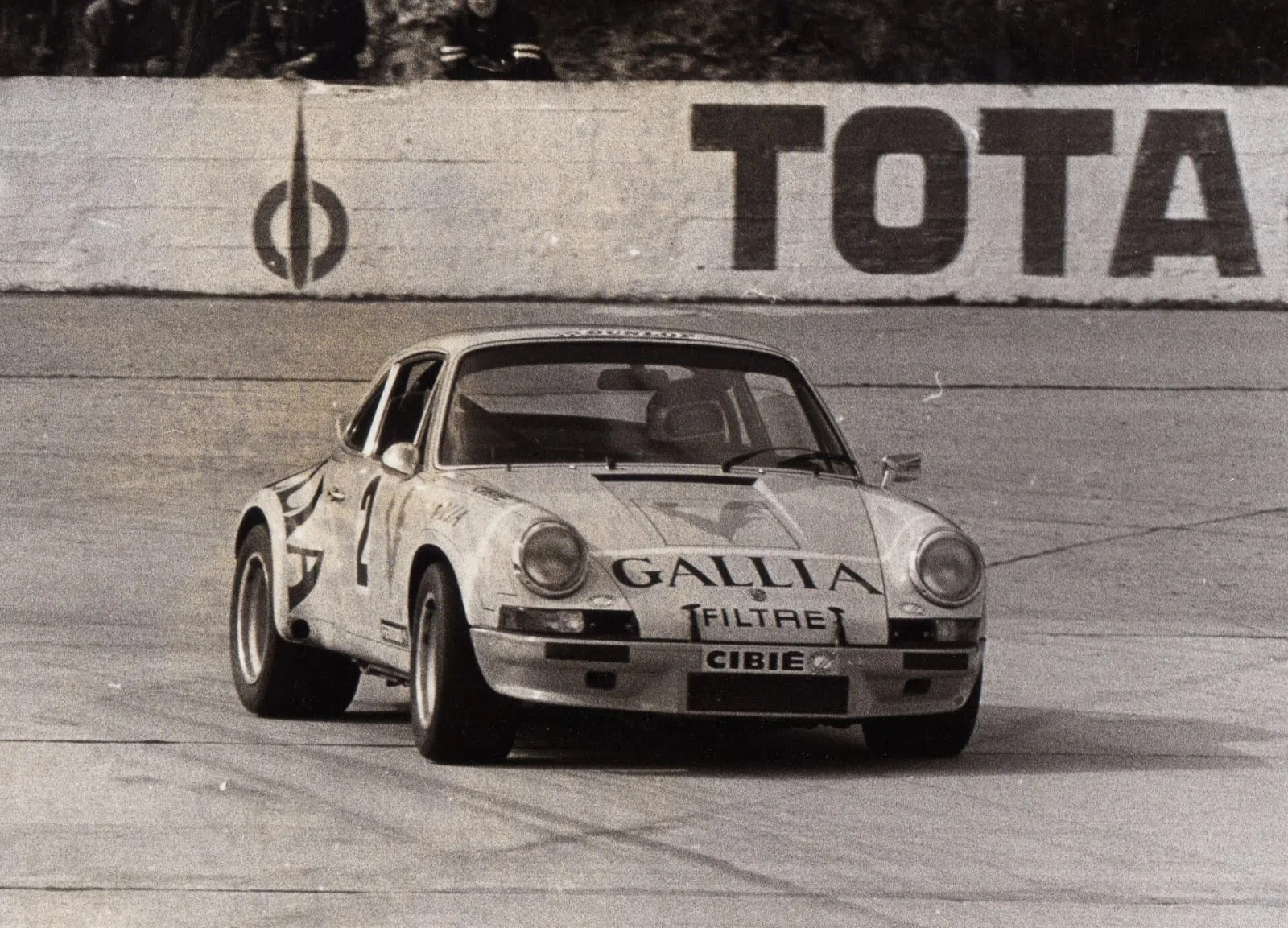
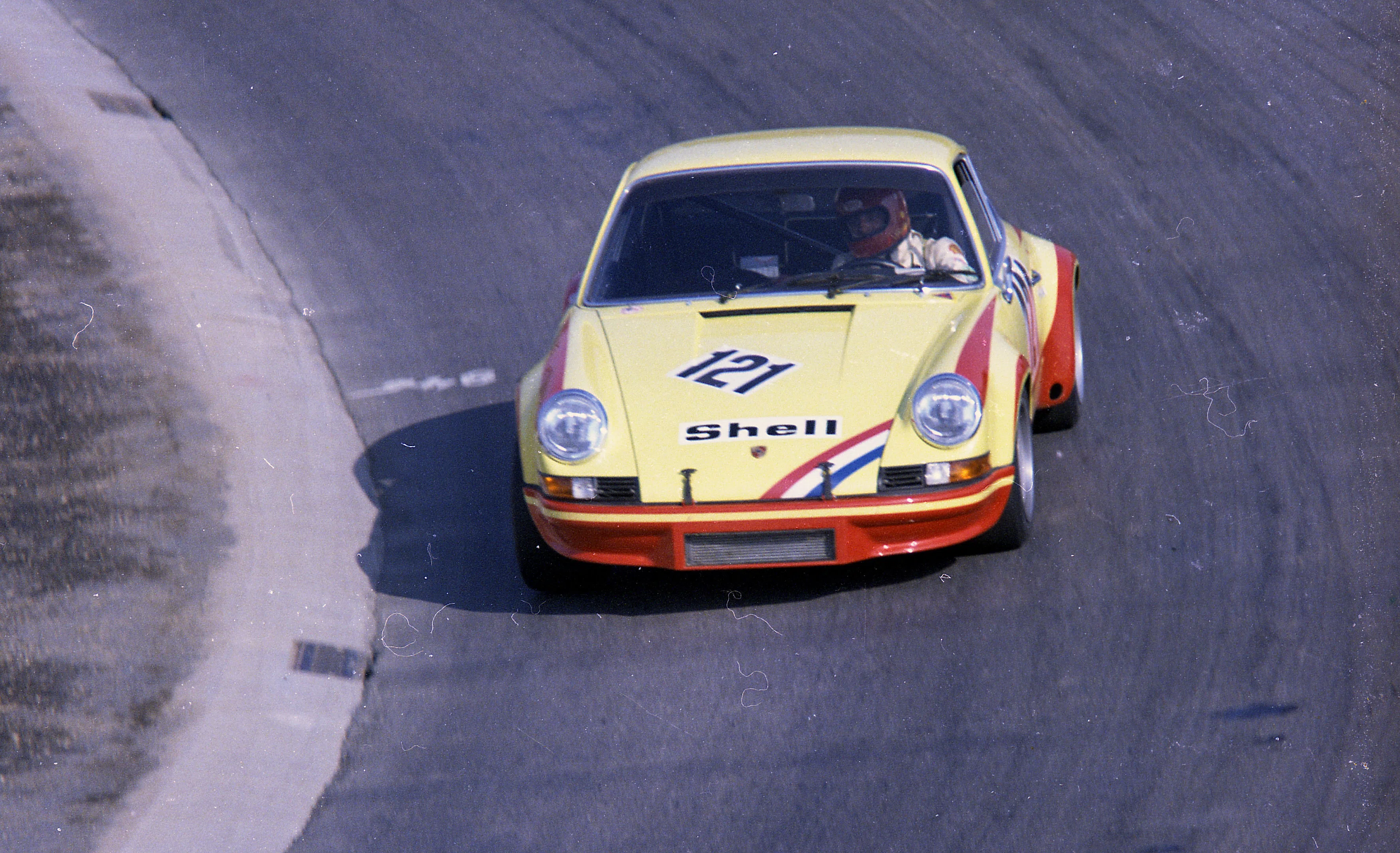
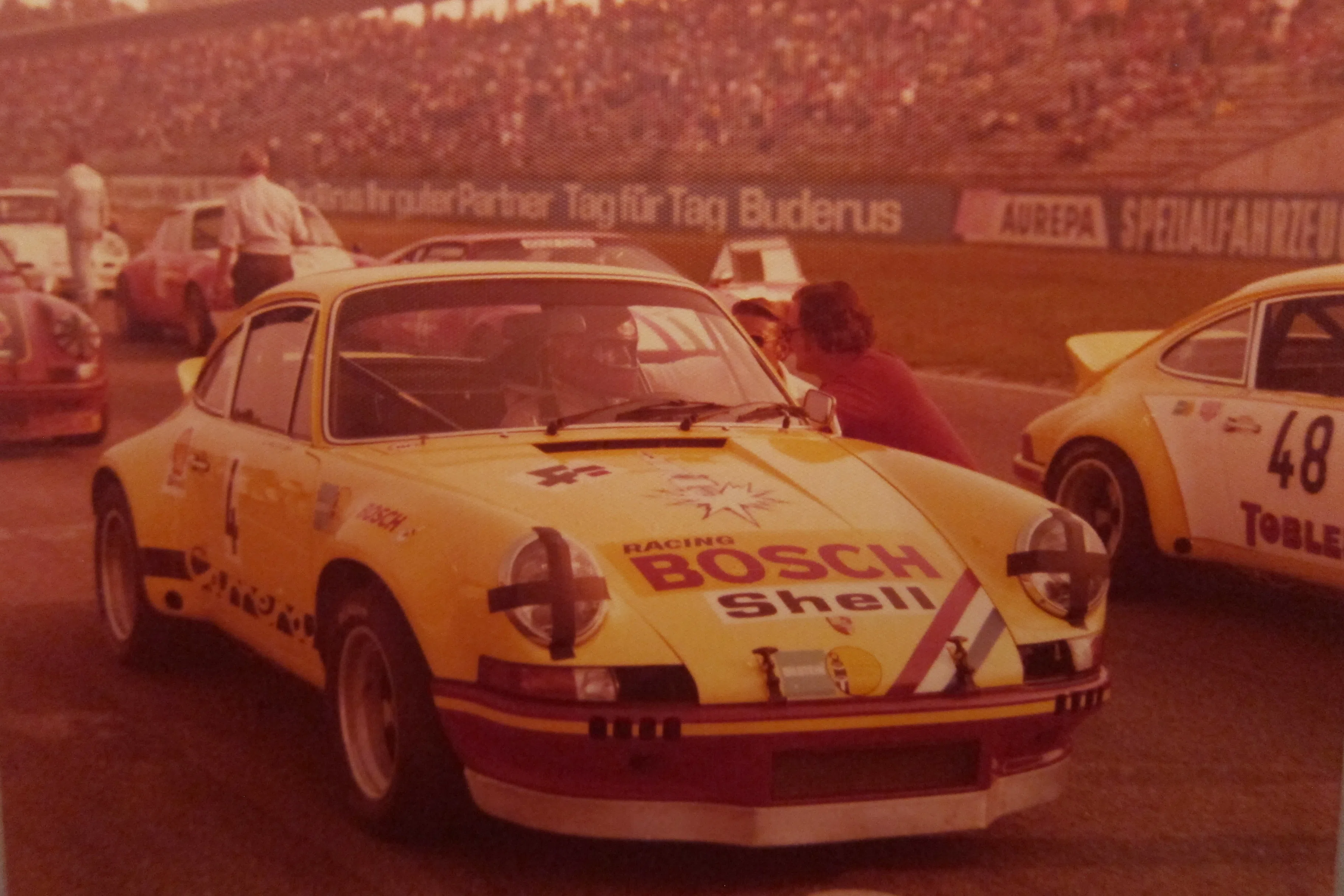
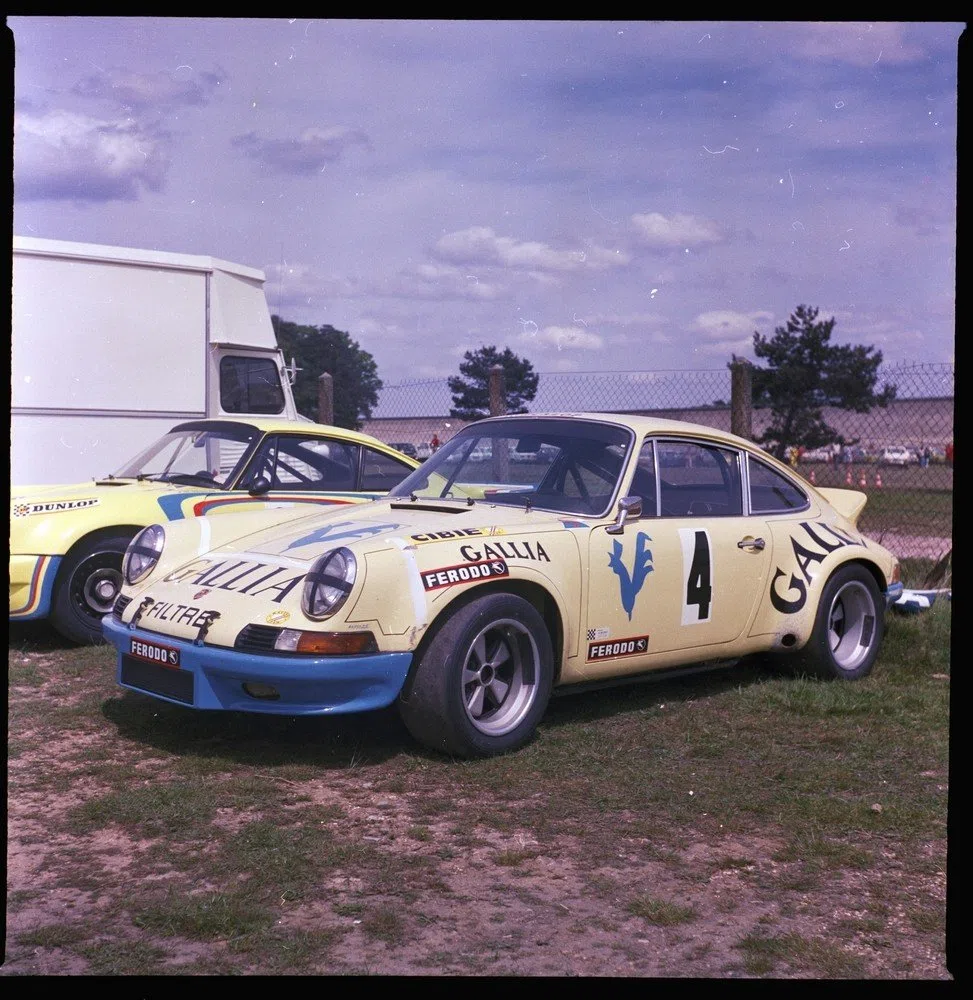
Livrée à la fin du mois de mars 1973, le châssis #0643 est acquis par l'Écurie Robert Buchet. Elle est immédiatement confiée au mythique pilote Claude Ballot-Léna. La saison 1973 se transforme alors en une véritable démonstration de force à travers l'Europe.
Engagée en Championnat d'Europe GT (ECGT), en Euro GT et en DARM, la RSR Light yellow écrase la concurrence et accumule les victoires absolues (1ère place) à un rythme effréné :
- Nürburgring (victoire en DARM puis en ECGT le même week-end d'avril).
- Magny-Cours (mai).
- Euro GT de Paris (mai).
- Euro GT de Thruxton en Angleterre (août).
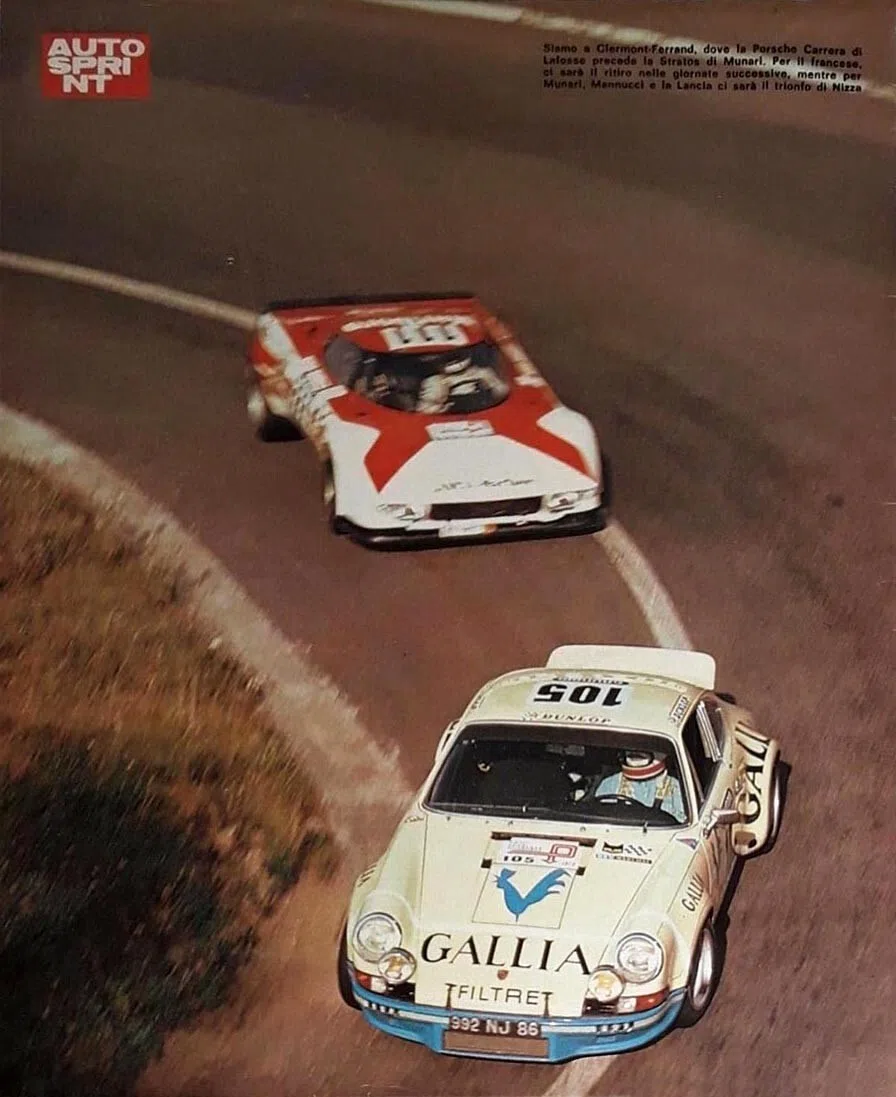
Ballot-Léna arrache également de superbes podiums européens à Nivelles (2ème) et Imola (3ème). En septembre de la même année, la voiture participe au redoutable Tour de France Automobile avec l'équipage Jean-Louis Lafosse et Jean-Pierre Angoulet, bien que l'épreuve se solde par un abandon.
En 1974, la voiture continue de s'illustrer sur circuit, notamment avec Jean-Louis Lafosse (qui signe une 2ème place aux Coupes de l'USA). Elle passe ensuite entre les mains du pilote Georges Bourdillat (Versailles), qui l'engage intensivement sur les circuits français (Montlhéry, Magny-Cours) où il décroche plusieurs podiums, dont une 1ère place au National Montlhéry en mars 1978.
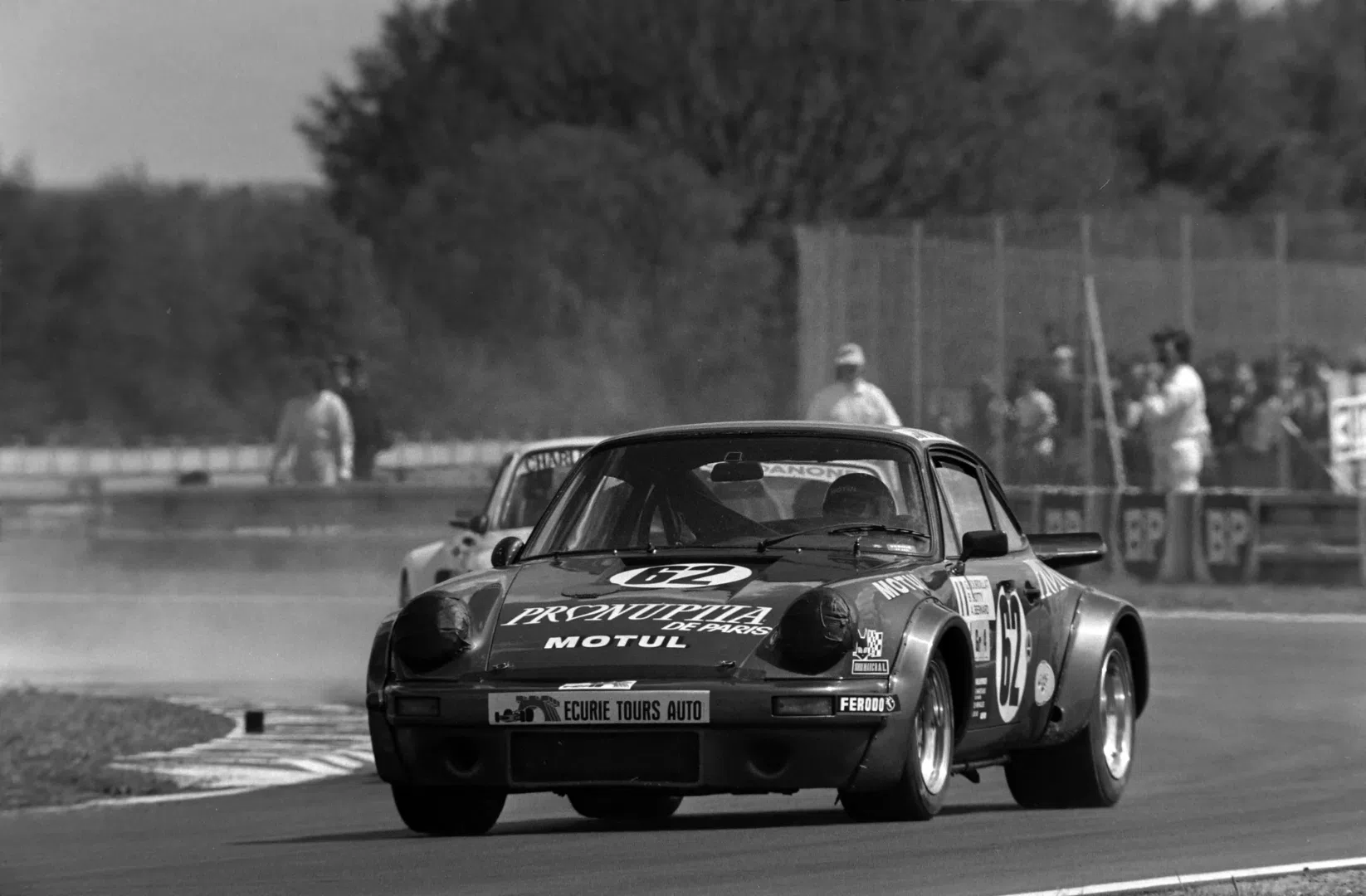
Mais l'objectif ultime de cette période reste la grande classique mancelle : les 24 Heures du Mans. Le châssis 0643 affronte le double tour d'horloge sarthois à deux reprises : en 1977 (avec Bourdillat, Bruno Sotty et Alain-Michel Bernard) puis en 1978 (avec Bourdillat, Bernard et Jean-Luc Favresse). Bien que ces deux participations se soldent par des abandons face à l'exigence de la piste, elles inscrivent définitivement cette voiture dans la grande histoire de l'endurance. À noter également une participation au Tour de France Automobile 1977 par l'équipage "Nordneg"/Jean-Claude Parmentier.
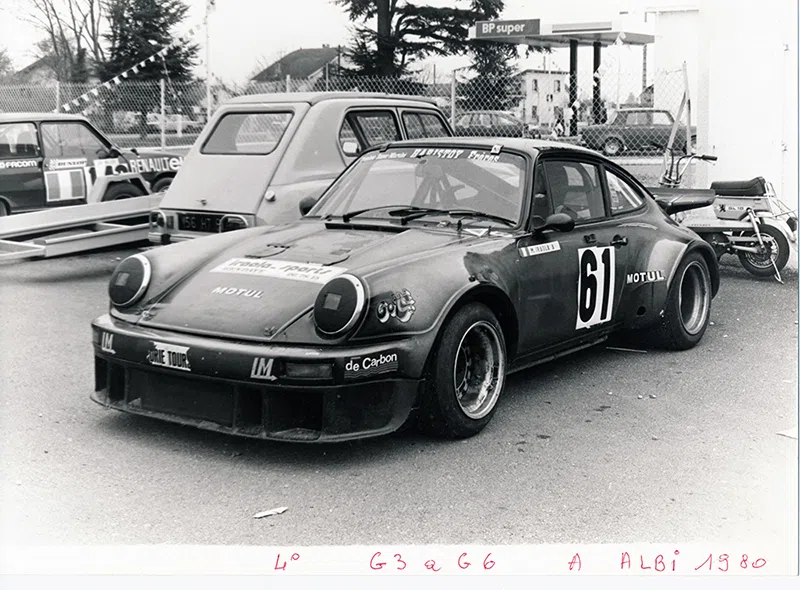
Fin 1978, la voiture descend dans le sud-ouest de la France, acquise par Miguel Iraola. Elle entame alors une troisième vie orientée vers les rallyes et les courses de côte. Jusqu'au début des années 80, on la verra batailler sur les routes du Rallye de Biarritz (11ème en 1979), à Aritxulegi, à Albi ou encore à la course de côte du Montseny en 1981, clôturant ainsi sa féroce carrière sportive d'époque.
Après avoir été soigneusement préservée et avoir passé quelques années chez Jean-Louis Laborde (à partir de 1999), la voiture est rachetée en mai 2002 par Michel Lecourt. C'est le début d'une fantastique épopée moderne qui va définitivement ancrer ce châssis dans la légende des épreuves historiques.
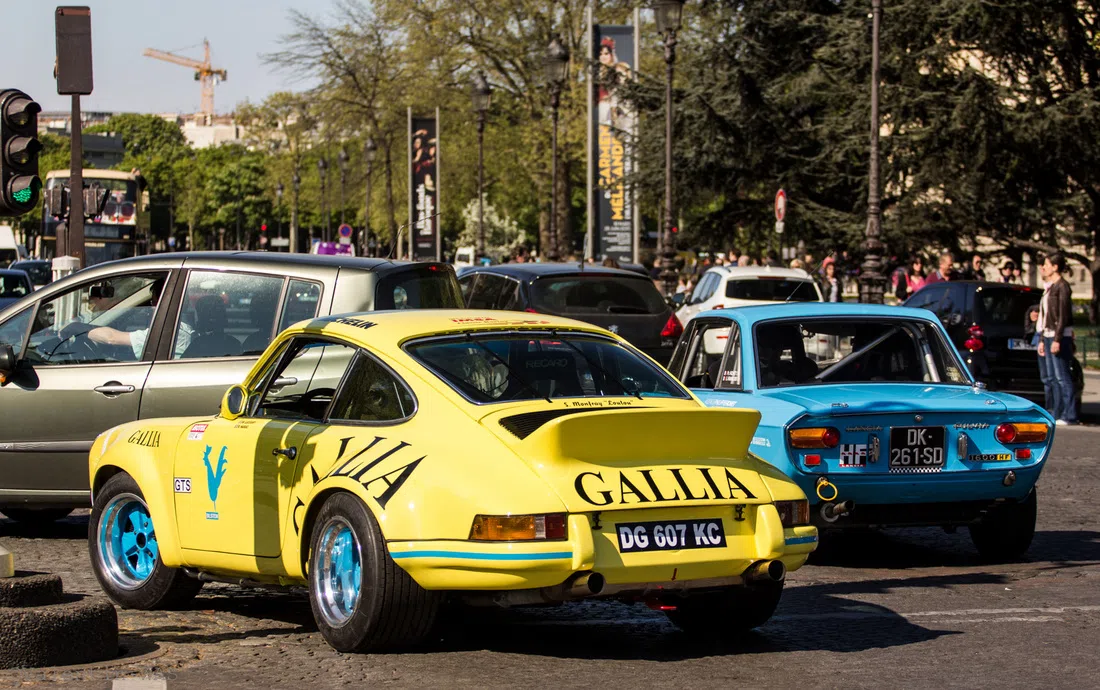
Fidèle parmi les fidèles, Michel Lecourt va faire de cette authentique RSR d'usine l'une des stars absolues et inépuisables du légendaire Tour Auto. L'infatigable 911 a ainsi arpenté les routes de l'Hexagone lors d'un nombre vertigineux d'éditions, marquant le public avec deux équipages emblématiques :
- En duo familial avec Marie-Christine Lecourt : Éditions 2003 (#17), 2004 (#60), 2005 (#221), 2006 (#202) et 2009 (#258).
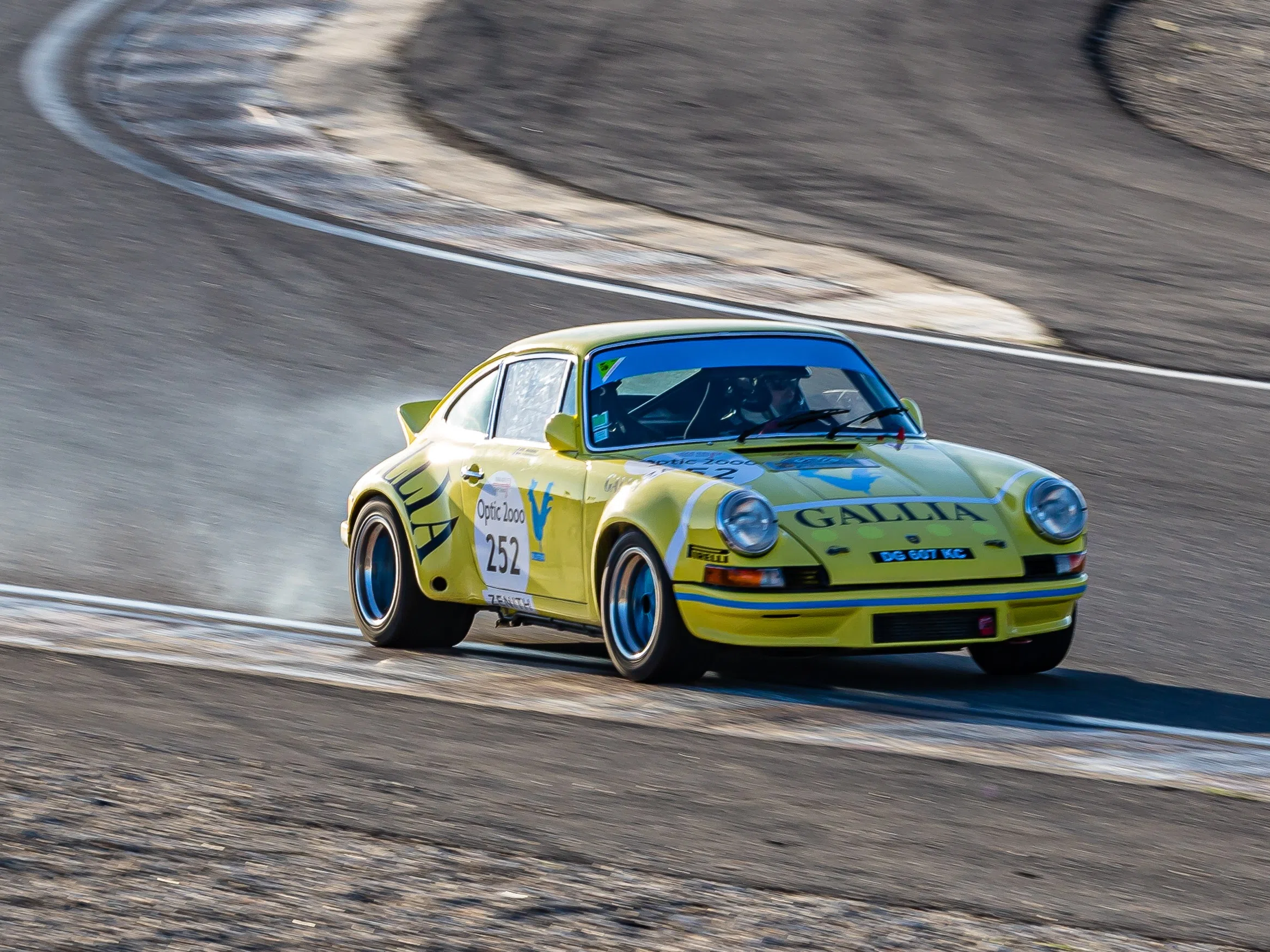
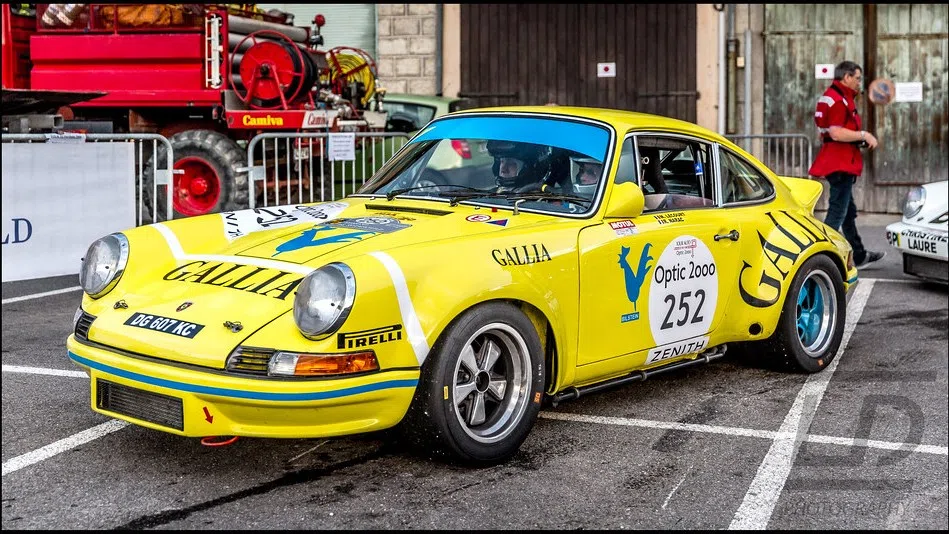
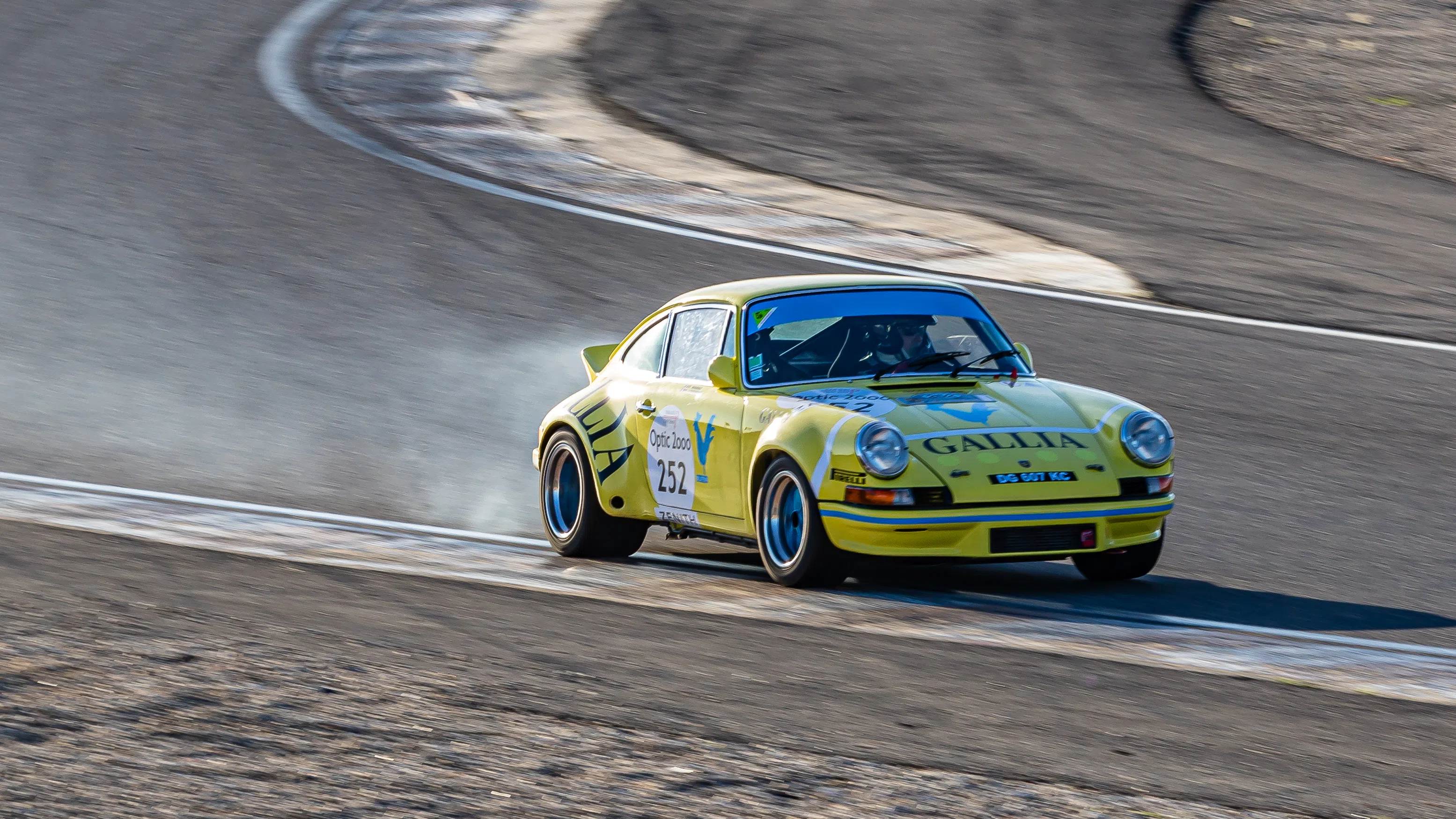
- Associé au grand pilote et patron d'écurie Raymond Narac : Éditions 2013 (#266), 2014 (#274), 2015 (#271), 2016 (#260), 2017 (#252) et 2018 (#252).
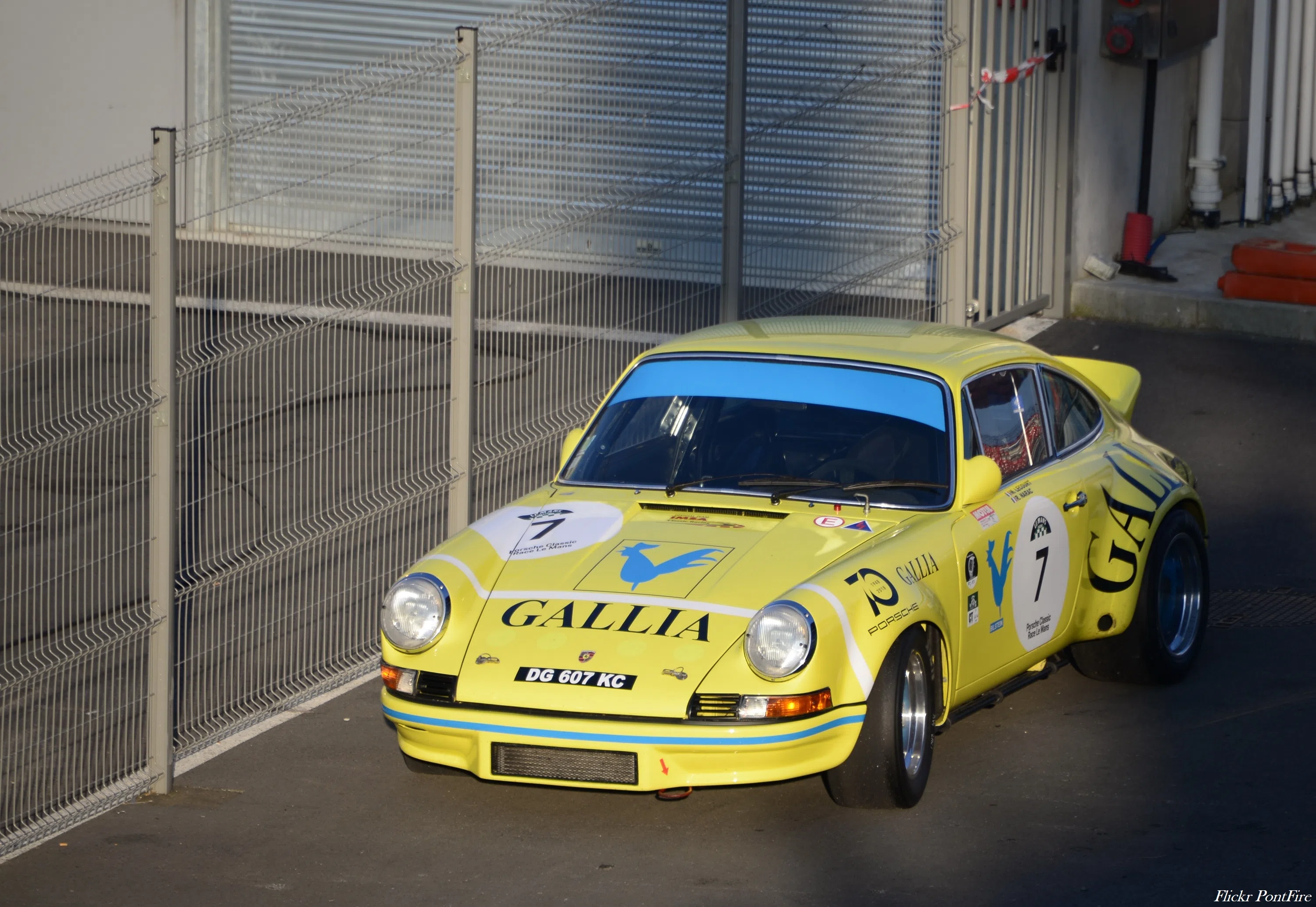
En parallèle de ce record de longévité sur les routes françaises, la RSR Light yellow s'est illustrée hors de nos frontières lors du Tour d'Espagne Classic (2004 et 2005) et sur la Ronde du Ventoux en 2009 (#3). Enfin, elle a dignement renoué avec son passé de bête d'endurance en foulant la piste de Le Mans Classic en 2004 (#34) et 2018 (#7) avec Michel Lecourt à son volant, confirmant son statut d'icône incontournable.
Delivered at the end of March 1973, chassis #0643 was acquired by Écurie Robert Buchet and immediately entrusted to the legendary driver Claude Ballot-Léna. The 1973 season subsequently became a true display of dominance across Europe.
Entered in the European GT Championship (ECGT), the Euro GT series, and the DARM championship, the "Light Yellow" RSR crushed the competition, racking up overall victories (1st place finishes) at a relentless pace:
- Nürburgring (a win in DARM followed by another in the ECGT, both during the same weekend in April).
- Magny-Cours (May).
- Euro GT Paris (May).
- Euro GT Thruxton, England (August).
Ballot-Léna also secured impressive podium finishes in European events at Nivelles (2nd) and Imola (3rd). In September of the same year, the car took part in the grueling Tour de France Automobile with the driver pairing of Jean-Louis Lafosse and Jean-Pierre Angoulet, though the event ended in a retirement.
In 1974, the car continued to distinguish itself on the track, notably with Jean-Louis Lafosse (who claimed 2nd place at the Coupes de l'USA). It later passed into the hands of driver Georges Bourdillat (from Versailles), who campaigned it extensively on French circuits—such as Montlhéry and Magny-Cours—securing several podiums, including a 1st-place finish at the National Montlhéry event in March 1978.
Yet, the ultimate goal during this period remained the great classic in Le Mans: the 24 Hours of Le Mans. Chassis 0643 took on the grueling 24 Hours of Le Mans twice: in 1977 (with drivers Bourdillat, Bruno Sotty, and Alain-Michel Bernard) and again in 1978 (with Bourdillat, Bernard, and Jean-Luc Favresse). Although both attempts ended in retirements—a testament to the unforgiving nature of the circuit—they firmly cemented the car’s place in the storied history of endurance racing. It also made an appearance in the 1977 Tour de France Automobile, driven by the team of "Nordneg" and Jean-Claude Parmentier.
At the end of 1978, the car moved to the southwest of France, having been acquired by Miguel Iraola. It then began a third chapter, shifting its focus toward rallying and hill climbs. Throughout the early 1980s, it could be seen competing in events such as the Rallye de Biarritz (finishing 11th in 1979), as well as races at Aritxulegi, Albi, and the 1981 Montseny hill climb—marking the conclusion of its intense period of contemporary competitive racing.
Following a period of careful preservation—including several years in the collection of Jean-Louis Laborde, starting in 1999—the car was purchased by Michel Lecourt in May 2002. This sparked a remarkable modern-day odyssey, one that would firmly establish this chassis as a legend within the world of historic motorsport.
A steadfast devotee, Michel Lecourt transformed this authentic factory-built RSR into an iconic and enduring star of the legendary Tour Auto. The indefatigable 911 has traversed the roads of France across a staggering number of events, leaving a lasting impression on the public through two iconic driver pairings:
- As a family duo with Marie-Christine Lecourt: the 2003 (#17), 2004 (#60), 2005 (#221), 2006 (#202), and 2009 (#258) editions.
- Alongside the renowned driver and team principal Raymond Narac: the 2013 (#266), 2014 (#274), 2015 (#271), 2016 (#260), 2017 (#252), and 2018 (#252) editions.
Beyond this record-breaking longevity on French roads, the "Light Yellow" RSR also made its mark abroad, participating in the Tour d'Espagne Classic (2004 and 2005) and the Ronde du Ventoux in 2009 (#3). Finally, it fittingly revisited its heritage as an endurance powerhouse by taking to the track at Le Mans Classic in 2004 (#34) and 2018 (#7)—with Michel Lecourt behind the wheel—further cementing its status as an essential icon.
.webp)
.webp)
.webp)
.webp)
.webp)
.webp)
.webp)
.webp)
.webp)