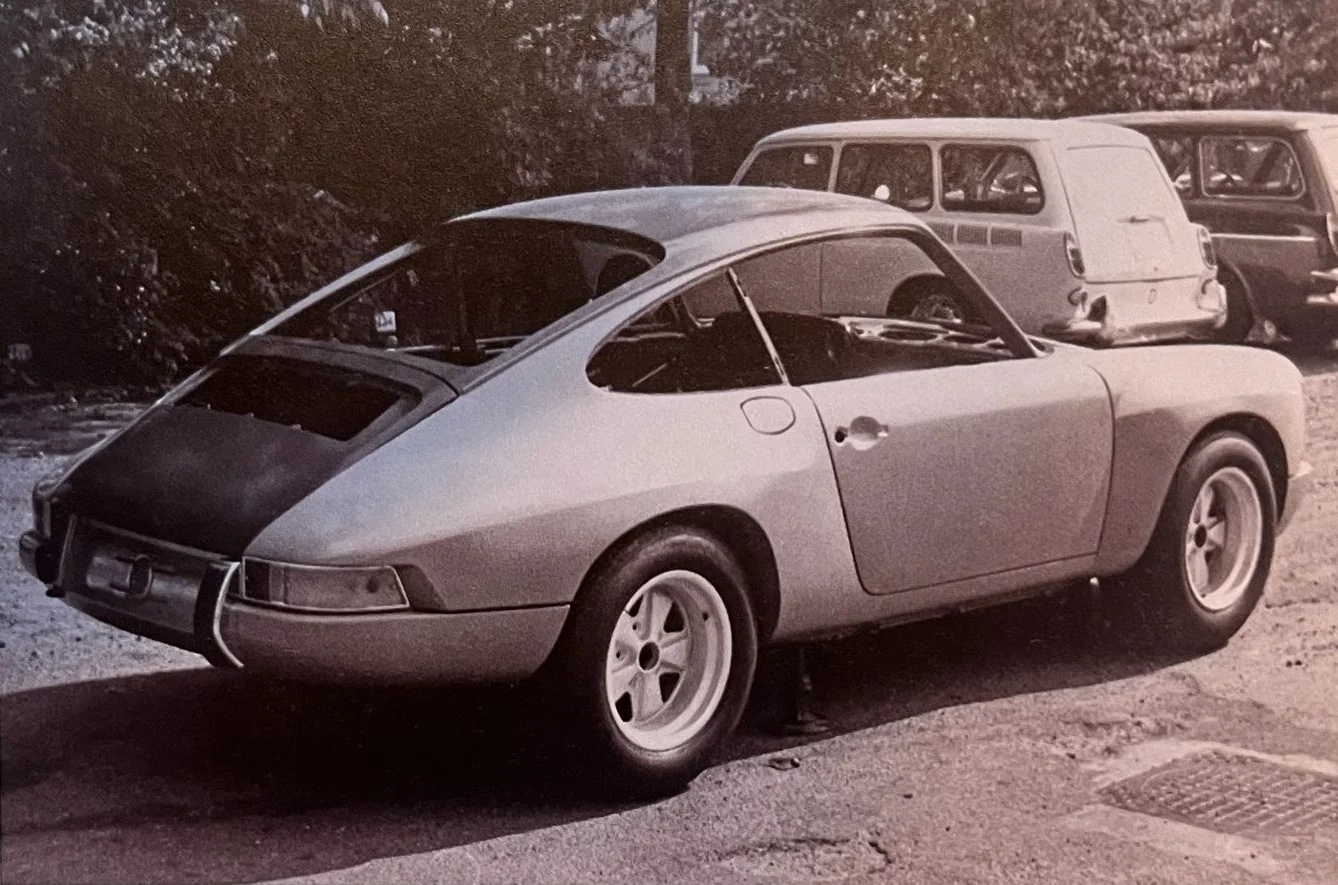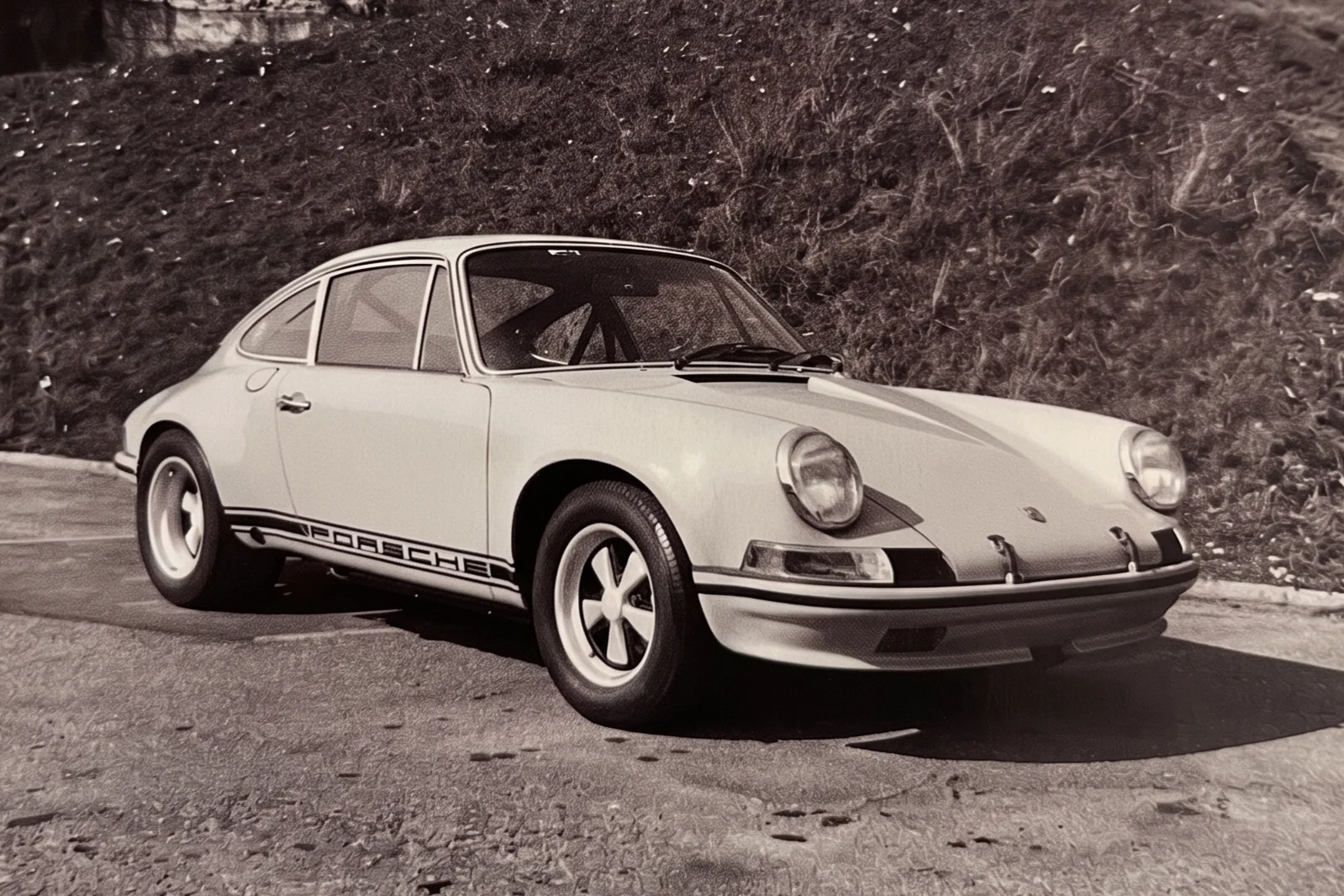
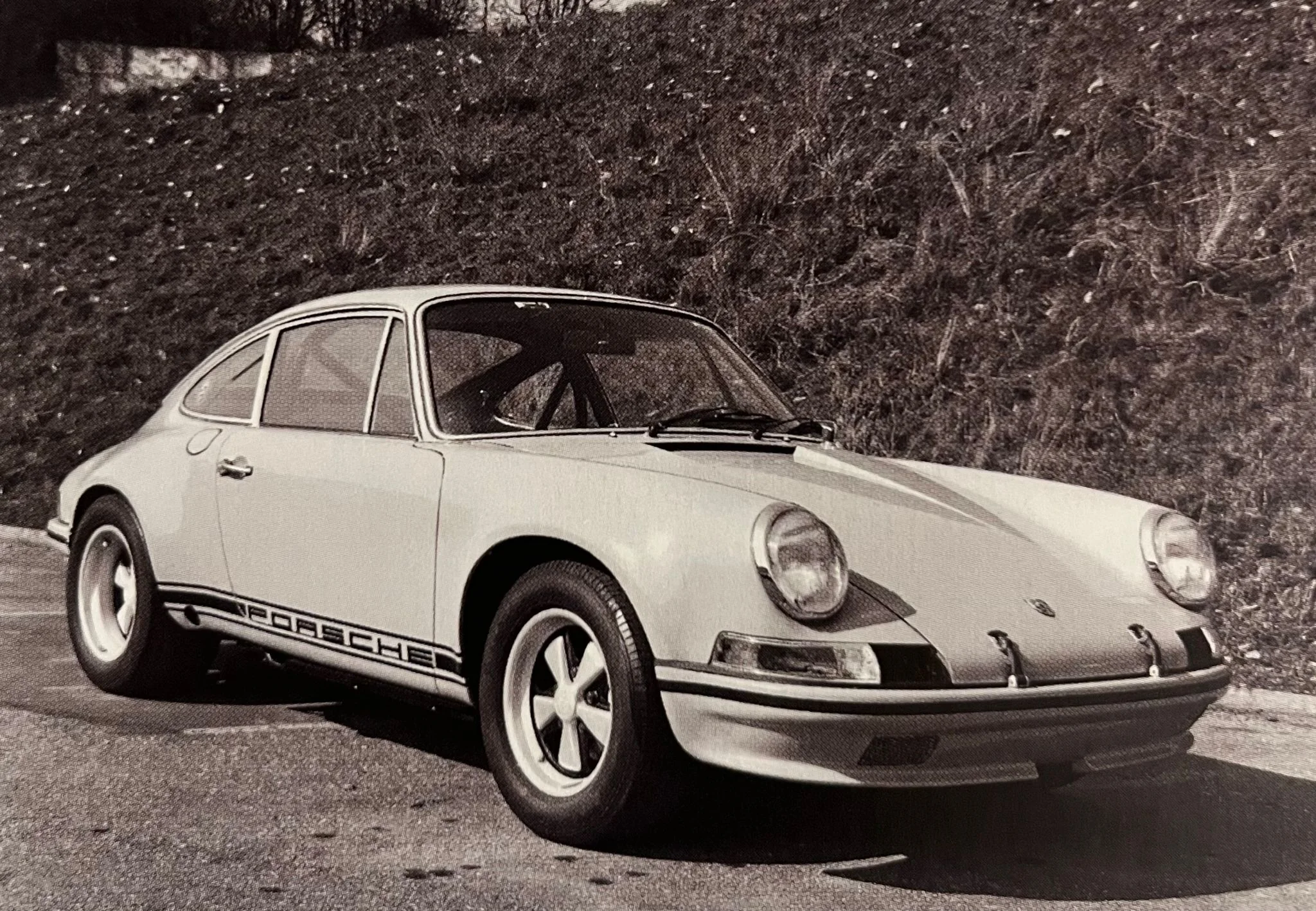
Apparue au cours de la saison 1972, la Porsche 911 2.5L S-R constitue l'un des maillons les plus méconnus mais également les plus importants dans l'évolution des Porsche 911 de compétition. Développée à partir de l'homologation FIA n°3025 de la 911 S ainsi que de ses extensions Groupe 4, elle assure la transition entre les 911 de course de la fin des années 1960 et les futures Carrera RS 2.7 puis Carrera RSR qui deviendront les références absolues des catégories GT.
Contrairement aux modèles RS et RSR qui bénéficieront d'une identité commerciale propre, la 2.5L S-R n'a jamais été officiellement commercialisée sous cette appellation. Porsche continuait à la désigner comme une simple 911 S, tandis que la dénomination « S-R » était principalement utilisée en interne ainsi que par les équipes clientes. Cette approche permettait au constructeur d'éviter la production d'une nouvelle série d'homologation tout en développant une voiture spécifiquement adaptée aux contraintes du Groupe 4.
La préparation comprenait de nombreuses évolutions homologuées : élargissement des voies par entretoises, extensions d'ailes arrière métalliques soudées, panneaux allégés en aluminium ou en matériau composite, vitrages spécifiques, réservoirs de sécurité de grande capacité et multiples adaptations destinées à la compétition. Ces modifications annonçaient directement les futures Carrera RSR.
Pour les clients souhaitant disposer d'une véritable voiture de course prête à engager, Porsche proposait l'option M491 « Rennausführung ». Cette spécification comprenait notamment un arceau de sécurité, un extincteur Heinzmann, un coupe-circuit extérieur, des sièges baquets Scheel ou Recaro, des harnais de sécurité, un habitacle largement dépouillé, des éléments de carrosserie allégés, ainsi que les élargissements de carrosserie nécessaires à l'installation de roues plus larges. Contrairement aux futures RSR, cette première version ne recevait toutefois pas encore la barre anti-rapprochement qui apparaîtra sur les évolutions ultérieures.
La question de la motorisation constitue l'aspect le plus singulier de la 2.5L S-R. Deux variantes du Flat-6 furent utilisées. Le moteur type 911/70 recevait un vilebrequin de 70,4 mm de course permettant d'atteindre 2492 cm³. Une seconde version, désignée type 911/73, adoptait un vilebrequin de 66 mm pour une cylindrée de 2466 cm³. Ces moteurs pouvaient être alimentés soit par l'injection mécanique Bosch, soit, plus rarement, par des carburateurs Weber 46 IDA à la demande du client.
Le développement du moteur 2492 cm³ révéla rapidement un problème majeur de fiabilité. Les importantes vibrations générées par le vilebrequin de 70,4 mm provoquaient parfois la rupture des vis de fixation du volant moteur lors des épreuves d'endurance. Porsche chercha alors différentes solutions afin de fiabiliser cette mécanique prometteuse mais encore imparfaite.
Cette fragilité fut mise en évidence lors des 24 Heures du Mans 1972. Une seule 911 2.5L S-R termina l'épreuve : celle de Michael Keyser. Quelques jours avant la course, le préparateur français Louis Meznarie avait décidé de remplacer le vilebrequin à course de 70,4 mm par une version à course réduite de 66 mm. Cette modification transforma la voiture en version 2466 cm³ et lui permit d'éviter les défaillances mécaniques rencontrées par plusieurs concurrentes équipées du moteur de plus forte cylindrée.
La carrière de la 2.5L S-R fut particulièrement courte. Dès 1973, l'arrivée de la Carrera RS 2.7 puis de la Carrera RSR 2.8 rendit cette configuration intermédiaire rapidement obsolète. La majorité des châssis furent alors convertis en spécifications 2.8 RSR ou 3.0 RSR afin de poursuivre leur carrière sportive. Malgré cette existence éphémère, la 911 2.5L S-R demeure aujourd'hui un modèle essentiel dans l'histoire de Porsche puisqu'elle servit directement de laboratoire technique aux futures Carrera RS et RSR.
.webp)
.webp)
.webp)
.webp)
.webp)
.webp)
.webp)