Le châssis 9111120698 est une Porsche 911 de millésime 1971 (base 911 T Karmann) convertie aux spécifications compétition 2.3L S/T. Sortie d'usine dans une teinte Light Ivory, elle est livrée neuve en Suisse au célèbre Wicky Racing Team et va écumer les plus grandes épreuves européennes durant les saisons 1971 et 1972 aux côtés du châssis 911 030 1016, sous les couleurs du Porsche Club Romand et de l'écurie Haberthur.
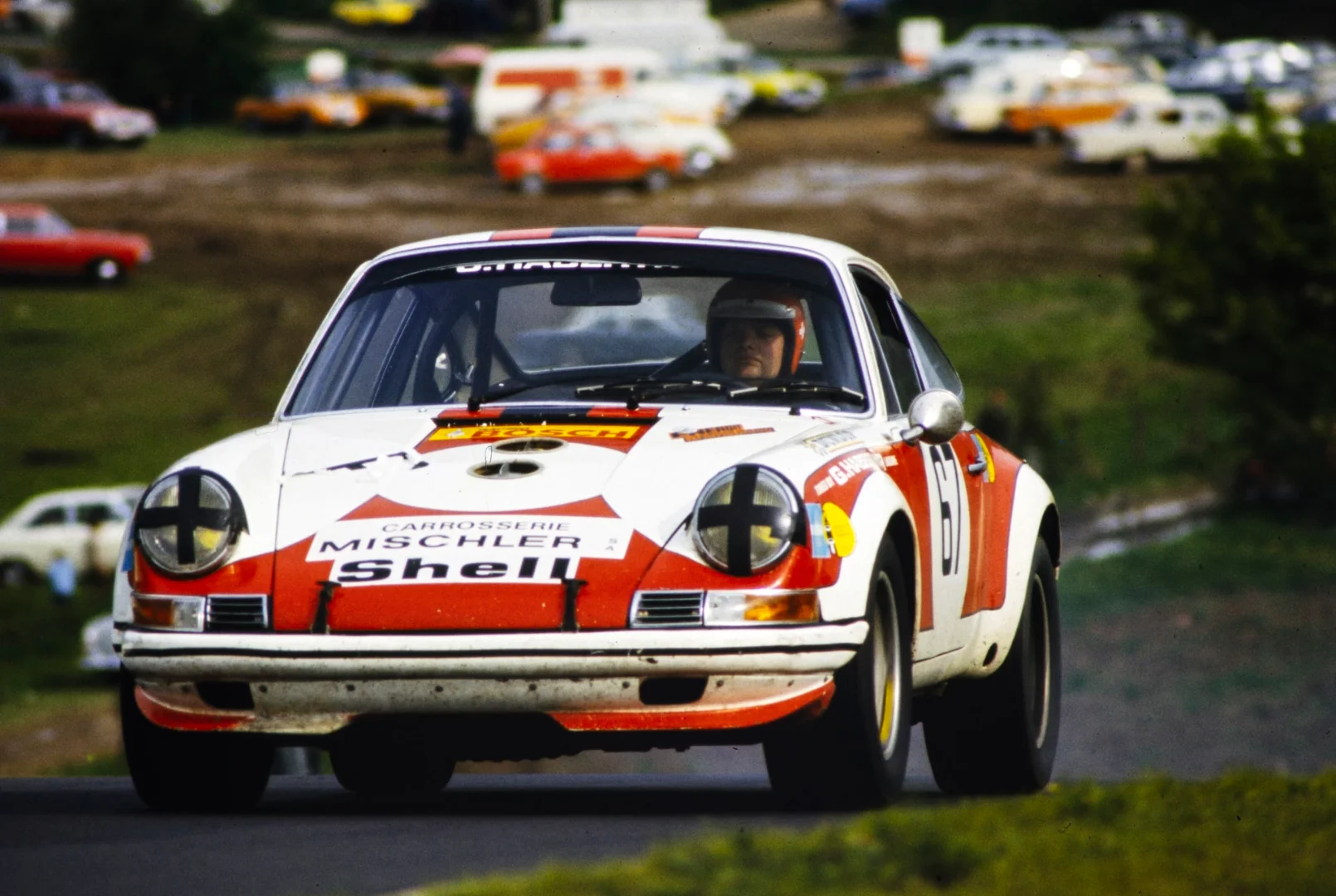
Équipée initialement d'un moteur type 911/21 à injection mécanique, elle signe une saison 1971 remarquable en endurance. Après des débuts à Monza et Spa, elle brille particulièrement à la Targa Florio où Bernard Chenevière et Paul Keller décrochent la 4ème place au classement général et la victoire de classe. Deux semaines plus tard, Claude Haldi et Paul Keller terminent 2èmes de classe aux 1000 Kilomètres du Nürburgring. La voiture s'aligne également en courses de côte (Cesana-Sestriere, Mont-Dore, Ollon-Villars), en rallye (TAP) et termine 9ème aux 1000 Kilomètres de Paris.
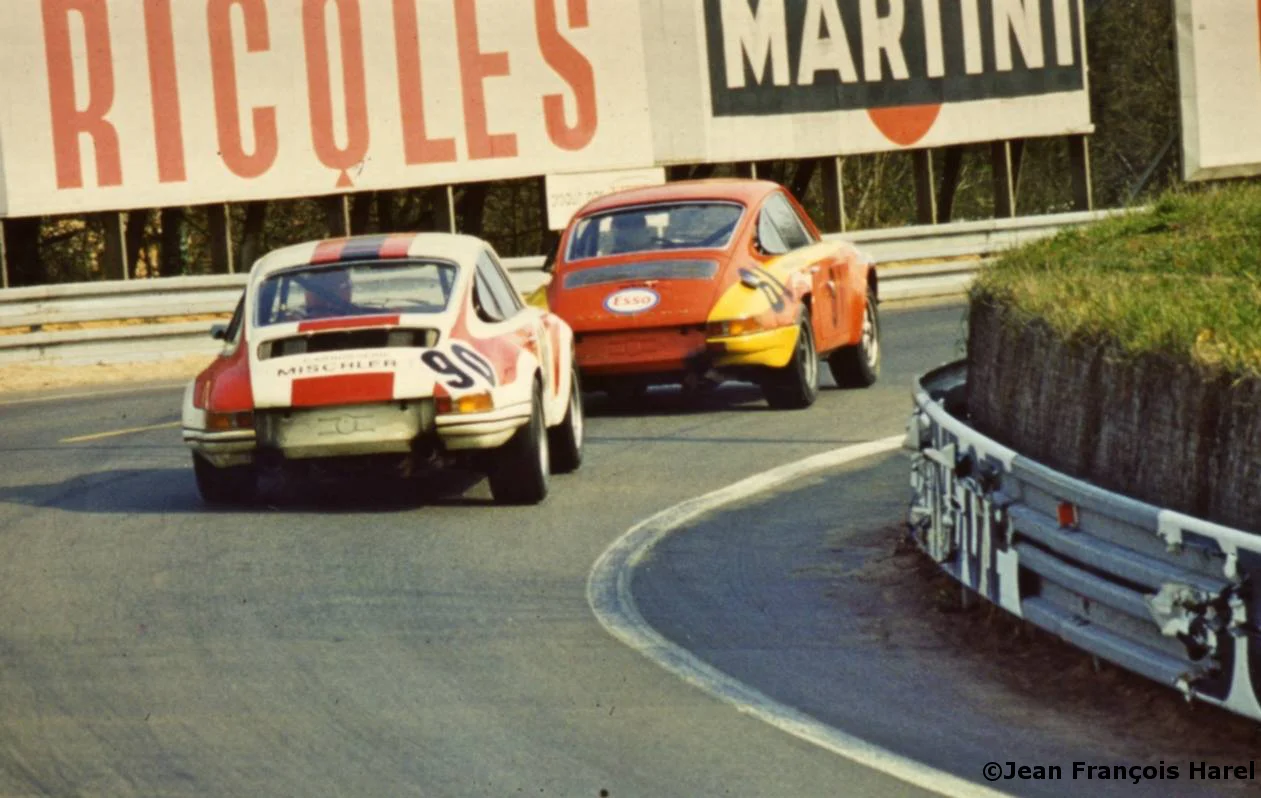
Pour la saison 1972, la mécanique est portée aux spécifications 2.5L (type 911/70). Préparée au sein de l'écurie Haberthur (reconnaissable à l'absence de radiateur d'huile avant), elle adopte une livrée rouge et blanche et s'illustre dès le mois de mars aux 4 Heures du Mans (3ème au général et 1ère de classe avec Paul Keller et Jean Mésange), avant de décrocher une 3ème place à l'EGTC de Paris et de finir 21ème aux 1000 Kilomètres du Nürburgring.
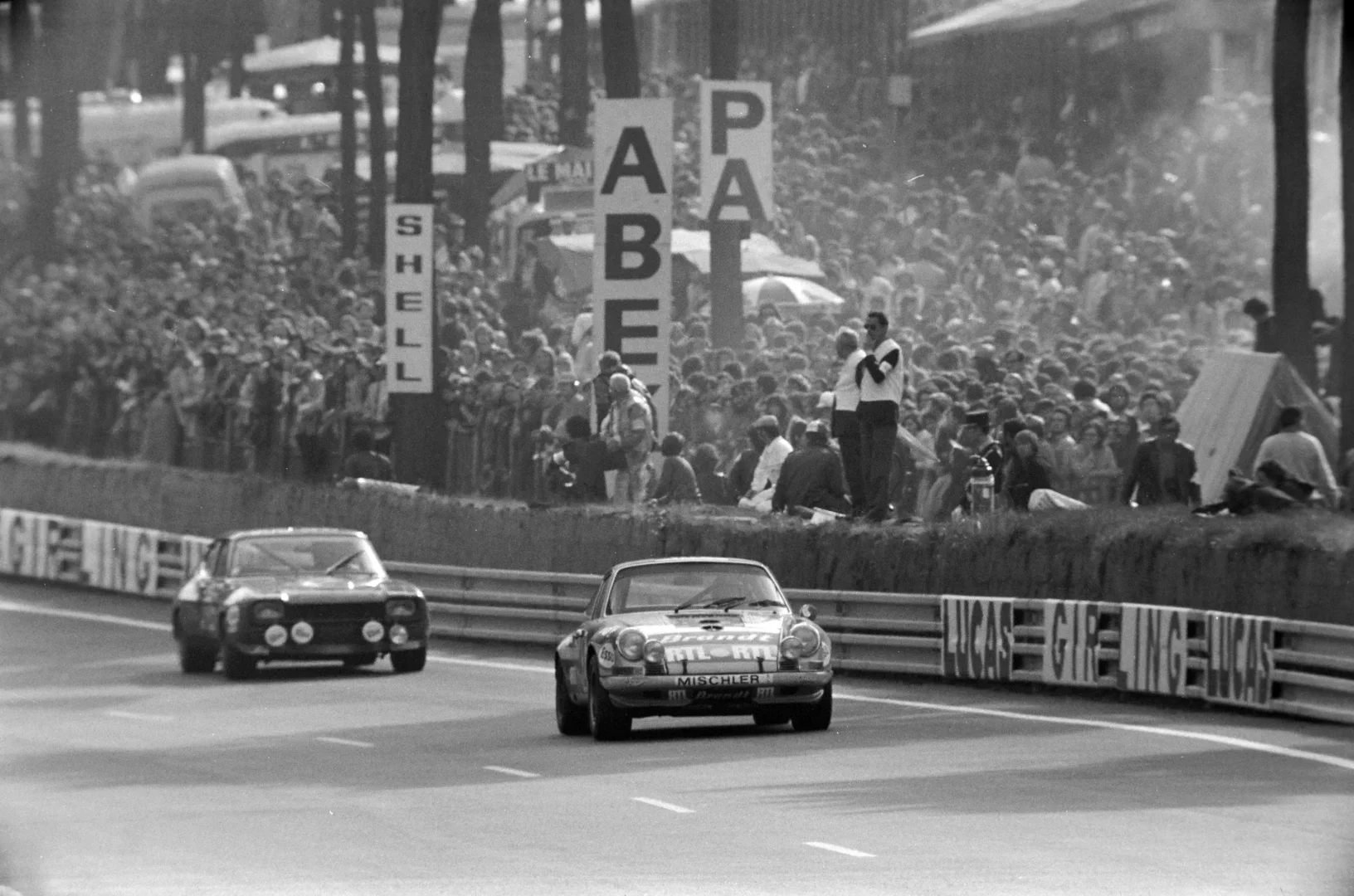
En juin 1972, la voiture est repeinte aux couleurs du sponsor Brandt / RTL pour prendre le départ des 24 Heures du Mans sous le numéro 42, confiée à Claude Haldi, Paul Keller et "Gedehem". Auteure d'une course solide, elle sera la toute dernière Porsche 911 à abandonner lors de cette édition, trahie par un joint de culasse. Elle poursuivra sa campagne 1972 avec notamment une victoire de classe à la course de côte de Cesana-Sestriere (10ème au général avec Claude Haldi).
Par la suite, ce châssis au palmarès impressionnant a été vendu comme projet de restauration, avant de bénéficier d'une remise en état complète pour retrouver ses spécifications S-T d'époque.
Chassis 9111120698 is a 1971-model-year Porsche 911 (based on a 911 T Karmann) that was converted to 2.3L S/T competition specifications. Leaving the factory in Light Ivory, it was delivered new to Switzerland—to the renowned Wicky Racing Team—and went on to compete in major European events throughout the 1971 and 1972 seasons. Alongside chassis 911 030 1016, it raced under the banners of the Porsche Club Romand and the Haberthur racing team.
Initially equipped with a 911/21-type engine featuring mechanical fuel injection, the car enjoyed a remarkable 1971 endurance racing season. Following its debut at Monza and Spa, it truly shone at the Targa Florio, where Bernard Chenevière and Paul Keller secured 4th place overall and a class victory. Two weeks later, Claude Haldi and Paul Keller finished 2nd in their class at the 1000 Kilometers of the Nürburgring. The car also took part in hill climbs (Cesana-Sestriere, Mont-Dore, and Ollon-Villars) and rallies (the TAP Rally), and finished 9th at the 1000 Kilometers of Paris.
For the 1972 season, the mechanical setup was upgraded to 2.5L specifications (type 911/70). Prepared by the Haberthur racing team—identifiable by the absence of a front-mounted oil cooler—the car featured a red and white livery. It first distinguished itself in March at the 4 Hours of Le Mans, where it finished 3rd overall and 1st in its class (driven by Paul Keller and Jean Mésange). This was followed by a 3rd-place finish at the EGTC in Paris and a 21st-place result at the 1000 Kilometers of the Nürburgring.
In June 1972, the car was repainted in the colors of its sponsor, Brandt/RTL, to compete in the 24 Hours of Le Mans. Carrying race number 42, it was driven by Claude Haldi, Paul Keller, and "Gedehem." After a strong performance, it became the very last Porsche 911 to retire from that year's race, sidelined by a blown head gasket. The car continued its 1972 campaign, notably securing a class victory at the Cesana-Sestriere hill climb (finishing 10th overall with Claude Haldi).
Subsequently, this chassis—with its impressive racing pedigree—was sold as a restoration project, before undergoing a complete overhaul to return it to its original, period-correct S-T specifications.
.webp)
.webp)
.webp)
.webp)
.webp)
.webp)
.webp)
.webp)