Le châssis 9110301263 a été livré neuf en 1970 à Porsche Salzburg (Autriche) sous la forme d'une 911 S de rallye pesant 980 kg et arborant une teinte Blood Orange. Engagée initialement en 1970 sous les couleurs du Bosch Racing Team Vienna, elle brille aux mains de l'équipage autrichien Günther Janger et Walter Wessiak, remportant notamment la prestigieuse Internationale Donau Elan-Elf Rallye et décrochant la deuxième place à la Rallye der 1000 Minuten.
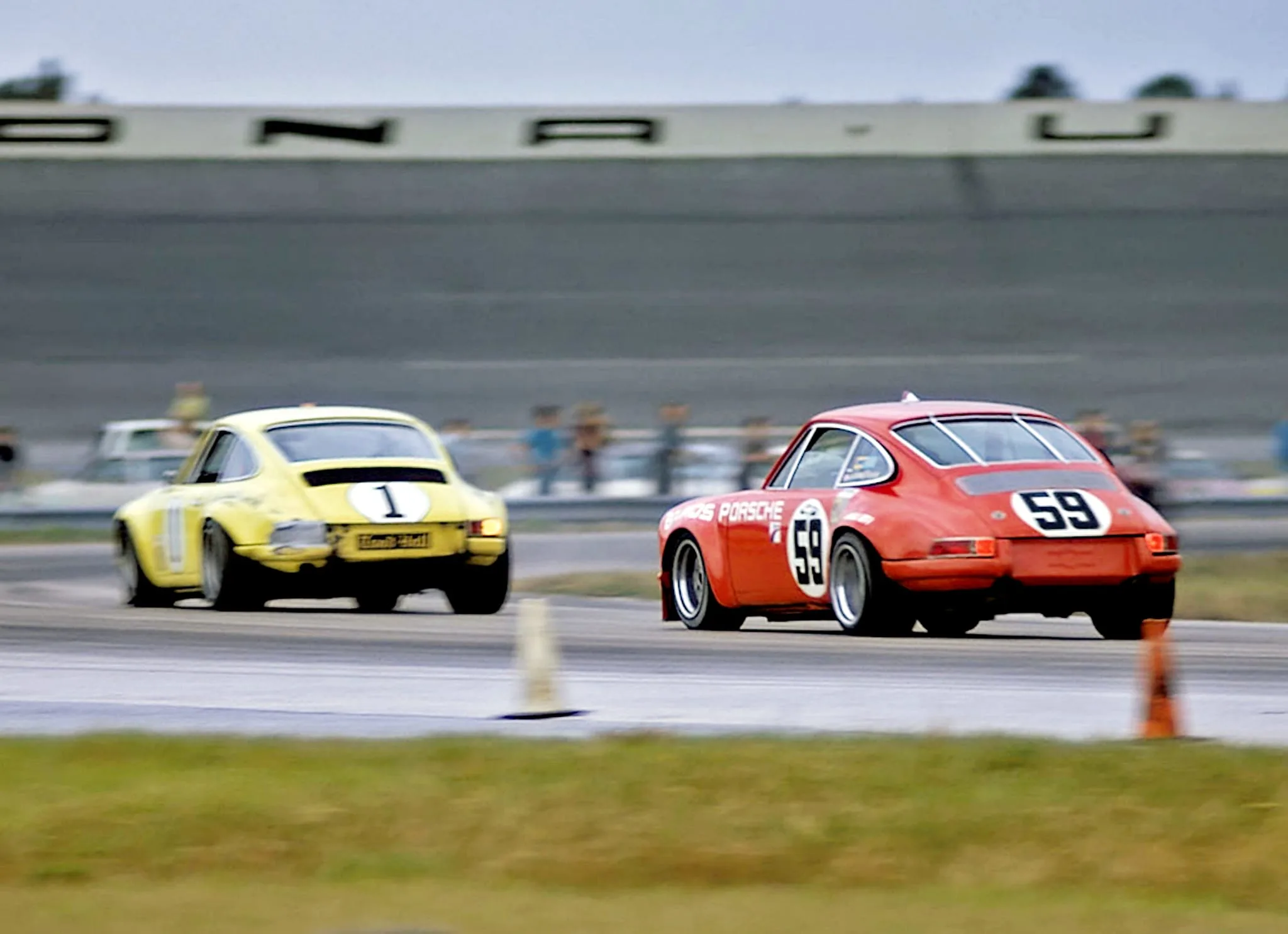
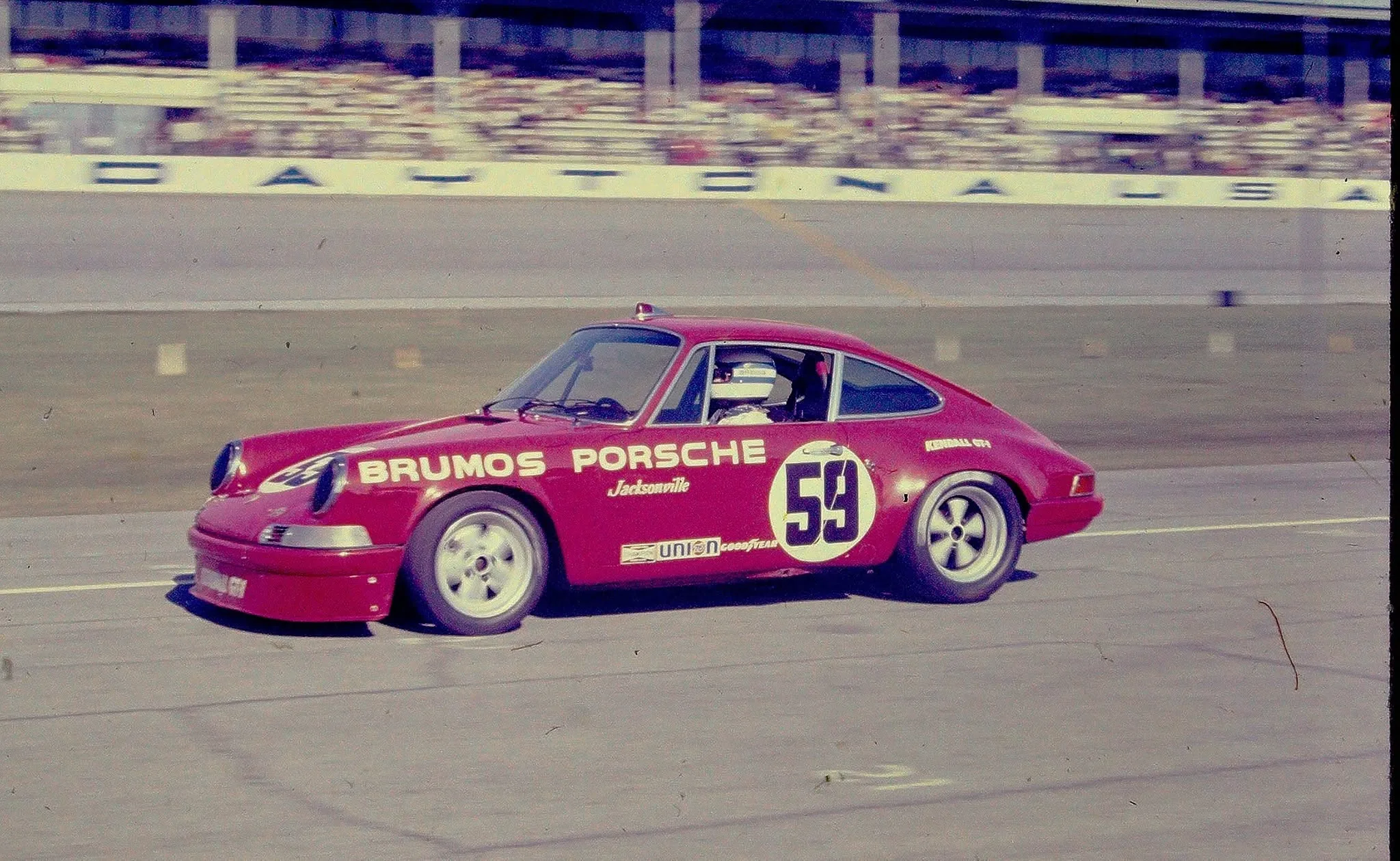
Son destin bascule en 1971 lorsqu'elle est vendue aux États-Unis à Peter Gregg, figure emblématique de Brumos Racing. Intégrée à la célèbre écurie, la voiture est transformée et adopte la livrée Brumos. Sous l'impulsion de Peter Gregg et d'un jeune pilote nommé Hurley Haywood, elle écrit une page majeure de l'histoire du sport automobile américain. En 1972, elle permet à Hurley Haywood de remporter le tout premier championnat IMSA Camel GT de l'histoire, couronnant une saison exceptionnelle marquée par de multiples victoires (Watkins Glen 500 km, Virginia 250 Miles) et podiums.
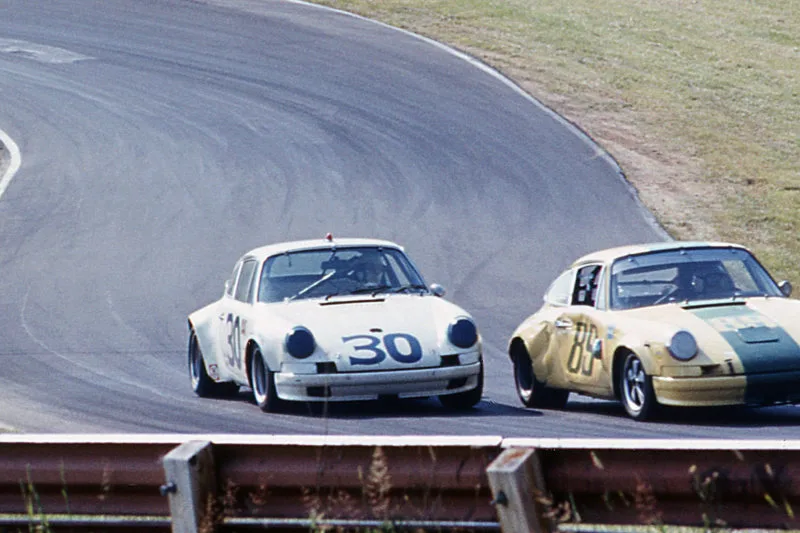
Après son passage victorieux chez Brumos, la voiture entame une longue carrière en Amérique du Nord (SCCA, Trans-Am, IMSA), passant entre les mains de nombreux pilotes privés (George Dyer, Paul Spruell, Terry Wolters, Mike Schaefer). Elle participe à d'innombrables épreuves d'endurance, dont les prestigieuses 24 Heures de Daytona et 12 Heures de Sebring, subissant de profondes modifications au fil des années (notamment des châssis tubulaires ajoutés à l'avant et à l'arrière).
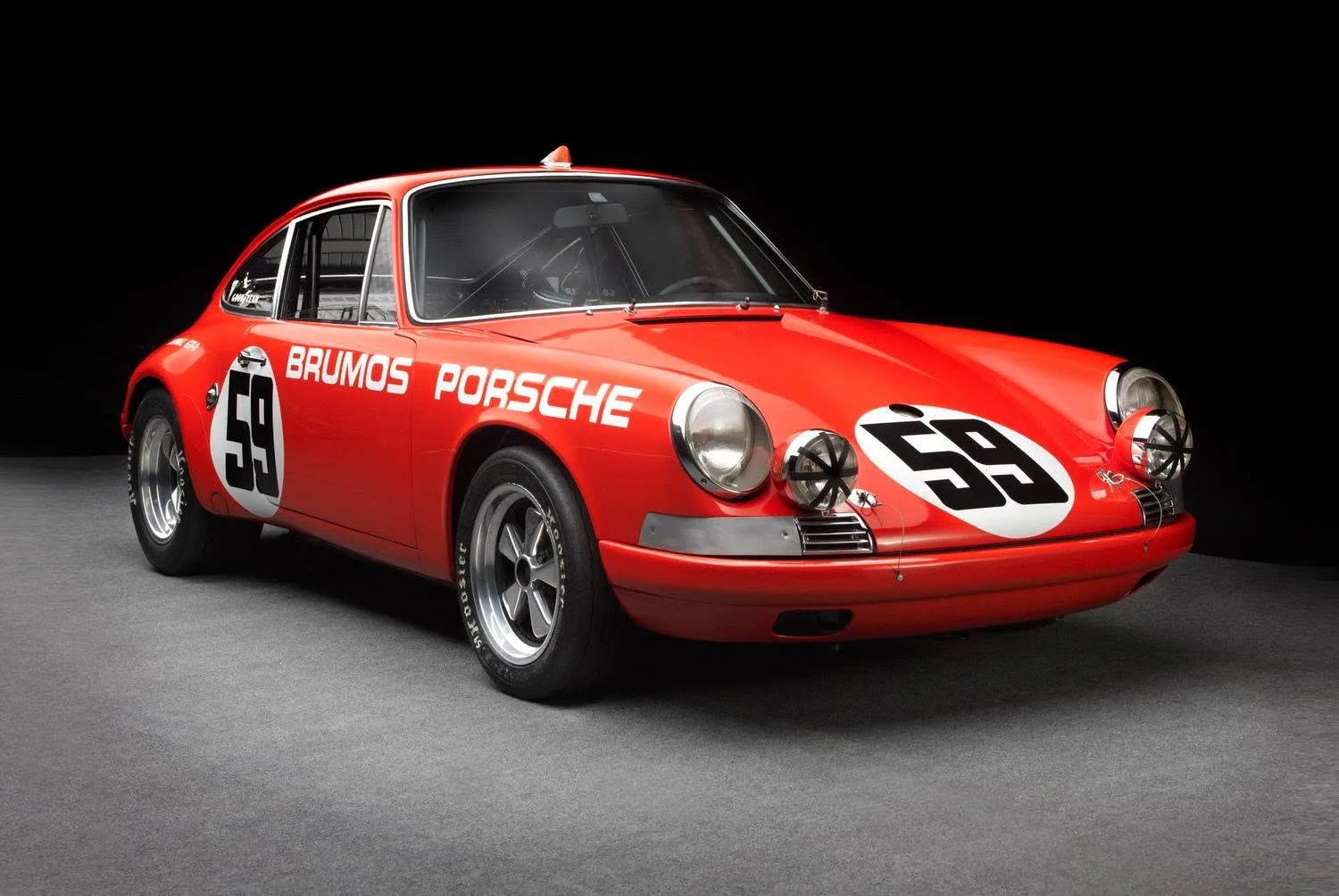
Retirée de la compétition professionnelle au milieu des années 1980, elle transite par plusieurs collections (dont la Collier Collection) avant de bénéficier d'une restauration intégrale par Jim Weber en 1994, lui rendant sa configuration victorieuse de 1972. En 2001, ce monument de l'histoire Porsche boucle la boucle en réintégrant la légendaire Brumos Collection.
Chassis 9110301263 was delivered new in 1970 to Porsche Salzburg (Austria) as a rally-spec 911 S, weighing 980 kg and finished in Blood Orange. Initially campaigned in 1970 under the banner of the Bosch Racing Team Vienna, it excelled in the hands of Austrian crew Günther Janger and Walter Wessiak—most notably winning the prestigious Internationale Donau Elan-Elf Rally and securing second place at the Rallye der 1000 Minuten.
Its trajectory shifted in 1971 when it was sold to Peter Gregg in the United States, a key figure at Brumos Racing. Upon joining the renowned team, the car was modified and adopted the iconic Brumos livery. Driven by Peter Gregg and a young pilot named Hurley Haywood, it went on to play a pivotal role in the history of American motorsport. In 1972, it carried Hurley Haywood to victory in the inaugural IMSA Camel GT Championship, capping off an exceptional season defined by multiple wins—including the Watkins Glen 500 km and the Virginia 250 Miles—along with numerous podium finishes.
Following its successful stint with Brumos, the car embarked on a long career across North America (competing in SCCA, Trans-Am, and IMSA events), passing through the hands of various privateer drivers, such as George Dyer, Paul Spruell, Terry Wolters, and Mike Schaefer. It took part in countless endurance races, including the prestigious 24 Hours of Daytona and the 12 Hours of Sebring, undergoing extensive modifications over the years—most notably the addition of tubular chassis structures at the front and rear. Retired from professional competition in the mid-1980s, the car passed through several collections—including the Collier Collection—before undergoing a complete restoration by Jim Weber in 1994, which returned it to its 1972 race-winning configuration. In 2001, this landmark of Porsche history came full circle by rejoining the legendary Brumos Collection.
.webp)
.webp)
.webp)
.webp)
.webp)
.webp)
.webp)
.webp)
.webp)
.webp)
.webp)
.webp)