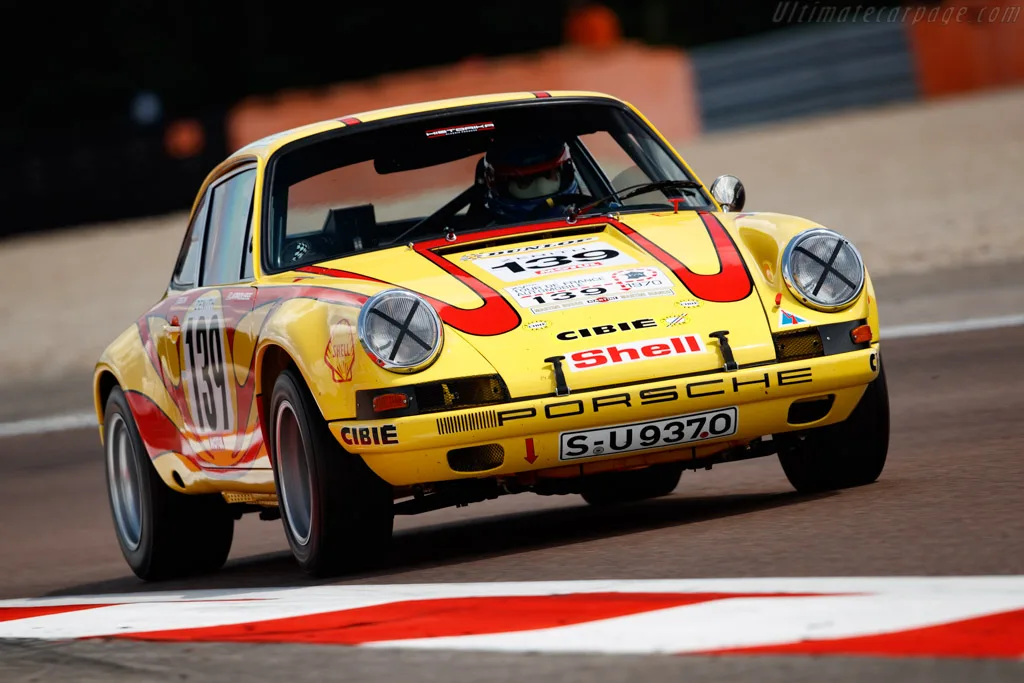
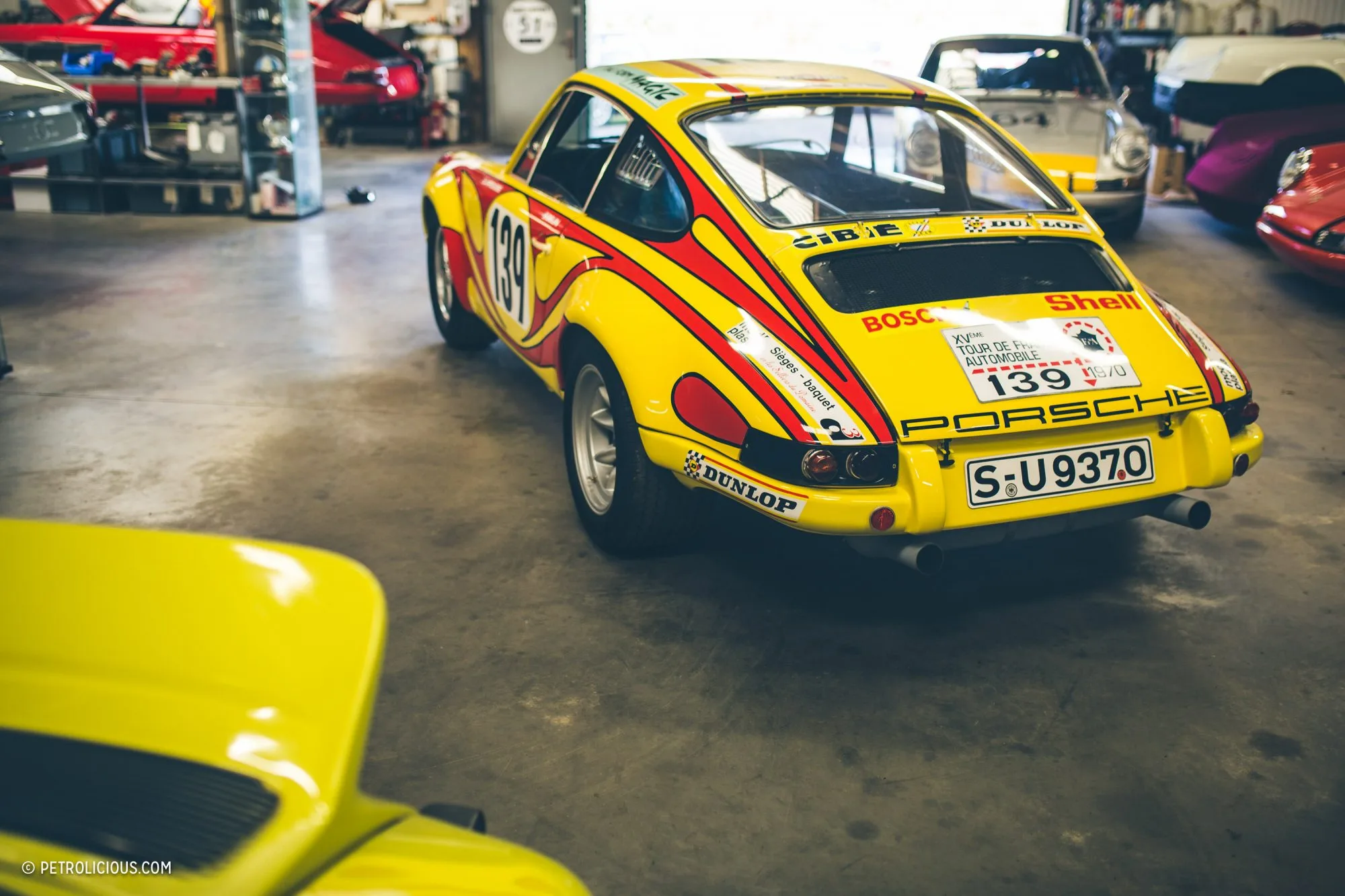
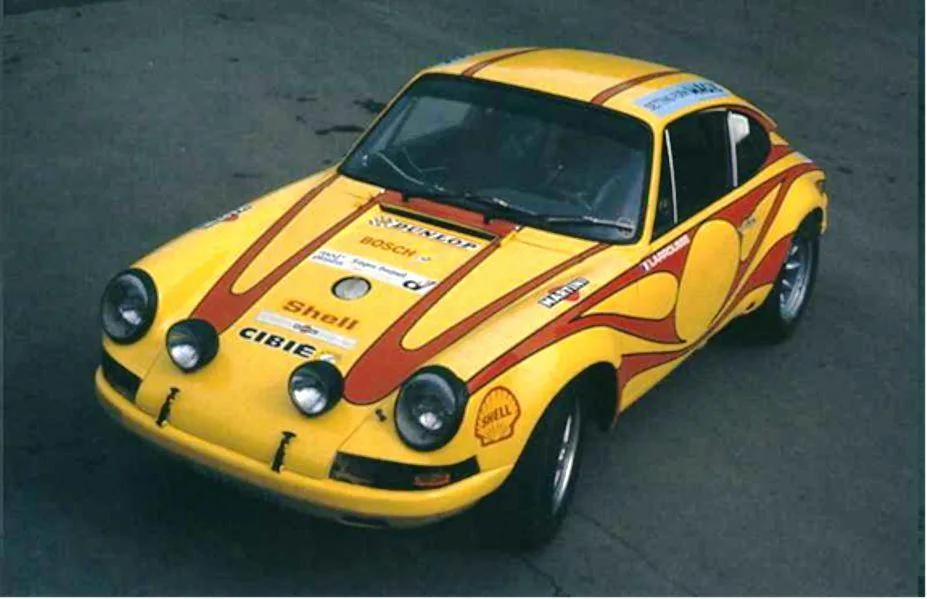
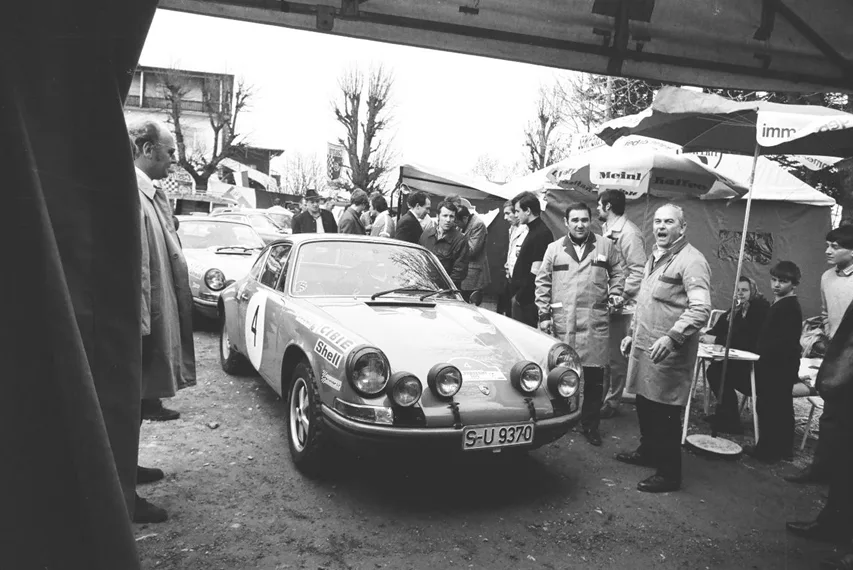
Véritable voiture d'usine (Porsche KG), le châssis 9110301127 a fait ses débuts à la Coupe des Alpes autrichienne en mai 1970, alors qu'il était encore équipé d'un moteur 2.2L. À l'issue de cette épreuve, la voiture est renvoyée à l'usine pour être élargie et convertie aux ultimes spécifications 2.3L S-T en vue du Tour de France Automobile de septembre. Le pilote français Gérard Larrousse exige alors que la voiture soit allégée au maximum. Pour motiver les troupes, il promet aux ingénieurs de leur offrir une bouteille de champagne pour chaque kilo gagné en dessous de la barre des 800 kg. Le défi est relevé haut la main : pesée à un exceptionnel 789 kg, la voiture allégée s'aligne parée des mythiques couleurs Shell jaune et rouge. L'effort s'avère payant, puisque le duo Gérard Larrousse et Maurice Gélin (numéro 139) réalise une course remarquable et décroche la 3ème place au classement général, finissant juste derrière les deux intouchables prototypes Matra.
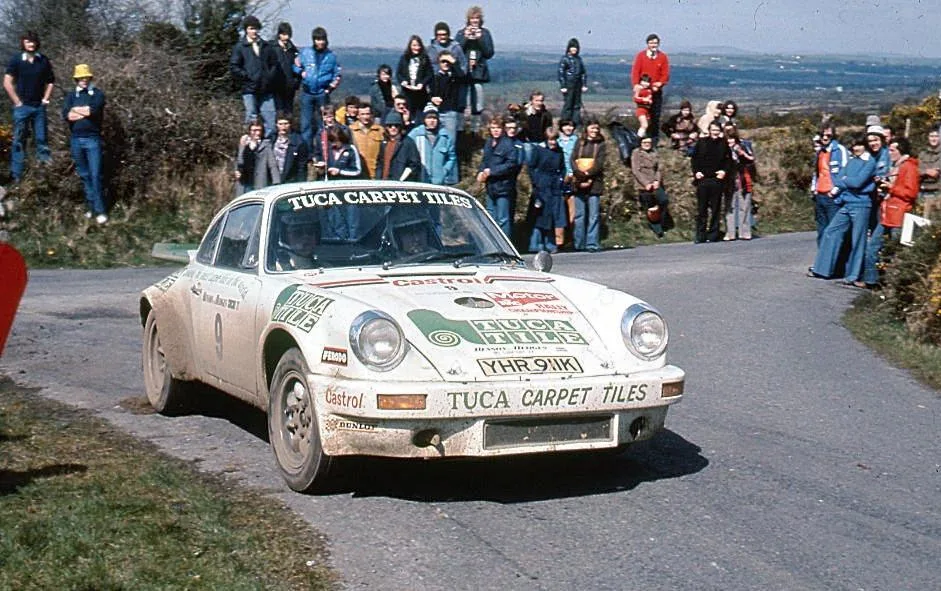
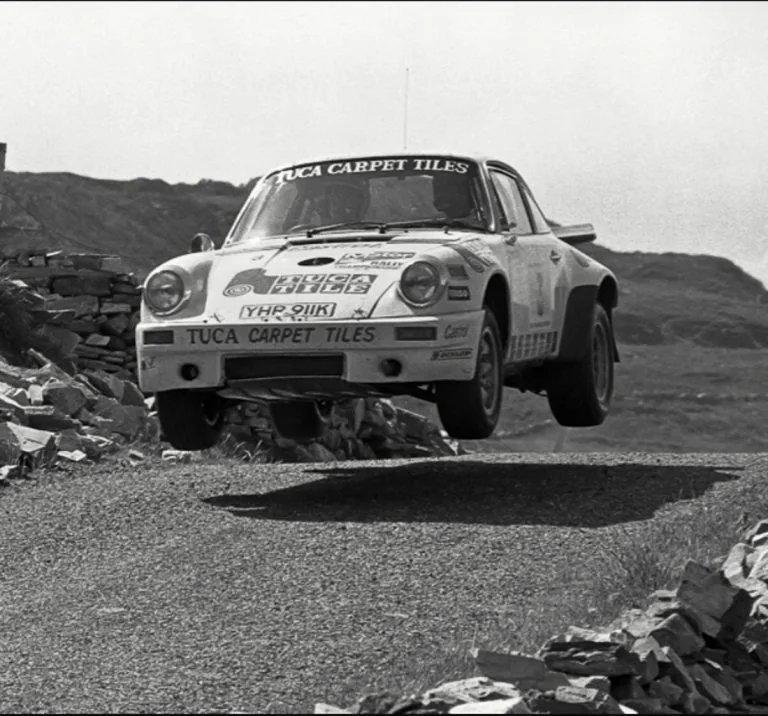
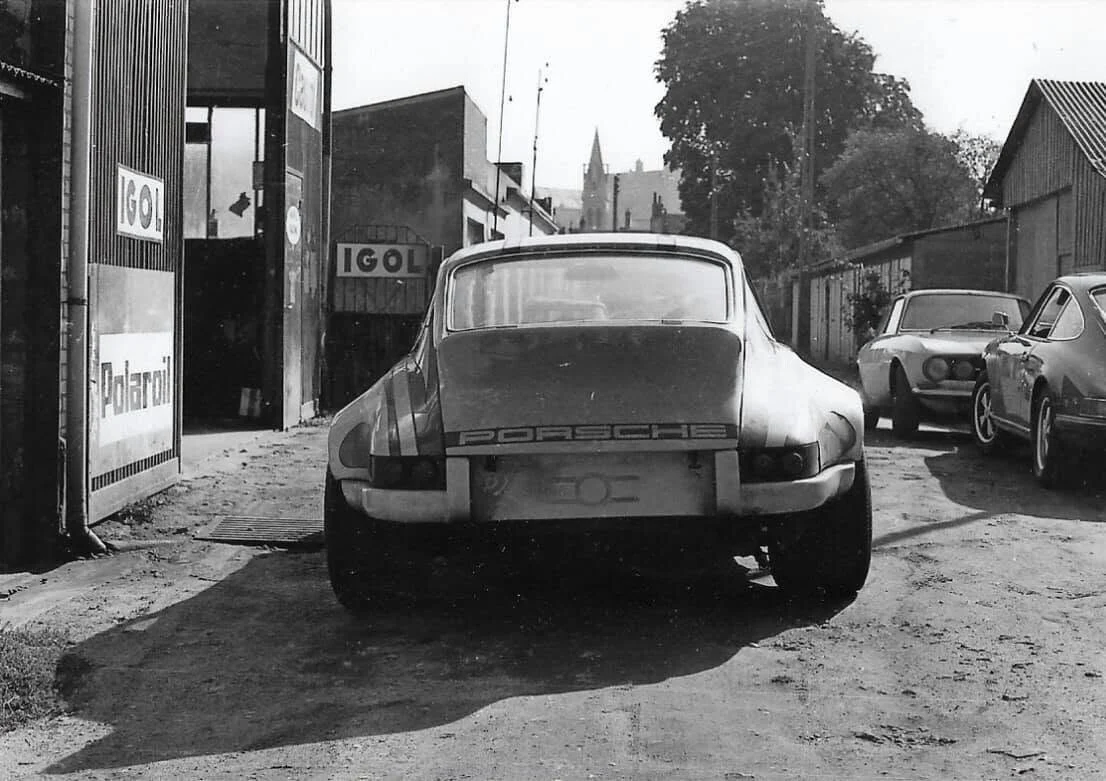
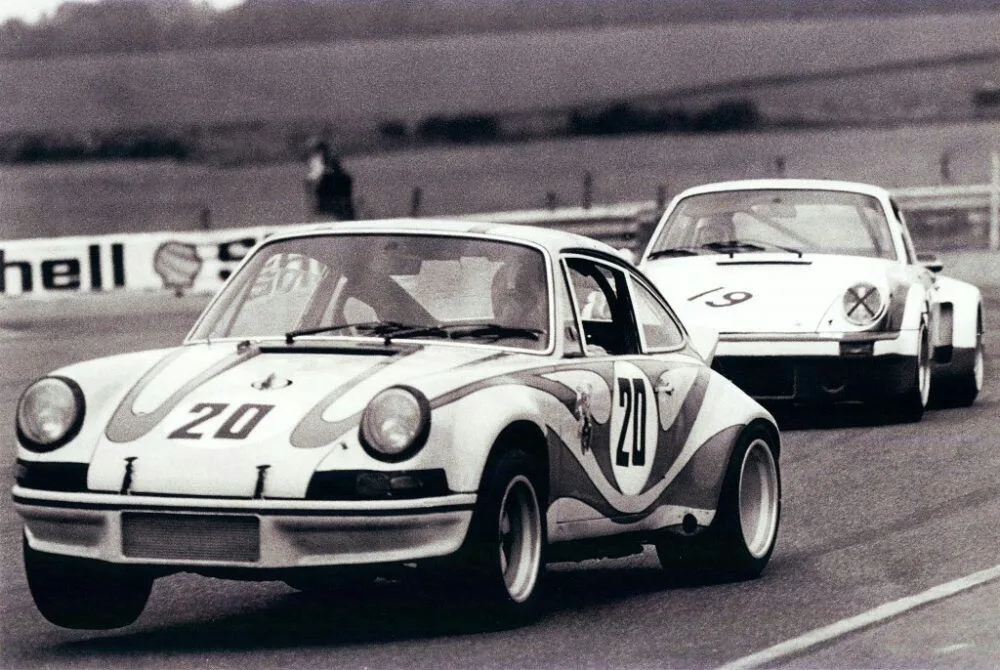
Après son épopée officielle, la voiture passe par les ateliers du Français Raymond Touroul (qui l'engage brièvement en 1974) avant de traverser la Manche et d'entamer une longue carrière de rallye au Royaume-Uni et en Irlande, notamment avec Brian Nelson. Afin de rester compétitive face à ses nouvelles rivales, elle va subir de profondes évolutions au fil de ses propriétaires britanniques. D'abord convertie en conduite à droite (RHD), elle est modifiée en spécifications 3.0L RS sous l'égide de Geoff Crabtree, puis repoussée aux spécifications 3.0L RSR par William Owen.
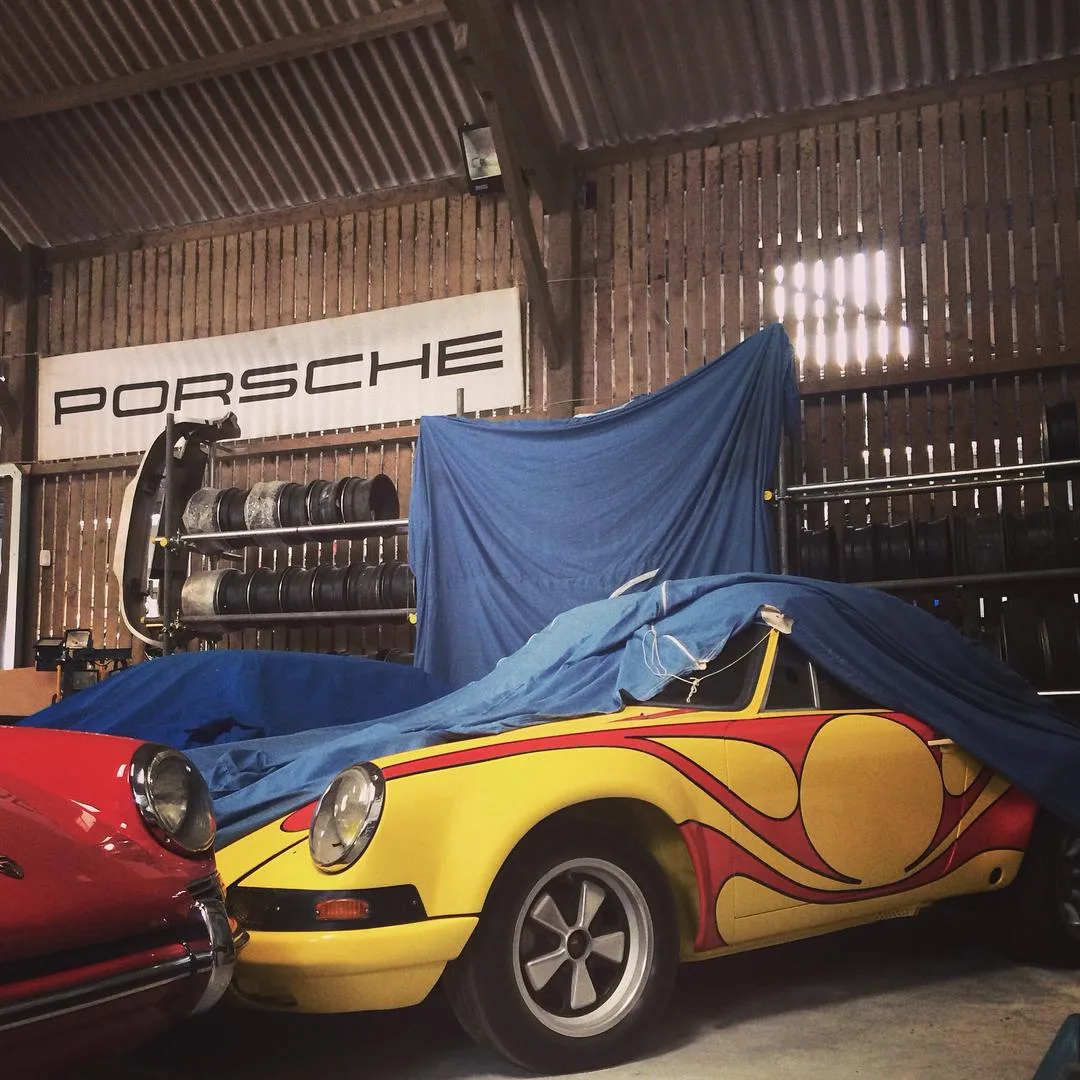
Ayant connu de multiples propriétaires (dont Ian Corkhill sur l'Île de Man et Cicely Nichols), elle est rachetée en 2006 par Kevin Morfett. Confiée à son entreprise, Historika Klassic Porsche, la voiture bénéficie d'une restauration intégrale d'une qualité exceptionnelle pour retrouver ses exactes spécifications d'usine (y compris le retour à la conduite à gauche) et sa légendaire livrée du Tour de France 1970. Depuis cette remise à neuf, elle s'illustre lors des événements historiques mondiaux. Pour couronner ce renouveau, Gérard Larrousse a pu en reprendre le volant à plusieurs reprises, notamment lors du Mans Classic et du Grand Prix de l'Âge d'Or, près d'un demi-siècle après leur podium partagé.
A genuine factory car (Porsche KG), chassis 9110301127 made its debut at the Austrian Alpine Cup in May 1970, while still equipped with a 2.2-liter engine. Following this event, the car was sent back to the factory to have its bodywork widened and to be converted to the ultimate 2.3-liter S-T specifications in preparation for the Tour de France Automobile in September. French driver Gérard Larrousse insisted that the car be made as light as possible; to motivate the team, he promised the engineers a bottle of champagne for every kilogram shaved off below the 800 kg mark. The challenge was met with flying colors: weighing in at an exceptional 789 kg, the lightened car lined up sporting the iconic yellow-and-red Shell livery. The effort paid off, as the duo of Gérard Larrousse and Maurice Gélin (car number 139) delivered a remarkable performance, securing 3rd place overall—finishing just behind the two untouchable Matra prototypes.
Following its factory-backed career, the car passed through the workshops of Frenchman Raymond Touroul (who entered it briefly in 1974) before crossing the English Channel to begin a long rallying career in the United Kingdom and Ireland, most notably with Brian Nelson. To remain competitive against newer rivals, the car underwent extensive modifications under its various British owners. Initially converted to right-hand drive (RHD), it was upgraded to 3.0-liter RS specifications under the guidance of Geoff Crabtree, and later further developed to 3.0-liter RSR specifications by William Owen. After passing through the hands of several owners—including Ian Corkhill on the Isle of Man and Cicely Nichols—the car was purchased in 2006 by Kevin Morfett. Entrusted to his company, Historika Klassic Porsche, it underwent a comprehensive, exceptionally high-quality restoration, returning it to its precise factory specifications (including a conversion back to left-hand drive) and its legendary 1970 Tour de France livery. Since this restoration, the car has made its mark at historic racing events around the world. As a fitting highlight to this revival, Gérard Larrousse has had the opportunity to get back behind the wheel on several occasions—most notably at the Le Mans Classic and the Grand Prix de l’Âge d’Or—nearly half a century after the pair shared a podium finish.
.webp)
.webp)
.webp)
.webp)
.webp)
.webp)
.webp)
.webp)
.webp)
.webp)
.webp)
.webp)
.webp)
.webp)
.webp)
.webp)
.webp)
.webp)
.webp)
.webp)
.webp)
.webp)