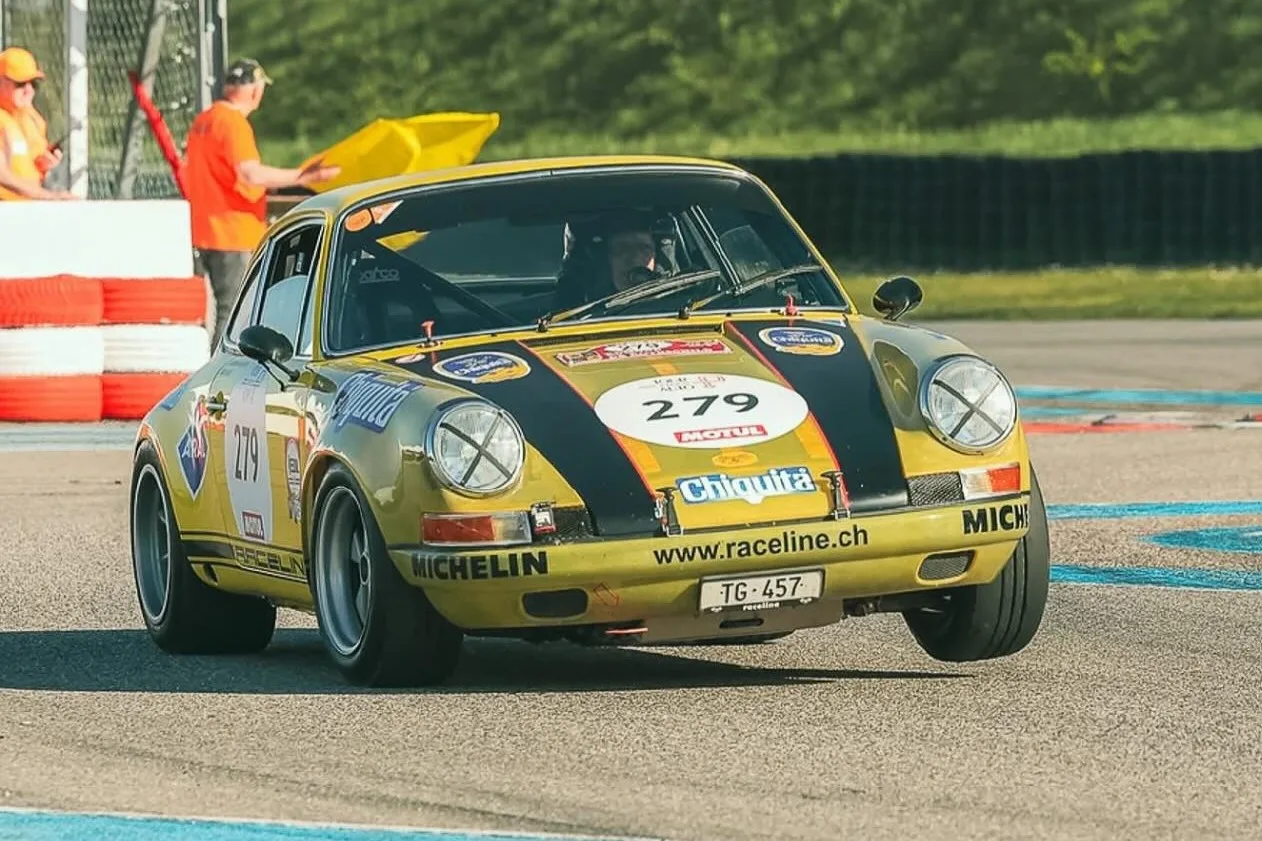
Achevé de construction le 26 mars 1970, le châssis 9110301108 a été commandé neuf à l'usine Porsche par Alfred Bauhaus Sr. Conçue pour succéder à ses précédentes montures, cette voiture a été baptisée "Chiquita III". Il s'agissait initialement d'une 911 S à équipement de base allemand allégé (930 kg), commandée dans une teinte spéciale (Sonderfarben) jaune "Chiquita", puis convertie aux spécifications S-T (2.3L, voies élargies) directement par le département course de l'usine selon la volonté de son propriétaire.
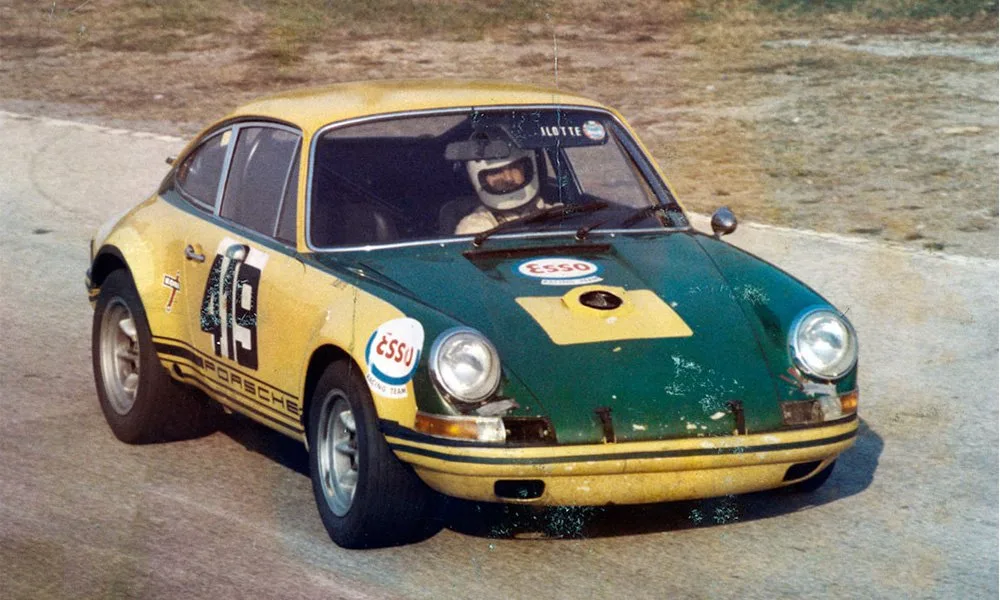
La saison 1970 fut triomphale pour la Chiquita III. Confiée principalement à Dieter Fröhlich (épaulé par le célèbre Pauli Toivonen aux 1000 km du Nürburgring), elle rafla pas moins de quatre victoires absolues en championnat DARM (Faßberg, Zolder, Mainz-Finthen) et trois victoires de classe, apportant des points précieux à Porsche, alors couronné Champion du Monde GT cette année-là. Malheureusement, bien que préparée pour les 24 Heures du Mans 1970, son engagement officiel fut refusé par les organisateurs.
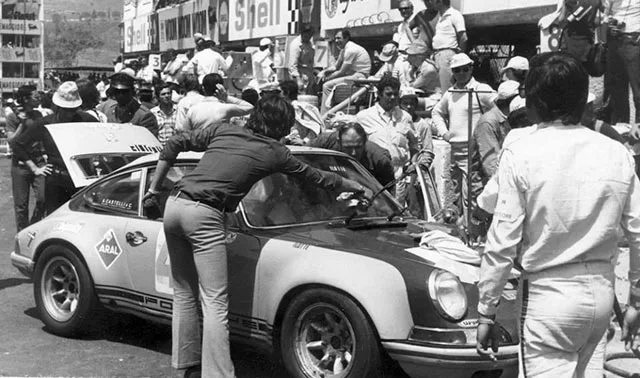
À partir de l'été 1970 et durant la saison 1971, la voiture passa aux mains de pilotes italiens (Mario Ilotte en tête). Elle continua de s'illustrer en Championnat du Monde des Voitures de Sport et en Championnat d'Europe de la Montagne, s'offrant même des apparitions à la mythique Targa Florio (29ème) et aux 24 Heures du Mans 1971, où elle fut contrainte à l'abandon sur casse d'un piston.
À la fin de la décennie 1970, la voiture subit de lourdes modifications pour s'adapter à son époque : repeinte en rouge, elle fut élargie de manière outrancière à la façon d'une 935, dotée de jantes BBS et d'un aileron proéminent. Immobilisée peu après, elle a sommeillé dans cette stricte configuration "fin de course" pendant plus de trente ans, conservant son incroyable documentation (Kardex, correspondances avec Rico Steinemann, réservoir allégé d'origine, mécanique matching numbers).
Exhumée au début des années 2010 chez Flat Six Cars à Bâle (Suisse), elle a été acquise en 2014 par le passionné Urs Beck. Après une restauration magistrale l'ayant ramenée à sa stricte configuration "Chiquita" jaune d'origine (telle qu'engagée au Nürburgring en 1970), Urs Beck l'aligne inlassablement depuis 2016 sur les plus prestigieuses épreuves historiques mondiales : Le Mans Classic, Modena Cento Ore, la redoutable Carrera Panamericana et bien sûr, chaque édition du Tour Auto.
Completed on March 26, 1970, chassis 9110301108 was ordered new from the Porsche factory by Alfred Bauhaus Sr. Intended to succeed his previous race cars, it was christened "Chiquita III." Originally a 911 S built to a lightweight German-market specification (930 kg) and finished in a special-order (*Sonderfarben*) "Chiquita" yellow, the car was subsequently converted to S-T specifications—featuring a 2.3-liter engine and widened track—by the factory’s own racing department, at the owner's request.
The 1970 season proved triumphant for Chiquita III. Driven primarily by Dieter Fröhlich—with the renowned Pauli Toivonen joining him for the 1000 km of the Nürburgring—the car secured four outright victories in the DARM championship (at Faßberg, Zolder, and Mainz-Finthen) along with three class wins, contributing vital points to Porsche’s successful campaign for the GT World Championship that year. Although prepared for the 1970 24 Hours of Le Mans, its official entry was ultimately rejected by the organizers.
From the summer of 1970 through the 1971 season, the car passed into the hands of Italian drivers, most notably Mario Ilotte. It continued to distinguish itself in the World Sportscar Championship and the European Hill Climb Championship, including appearances at the legendary Targa Florio (finishing 29th) and the 1971 24 Hours of Le Mans, where it was forced to retire due to a broken piston. At the end of the 1970s, the car underwent extensive modifications to suit the era: it was repainted red, fitted with exaggerated wide bodywork in the style of a 935, and equipped with BBS wheels and a prominent rear wing. Soon after, it was taken off the road and remained in this "end-of-racing-career" configuration for over thirty years, all the while retaining its remarkable documentation—including its original Kardex, correspondence with Rico Steinemann, the original lightweight fuel tank, and its matching-numbers mechanical components.
Rediscovered in the early 2010s at Flat Six Cars in Basel, Switzerland, the car was acquired in 2014 by enthusiast Urs Beck. Following a masterful restoration that returned it to its original, iconic yellow "Chiquita" specification—as it appeared when entered at the Nürburgring in 1970—Urs Beck has, since 2016, tirelessly campaigned the car in the world’s most prestigious historic racing events, including Le Mans Classic, the Modena Cento Ore, the formidable Carrera Panamericana, and, of course, every edition of the Tour Auto.
.webp)
.webp)
.webp)
.webp)
.webp)
.webp)
.webp)
.webp)
.webp)
.webp)
.webp)
.webp)
.webp)
.webp)
.webp)